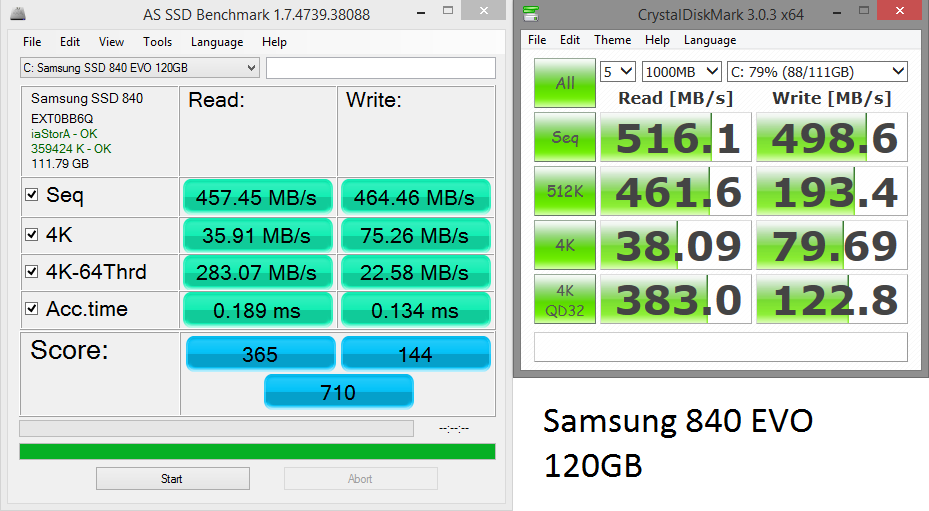
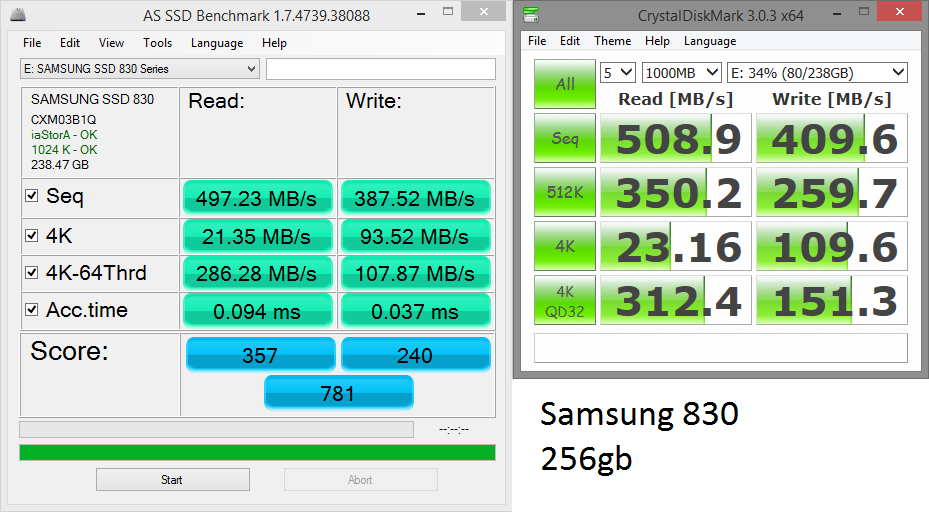
Ran the benchmarks off of a SanDisk X300 connected up with a USB 3.0 caddy.
Spreadsheet updated through Zavarrr's results.
I've also split the results into SSDs, mechanical drives, and Cache/RAM Disk sheets just to keep like with like. You should be able to switch between them using the tabs at the very bottom of the spreadsheet.
And if anybody wants to test their mechanical drives I suggest just using CrystalDiskMark and ATTO. AS SSD simply just takes to long to run.
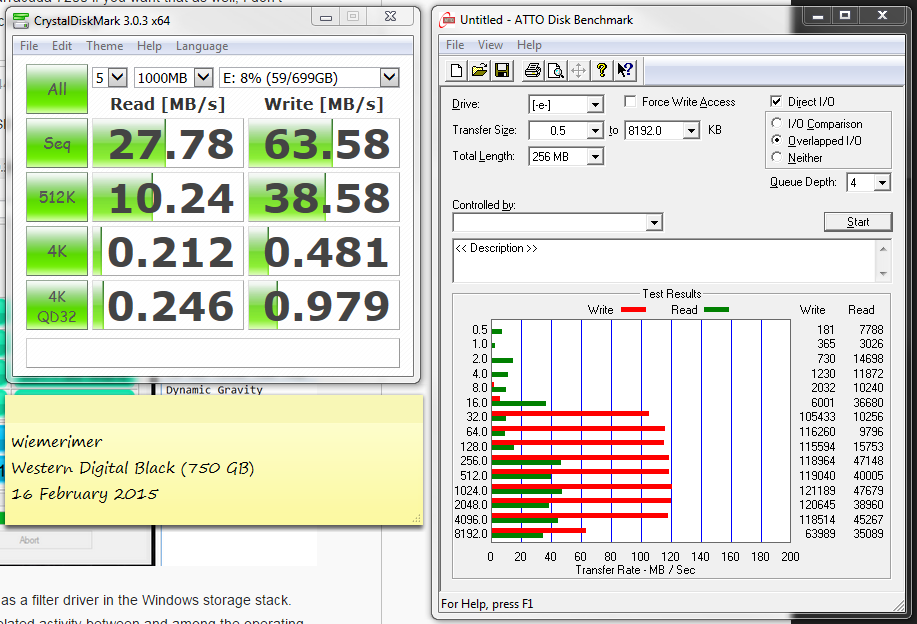
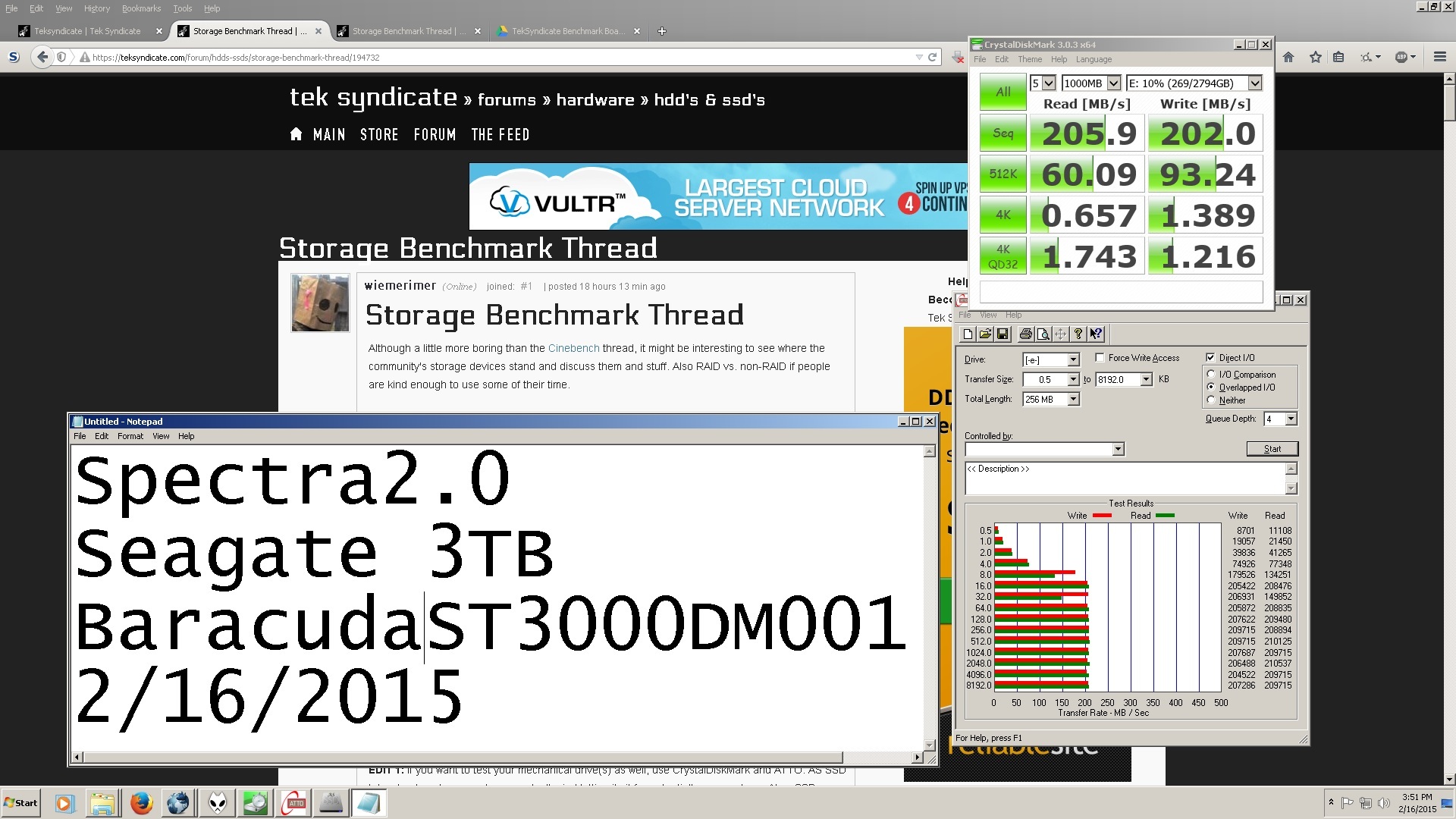
Also, to make my 750 GB WD Black legitimate:
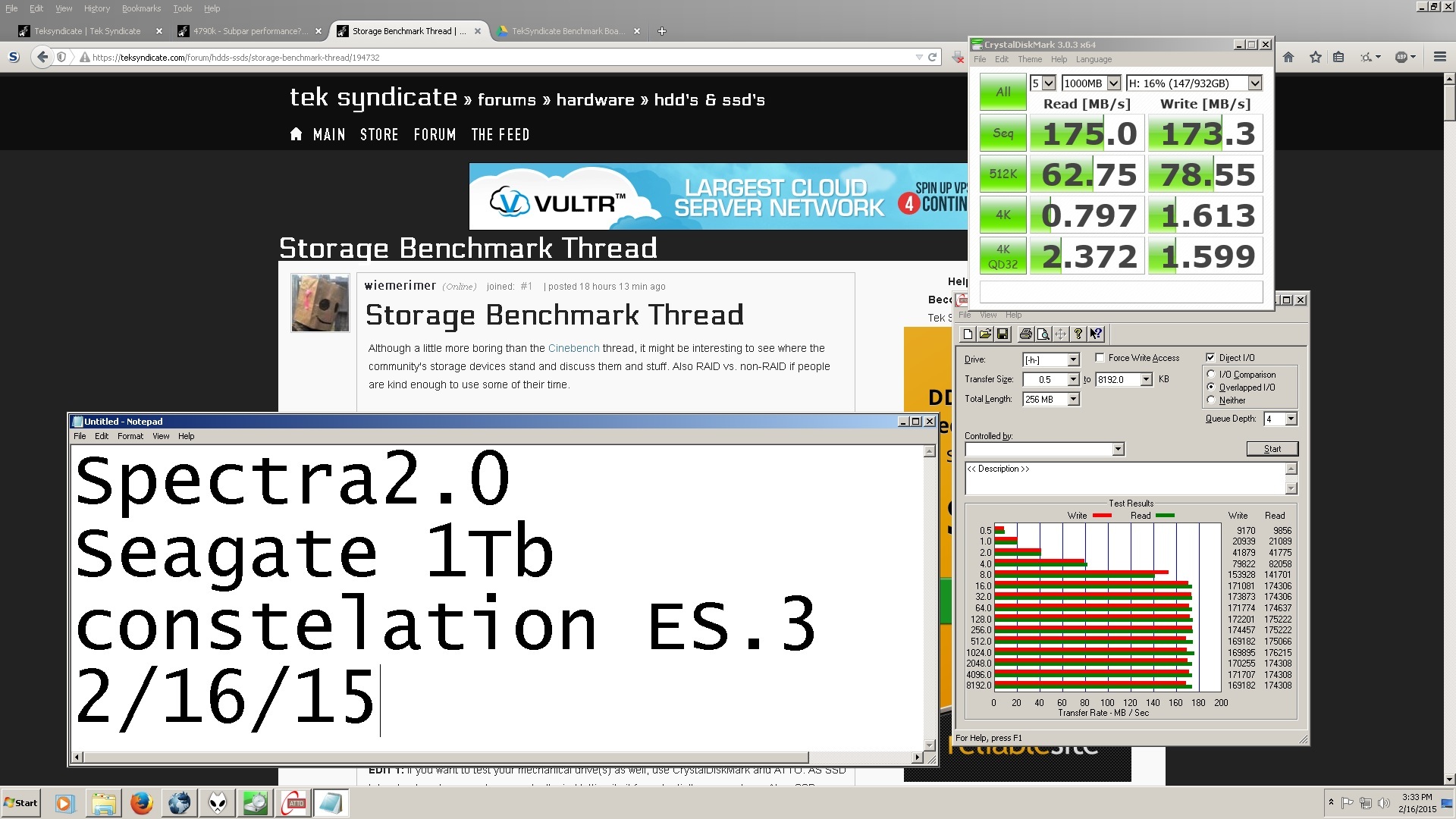
Relevant:
https://www.youtube.com/watch?v=n3B_GwiUGlU


Ok so raid didn't happen, Long story short Gigabytes raid driver dun fed up somehow
But in the meantime I got a new OS drive
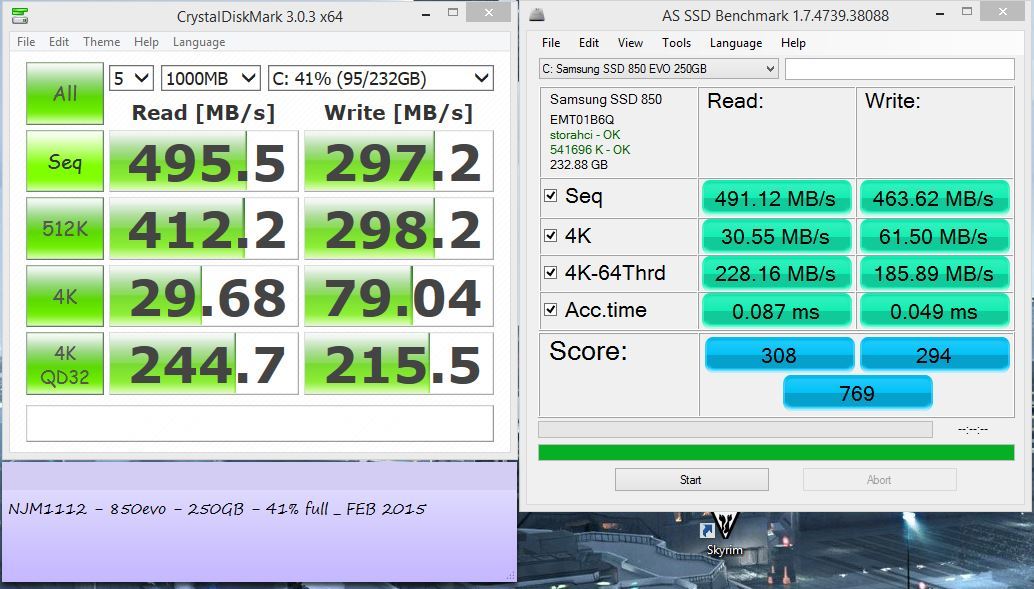
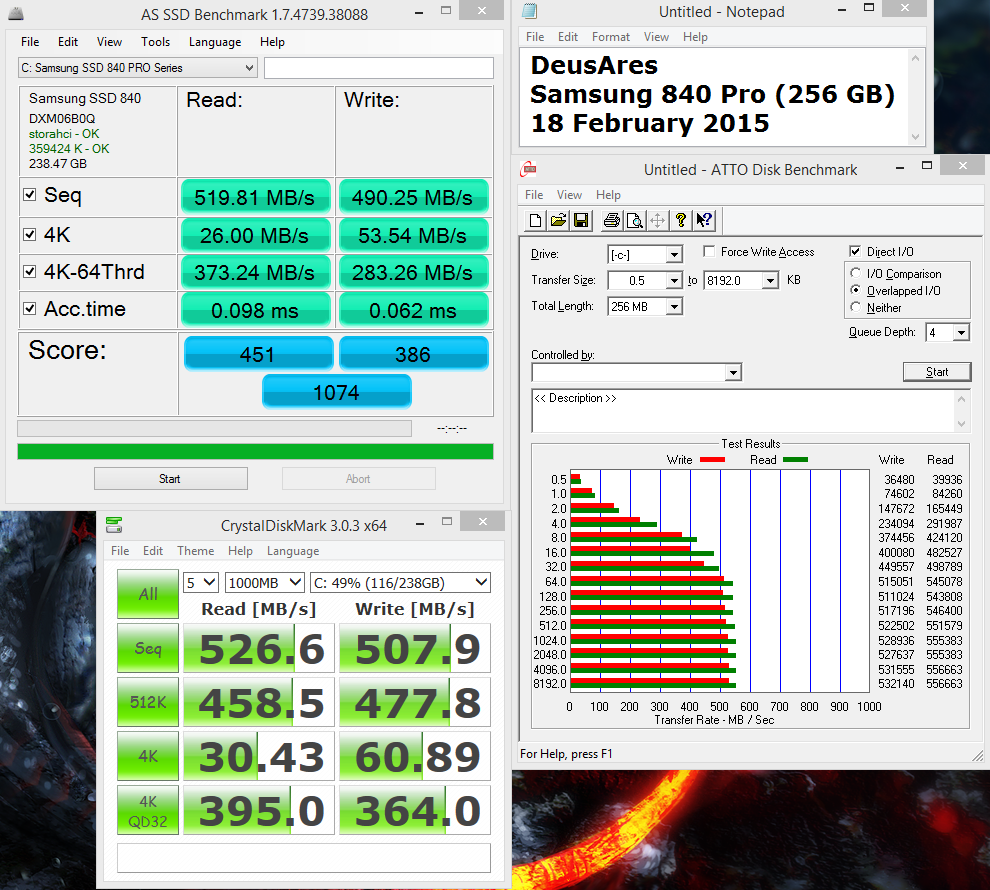
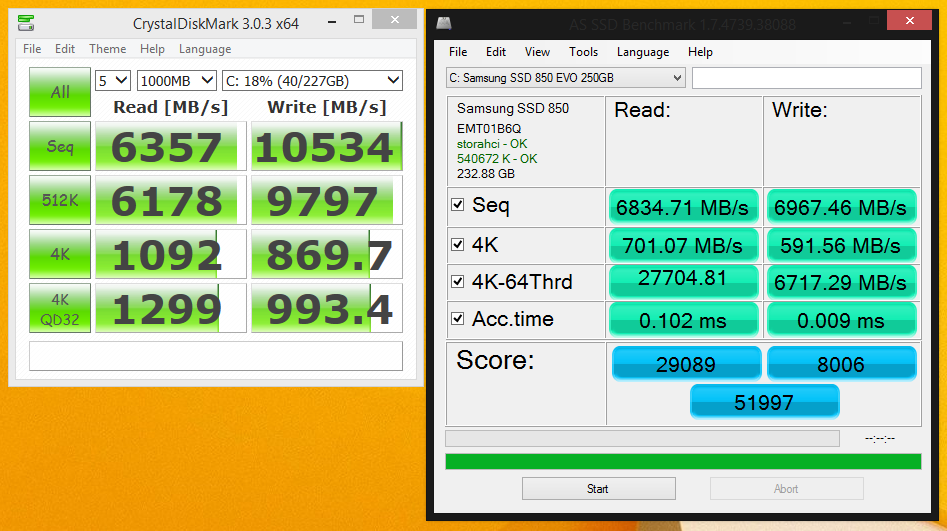
Here's my results with Samsung RAPID mode enabled.
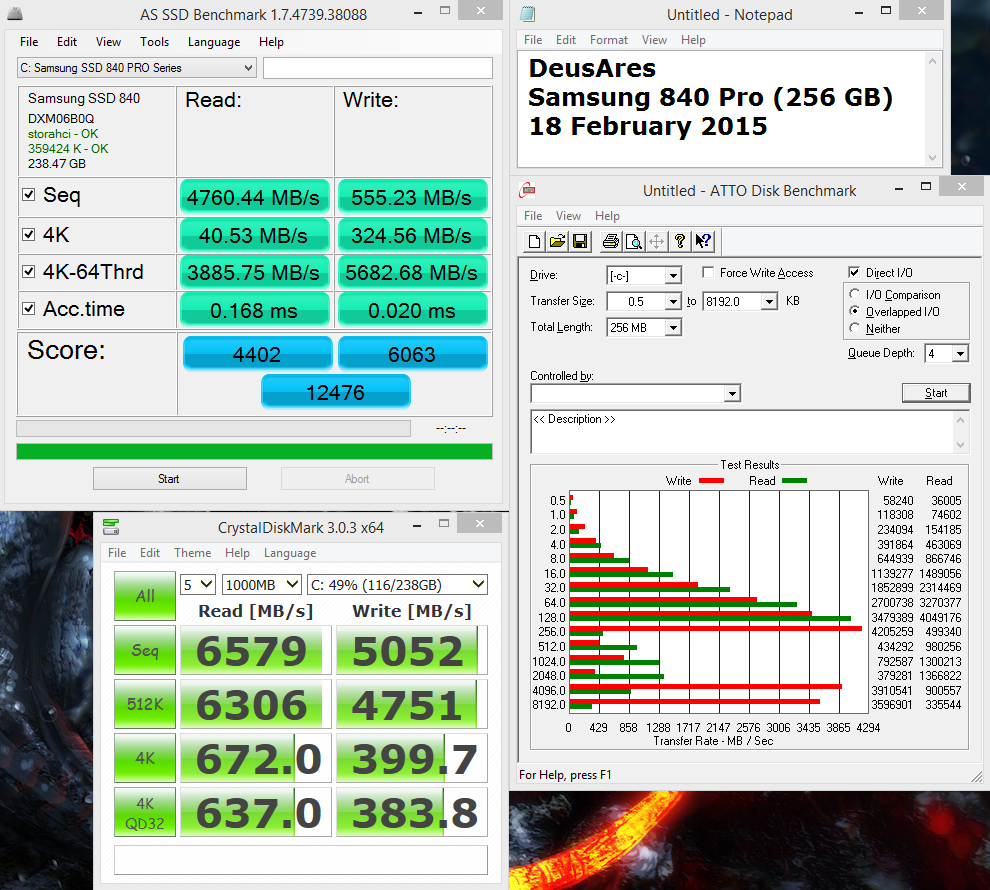
And here's my results with Samsung RAPID mode disabled.
my first build! http://imgur.com/gallery/8fF7a
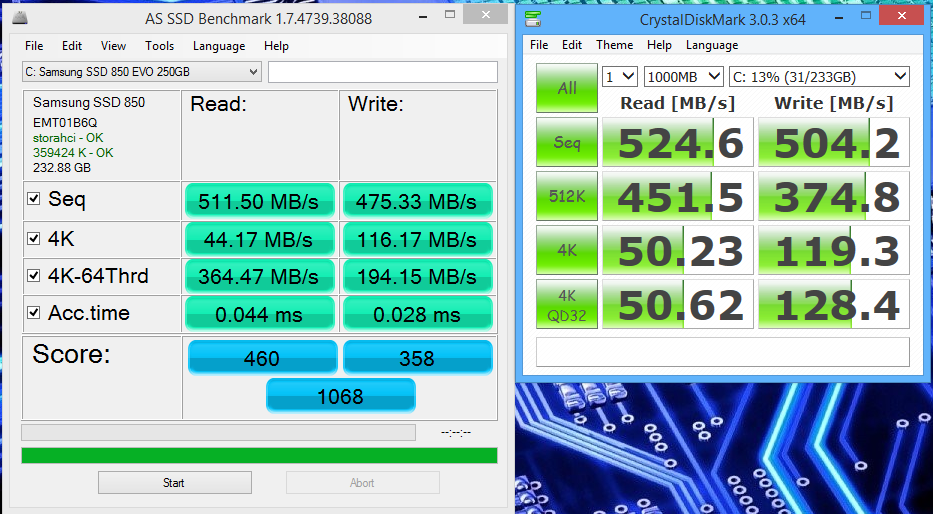
found the Samsung 850 EVO 250GB on sale for $15 more than the 850 Pro 128GB. had to go for it.
DO YOU HAVE IT PLUGGED INTO A 6GBPS PORT?
I'm not doing more benchmarks, but here are ones I have already done.
OCZ vertex 500 gig circa 2012-2013 I don't remember.

Next is a Mushkin 1tb reactor. I believe there is only one generation of these so far.

I am pleased with these results.
1 Like
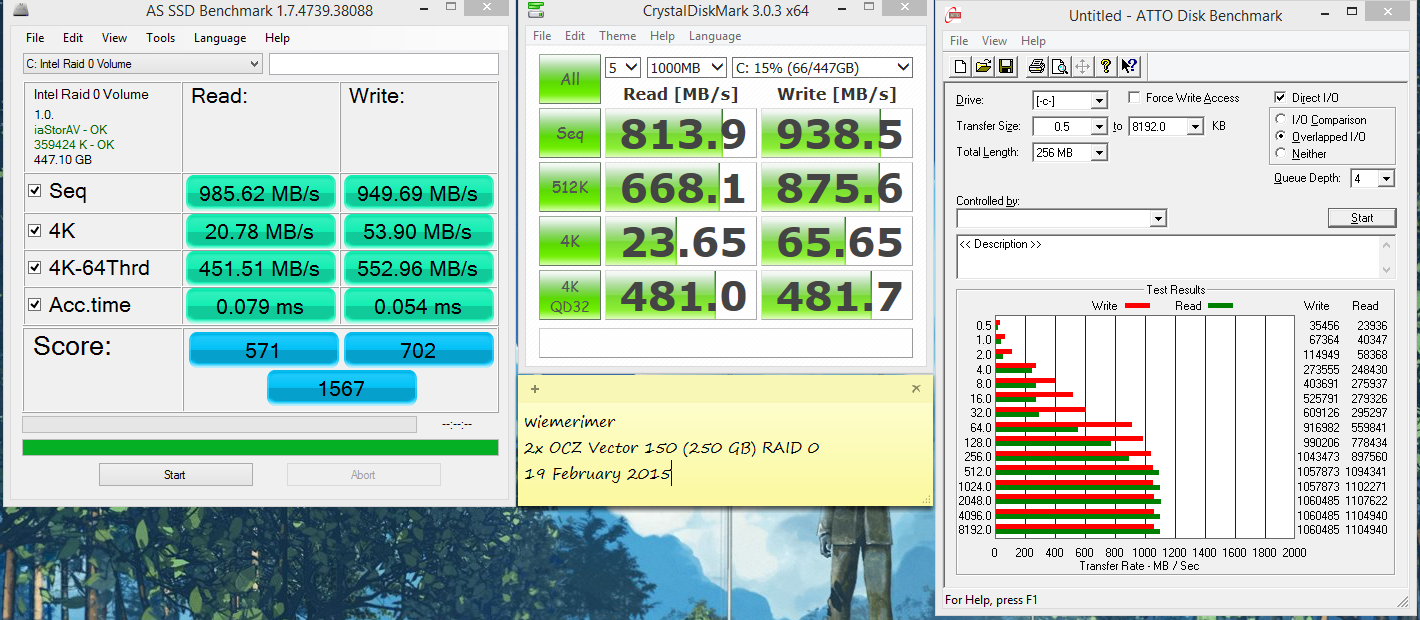
Two OCZ Vector 150s (250 GB) in RAID 0. Not too shabby.
EDIT: Spreadsheet updated again. Samsung sure is popular.
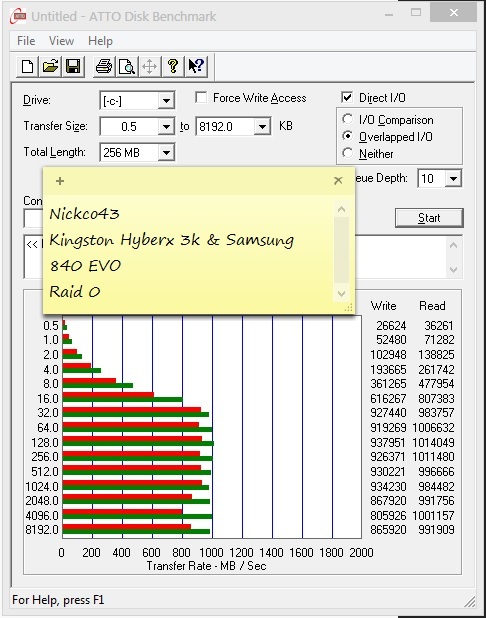
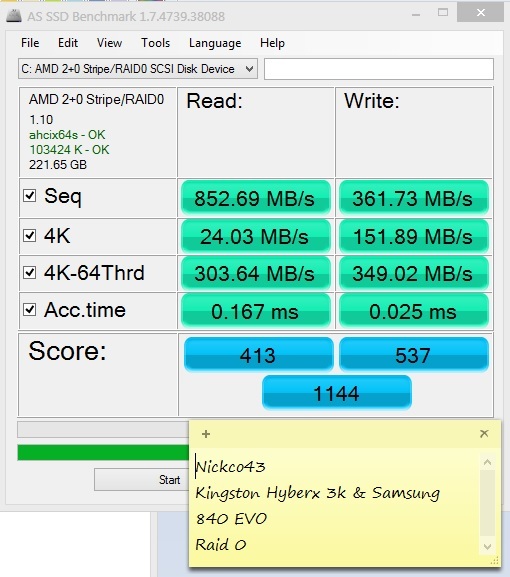
YES I DO!

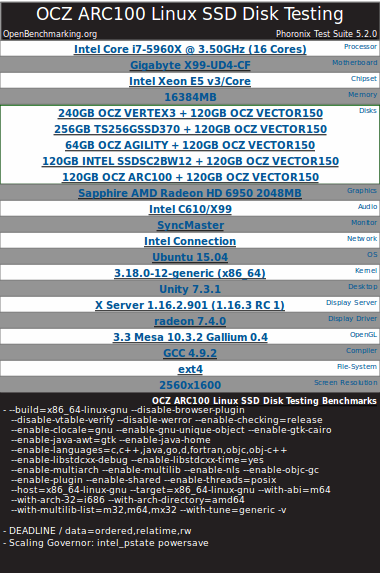
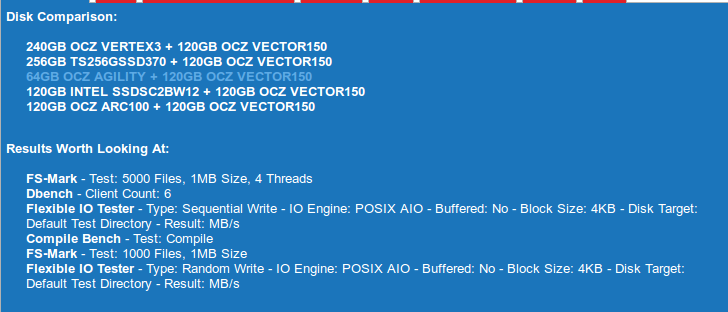
I pulled this test suite result from Openbenchmarking.org. Check out the site for more amazing and in-depth benchmarking results.
The Following is a list of the tests being run and what those tests are comprised of.
Flexible I/O Tester: Fio is an advanced disk benchmark that depends upon the kernel's AIO access library.
FS-Mark: FS_Mark is designed to test a system's file-system performance.
DBench: Dbench is a benchmark designed by the Samba project as a free alternative to netbench, but dbench contains only file-system calls for testing the disk performance.
Compile Bench: Compilebench tries to age a filesystem by simulating some of the disk IO common in creating, compiling, patching, stating and reading kernel trees. It indirectly measures how well filesystems can maintain directory locality as the disk fills up and directories age. This current test is setup to use the makej mode with 10 initial directories
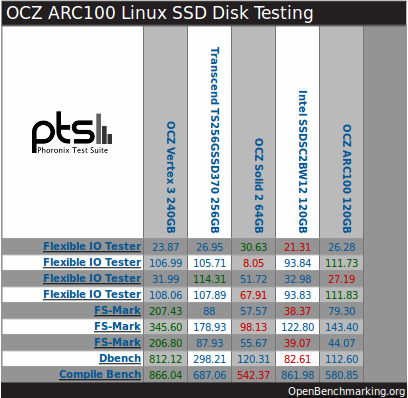
Flexible I/O Tester


FS-Mark: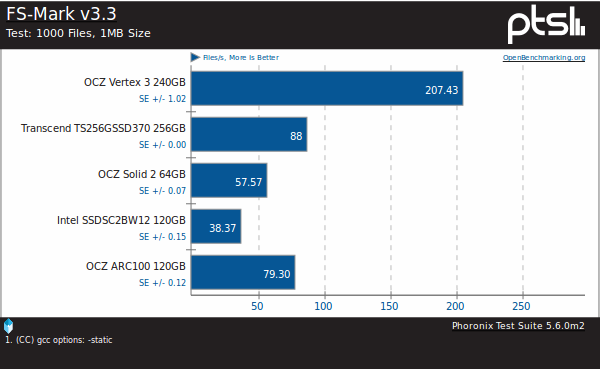
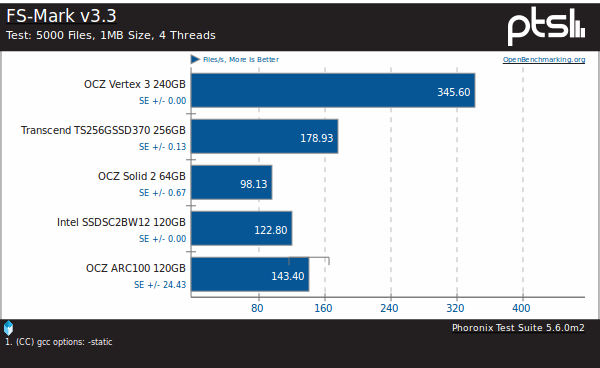

DBench
Compile Bench
ok the C drive is a 256GB Samsung 850 Pro
e: is a 3tb WD Black 3.5 7200
F: is an old laptop that i had sitting in a hotswap case is a 80GB2.5 5400rpm
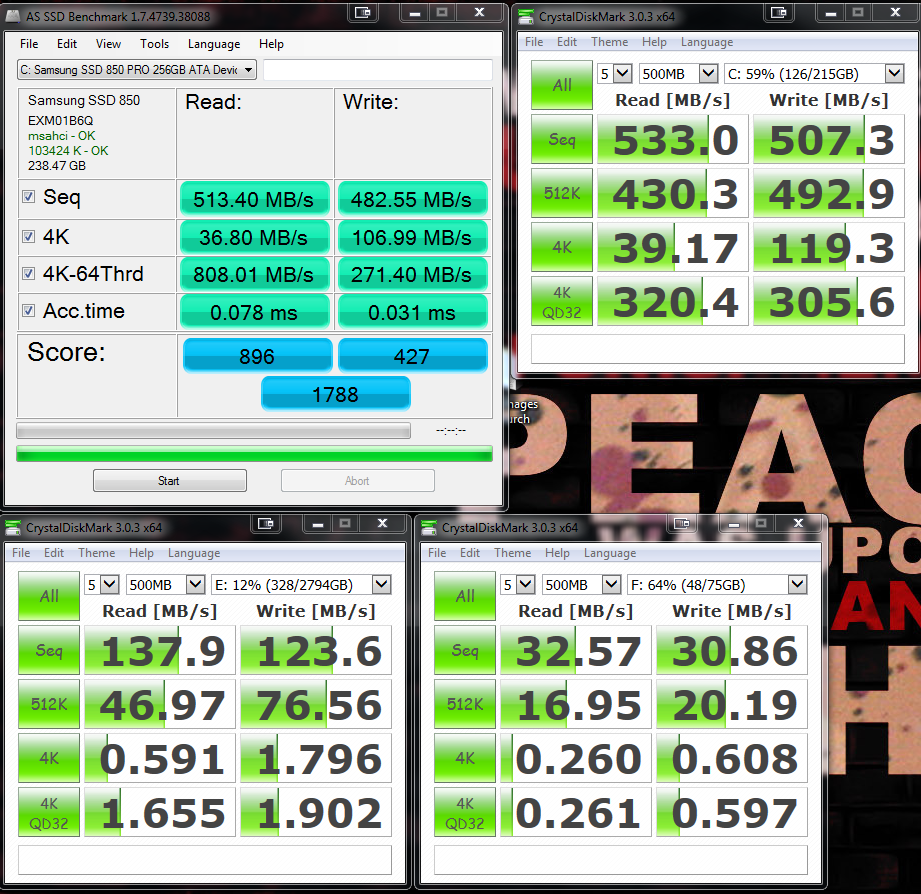
Updated again. I also stole the data from Logan's recent review of the Corsair Neutron XT.
I'm also going to look into the benchmark stuff LinuxMaster9 posted so our Linux friends can compare as well. The Linux tests may require more info though, like distro/kernel/versions/drivers/whatever.
I may also restructure the spreadsheet a little, because I honestly forgot IOPS existed when I came up with the idea for this thread. Restructuring will probably occur if/when I get the Linux stuff worked out.