Thinking of Northvolt (battery factory) here in Sweden…
Reuters
*** STOCKHOLM, Sept 23 (Reuters) - Northvolt plans to cut 1,600 jobs at its base in Sweden, or about a fifth of its global workforce, as Europe’s biggest hope in the electric vehicle battery market struggles with production problems, sluggish demand and competition from China.
Reliability, however, comes from redundancy. What is more reliable, 1 000 independent solar installations plus 20 wind plants plus 20 GWh of energy storage, or two nuclear power plants?
If you do the math the SWB grid will be more reliable every time. Those nukes will have an uptime of ~95% each (which is roughly 10% probability one of them is down at any given moment, and 1% probability both will be down at the same time) while the SWB grid will have an uptime of 99.99% or more.
So, yes. More reliable. Not less. Not to mention two nukes are easy to cut off from the grid in wartime, as we have seen in Ukraine.
Now you’re definitely missing the bigger picture. Northvolt is strategically important for the Europe as a whole, but just as, say, the declining sales of XBox consoles definitely doesn’t mean console gaming is dead, so too the transition marches on.
It is very sad that Northvolt is in the position it is, but that doesn’t make batteries any less relevant. Did the demise of Blackberry stop the smartphone revolution?
The math I’m seeing is that we will probably use a million times more lithium, concrete and other resources to get a worse outcome than just focusing on reliable power sources.
The idea that we should go backwards into the future and rely on weather dependent resources is just stupid in my opinion.
Let’s harvest energy from the blazing hell that is the depths of the earth’s mantle.
Or we can just try to find an alternative to steam turbines, and make reactors that can come up to 100% power within a few seconds.
Smaller nuclear plants that are less efficient may still make sense if they’re to suppliment when renewable power isn’t available.
Maybe using large-scale Stirling Cycle generators, or some form of photo-voltaic cells that use radiactive emission directly.
You’ve completely omitted the key fact that we are not in control over when solar/wind generate. We are able to capture a small percentage of what mother nature/God/your_preferred_representation_of_natural_processes_here throws at us. The weather isn’t redundant, no matter how many PV cells or windmills you mass-manufacture to collect it.
Yeah, two nuke plants could be down at the same time. Which is why that’s not how the grid has ever, nor will ever operate. Having hundreds of power stations that can be easily scheduled around each others’ KNOWN down times is far, far better than making a “grid” out of entirely renewables that operate on a schedule of shrug, with “well, we’ll throw a fuckton of chemical storage in there to probably cover the down time (assuming we generate enough surplus during the up time in the first place)”. When that doesn’t work out, you get the Texas blackout of 2021. You know what nuclear’s “storage” is? The fuel, that’s already sitting there in the reactor. Same with fossil fuels. Burn 'em when you need 'em.
Not really. SWB is much, much, much more flexible than Nuclear. Nuclear needs to produce at least 30% of the power output at all times to make sense. Even when everyone is sleeping in the dead of the night. Have you ever seen a grid with 150% capacity load? Things blow up fast when that happens.
SWB can track the demand curve with millisecond accuracy. As for lithium, there are other types of batteries. The cheapest to produce today only require seawater and coal (and no, not as fuel).
Except, you know… We can determine to the second when the sun will rise and set in a specific location. So Solar is not unpredictable; just not always around. After a few years of solar you can almost predict to the kWh how much a farm will produce, and when it will produce it. Some variations due to clouds occur, but for the most part… Solar is extremely predictable.
Wind is a bit more chaotic, true, but still pretty reliable forecasts are made with less than 5% error of margin the first 48 hours. So these powers are not really unreliable. If you have 12 hours of battery storage and a solar farm dimensioned to fill that battery plus surplus demand during daytime, in theory that would be enough to power 90% of humanity who live in the sun belt - but in theory pigs could be given wings and fly, too, so maybe there is a bit more to it than that?
Incorrect. The Texas blackouts of 2021 happened mostly because natural gas pipelines froze over, and wind power actually helped more than anticipated to keep the Texas grid going. Read the post mortem reports instead of spouting FUD.
My hot take: If Nuclear keeps insisting on the current road, then SWB will steamroll the technology by 2035. It is already over for the conventional tech, but breeders may still have a future for waste disposal. Maybe I am a brilliant mind - but statistically speaking I am much more likely to be a crazy loonie. Time will tell.
Either way… It’s not as if my words arguing the point on a random internet forum is going to change what will happen in the next ten years. I am far too insignificant for that, the capital is already in place and the green tsunami is already building momentum.
Actually too much inverter based production is very detrimental to the grid, but I guess you already knew that.
Given what information you have shared about your job. You should know that rotating mass is very important to the frequency stability of the grid. This is something wind and solar can’t contribute with. On the contrary intermittent production increases the money the operators have to spend on measures to keep the frequency stable.
Putting all that aside. There is zero track record of any nation on this planet who have decarbonised their grid using only wind and solar. You mentioned France earlier, and that is funny cause they are probably the best example of how to go about cutting fossil fuels in your grid. I’m sure you know how they did that during the 70s.
I would rather not say since my opinions are my own, but: the one smack dab in the middle of Sweden. The division I worked for got sold off to another multi-national and we are world leading in our field. That should give you enough clues.
Political affiliation - None, though I was a Pirate in 2008.
Indeed it is - And here is how you emulate it cheaply with SWB:
The whole point is to not purposely destabilise the grid in the first place. I don’t care if we can emulate it. If we have a good way to make electricity that’s stable and works at night and when the wind is not blowing. Why not build that?
Short answer: Because of the duck curve, which makes the old way of doing things incompatible with SWB.
So just don’t build solar then? Here is a ten minute video that explains why solar is completely outpacing all known predictions made and people are installing like crazy:
Funny thing is, even in Sweden putting solar on your roof would cost you ~$.08 - $.09 per kWh, and the transfer tariffs with energy taxes are $.1, so we are already at god parity in Sweden (mostly due to high energy taxes).
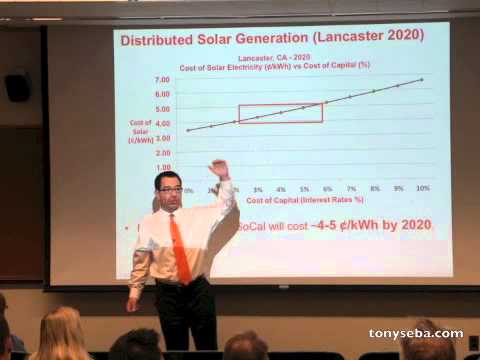
I agree with Mr Seba: Cost curves are like gravity, and since cost of green tech is now cheap enough the world will transition over. It is just too cheap to not do it.
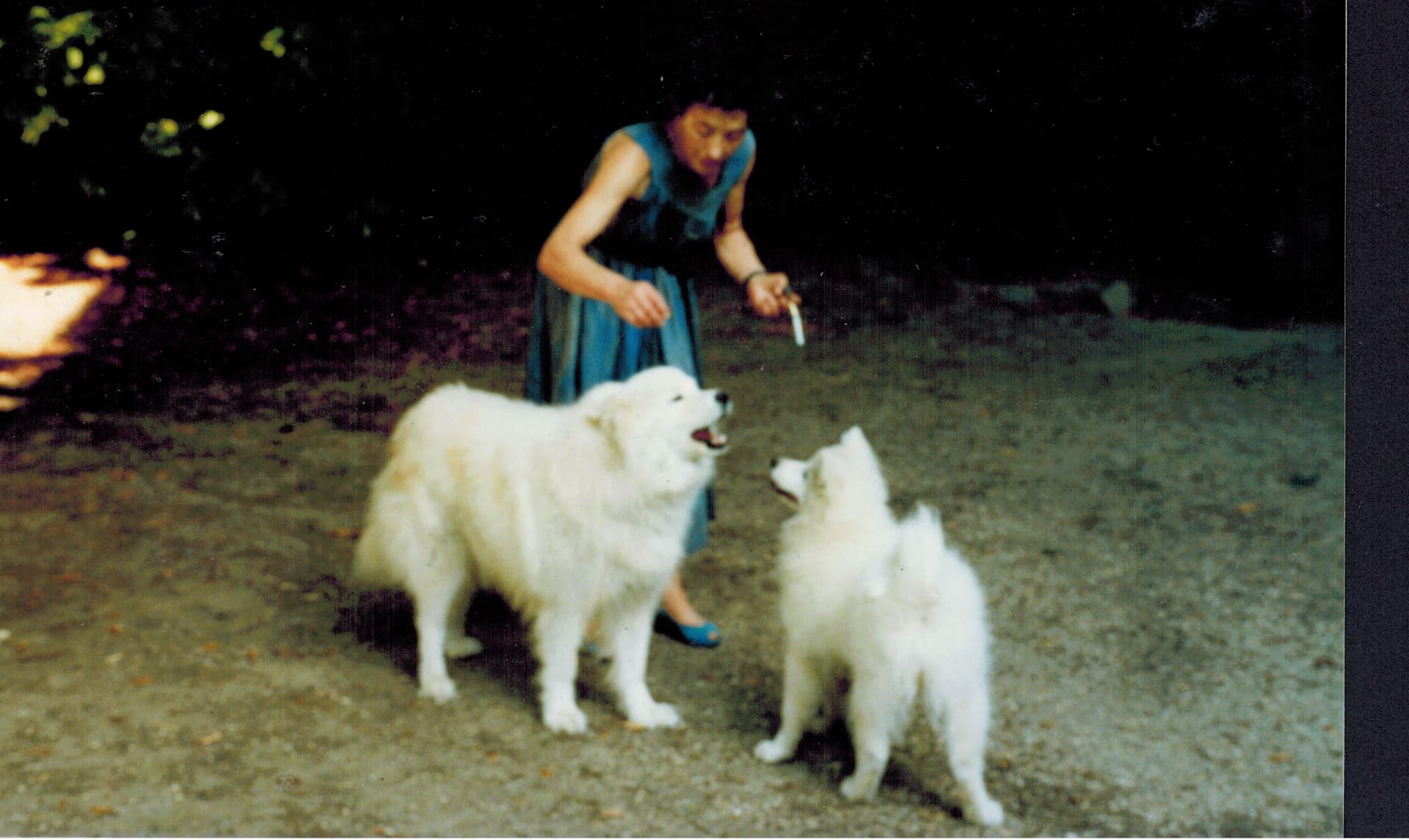
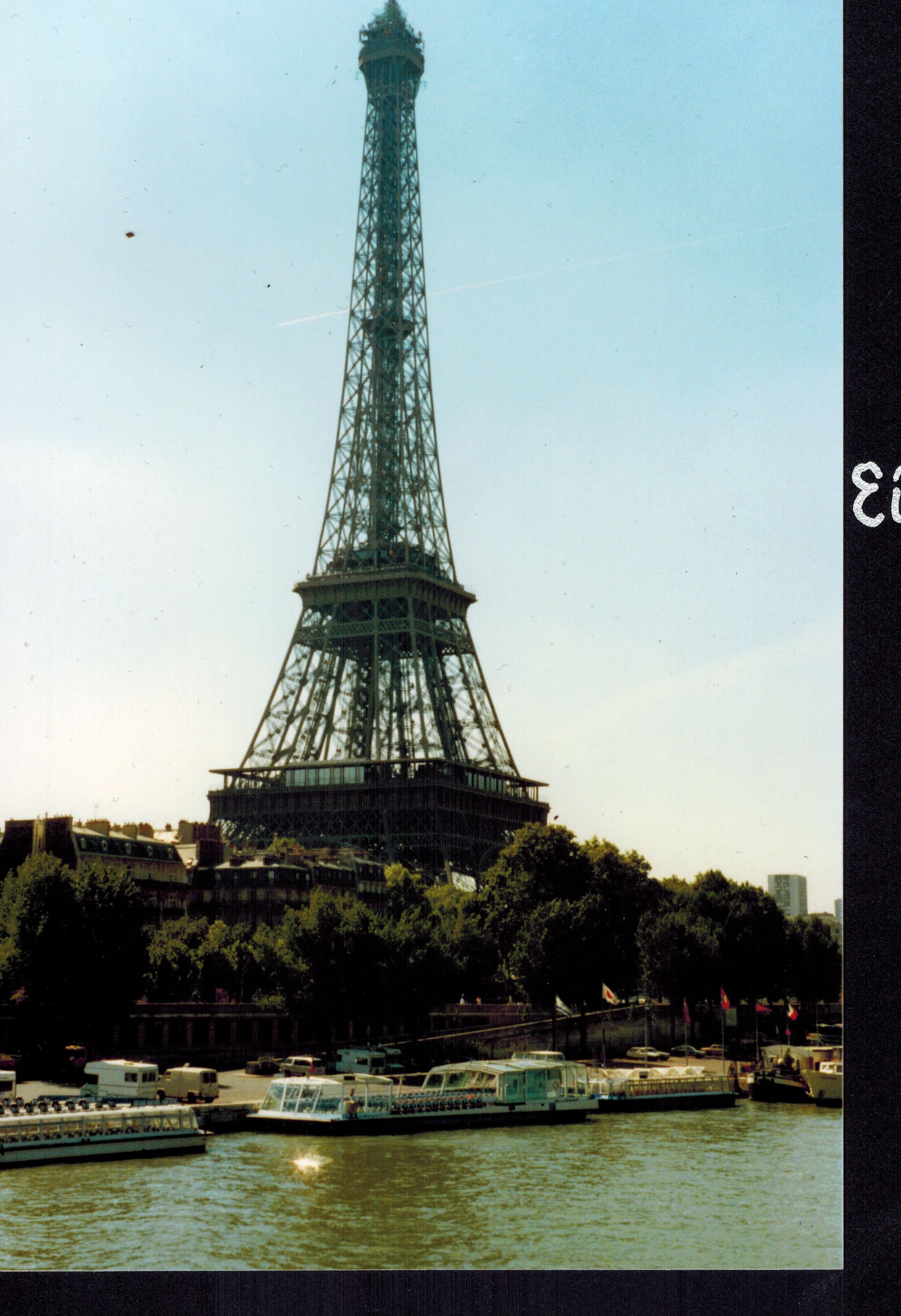
Samoyed. France in St Germain suburb of Paris and a landmark. Lol Pirate.
They had a lot of electrify. What Moore are you going to push? Will link to another forum here, pets.
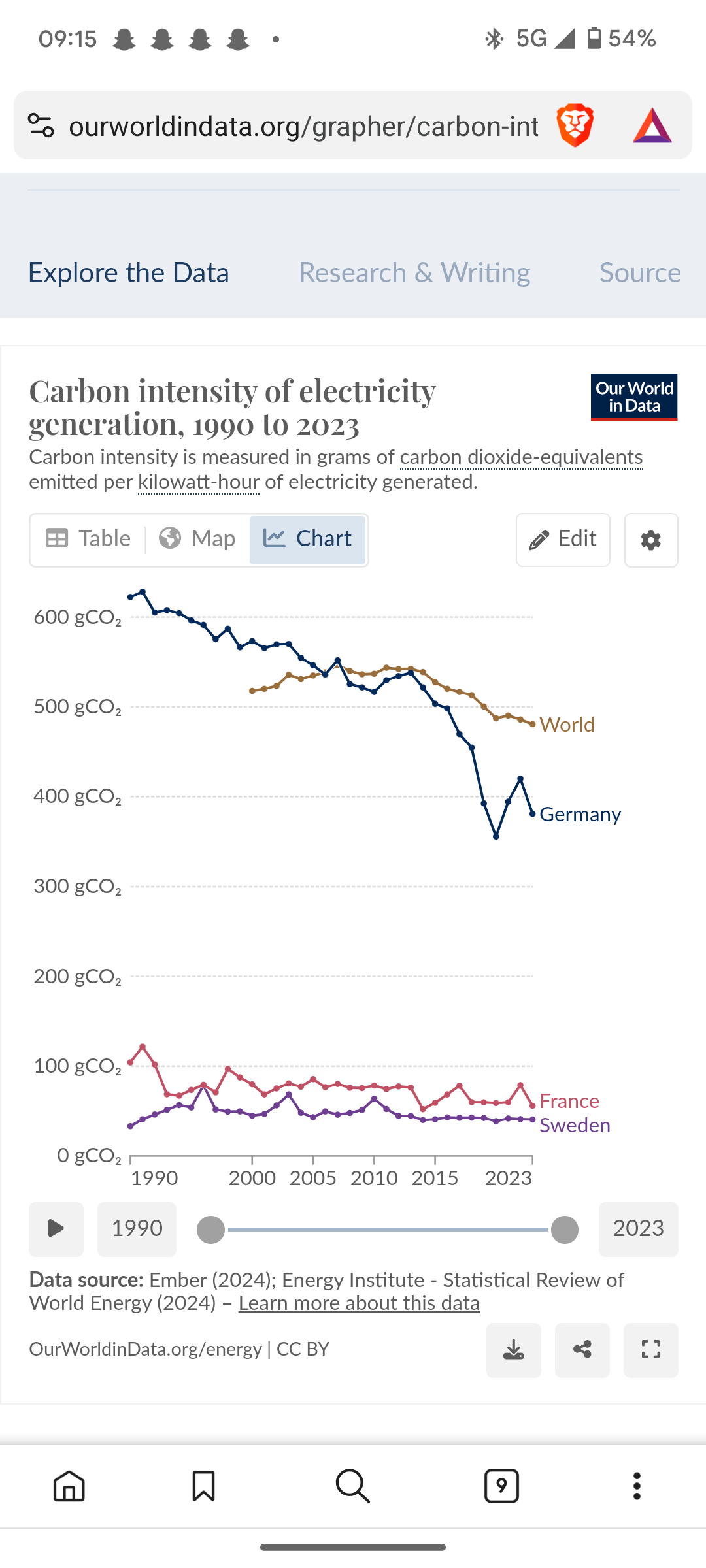
Germany has had massive buildup of wind and solar in the last couple of decades. How is that reflected in their emissions per kWh?
Added France and Sweden for comparison.
Seeing as the real goal of getting off fossil fuels is to reduce the emissions. How do we really do that?Seems to me that wind and solar just won’t do it.
Because corporations do not care in the slightest about stable supplies, night availability, or the weather. They just want profits, profits, profits… and nuclear is nowhere near as profitable as, well, anything else. That’s why.
It’s not a technical issue. It’s not an ethical issue. It’s not a moral issue. It’s not a common sense issue. It’s not a political issue. It’s just pure economics and greed.
Solar and Wind already won. Didn’t you get the memo? That train left the station ages ago and you’re still on the platform with those that missed it, grizzling.
Yep, it’s not perfect, but it doesn’t have to be. As solar (and wind) takes over the bulk of generation, two industries boom: Storage and Transmission. Grid-scale storage is already booming. Transmission is next — specifically long distance and extremely high voltage transmission… so that places where the sun shines at different times (and which experience different weather) are connected.
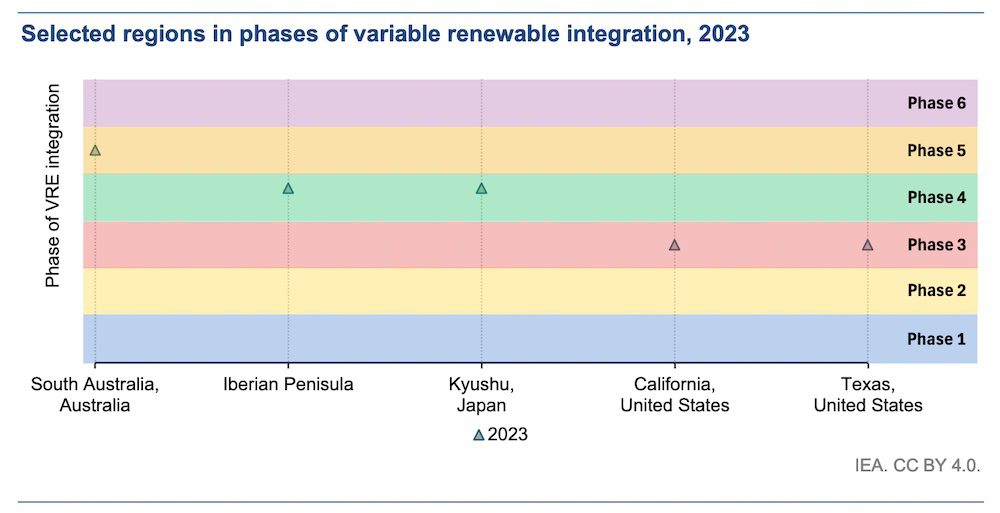
I actually live in South Australia. All of the concerns that are brought up here on a regular basis have either already been solved, or are currently being solved (as in infrastructure is literally being built this very second). Grid-scale storage projects are going up all the time, and now we’re building additional interconnects. The grid hasn’t been this stable in decades. Our biggest problem right now is establishment players (fossil fuel generators) manipulating the national energy market and artificially inflating prices — ripping off the consumers as much as they can before their legacy assets are stranded.
So yeah, from where I sit, it’s almost comical to listen to the objections.
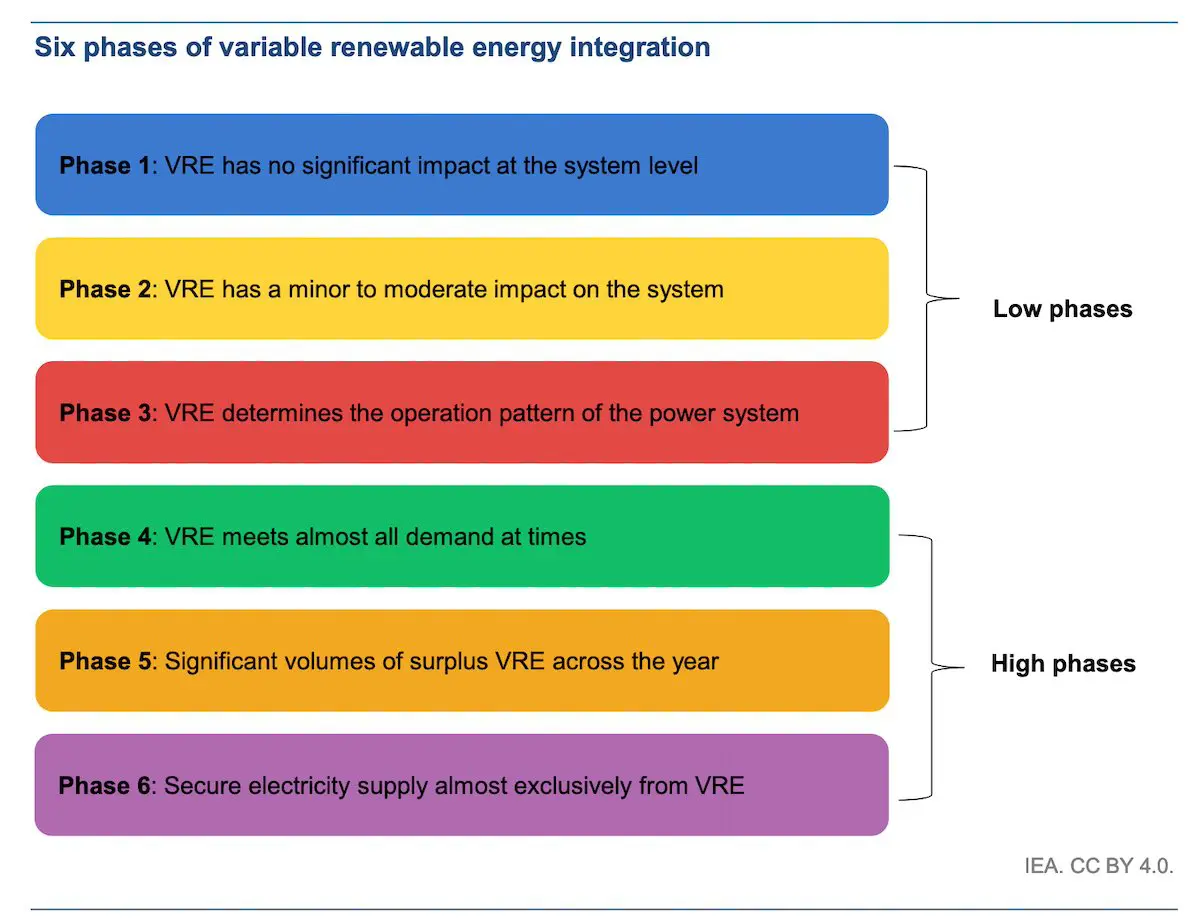
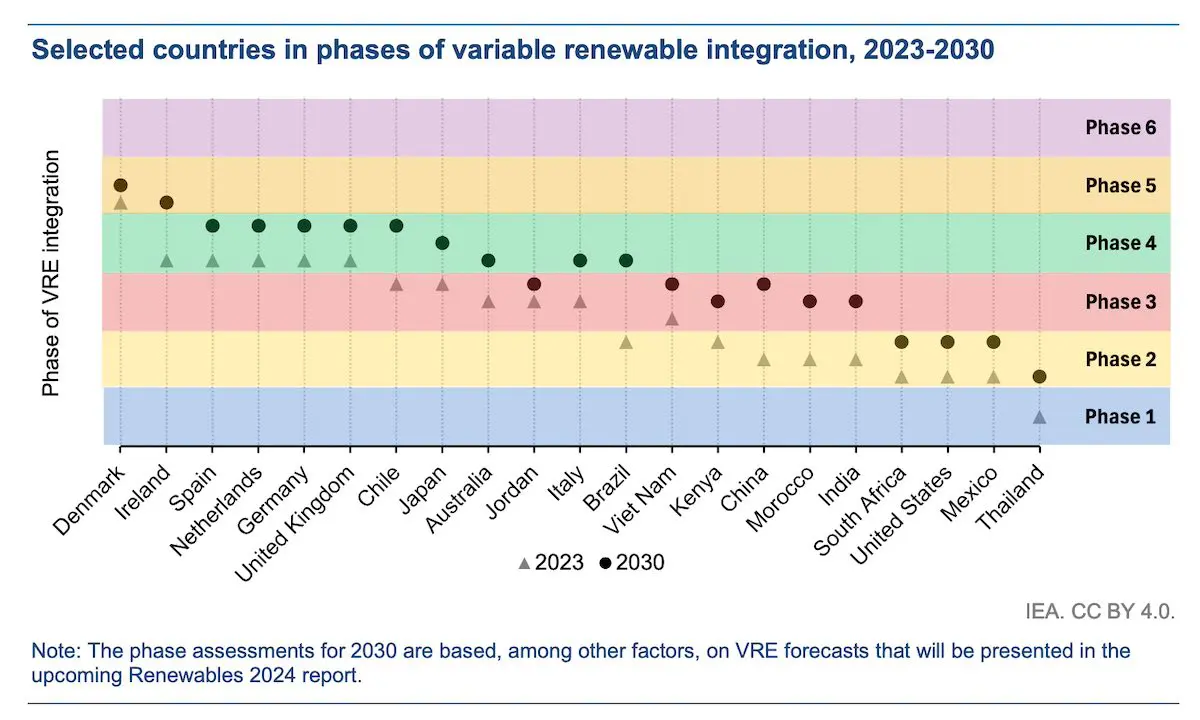
It’s all solved, people. Variable Renewable Energy (VRE) is not a problem. All we’re doing in South Australia now is ramping up.