No such info in Aida64 or HWinfo. CrystalDisk Info shows this, but it doesn’t explicitly state whether x4 is supported by the host machine or not.
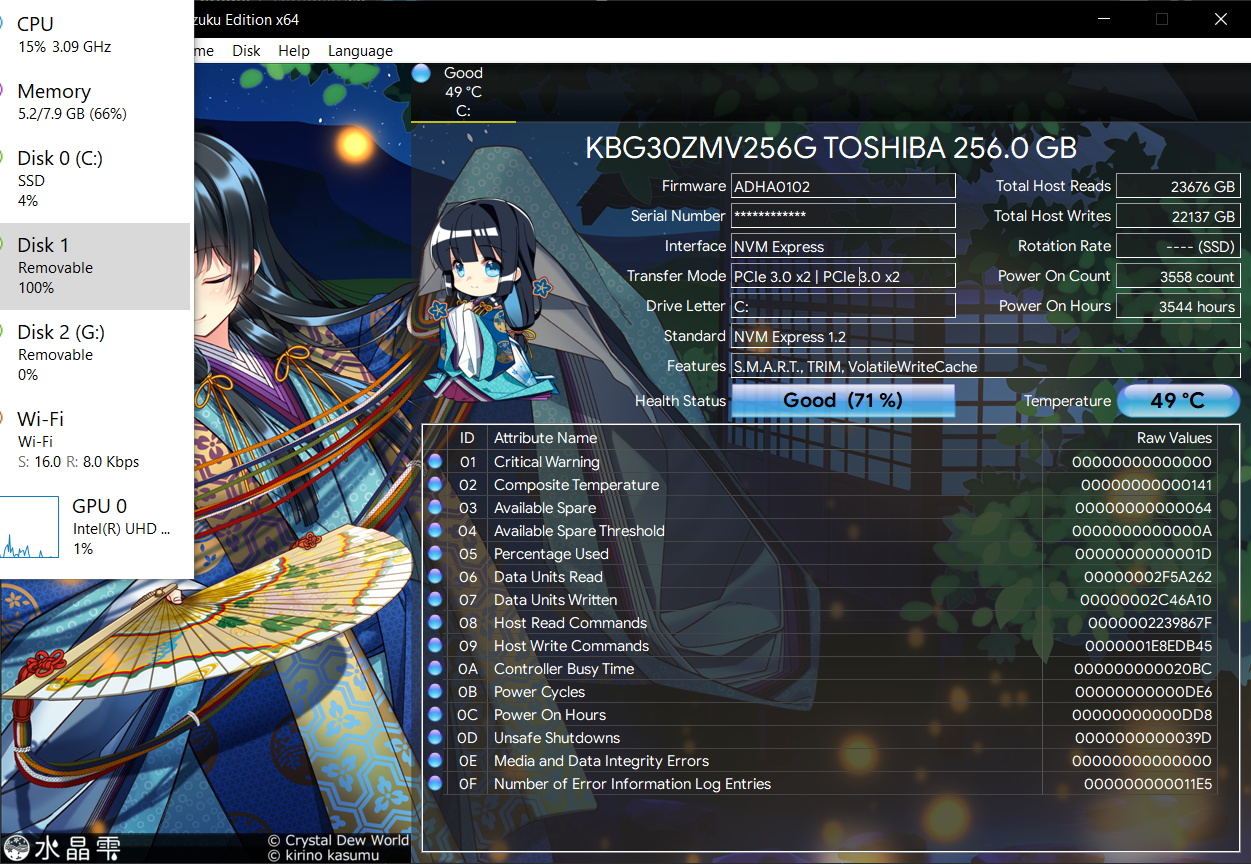
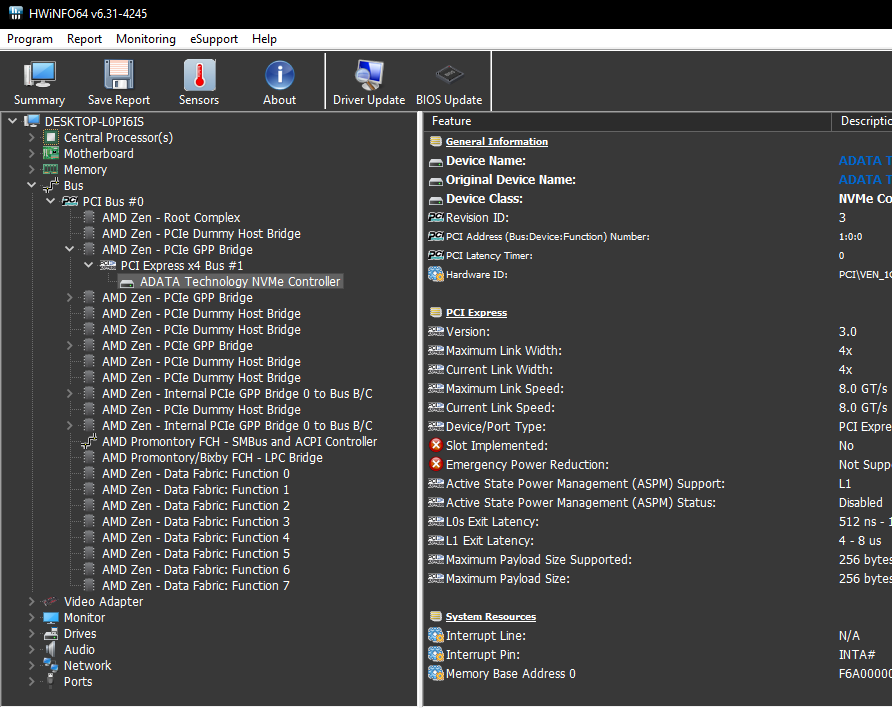
Yay, it does!
@stratego Thank you so so much!
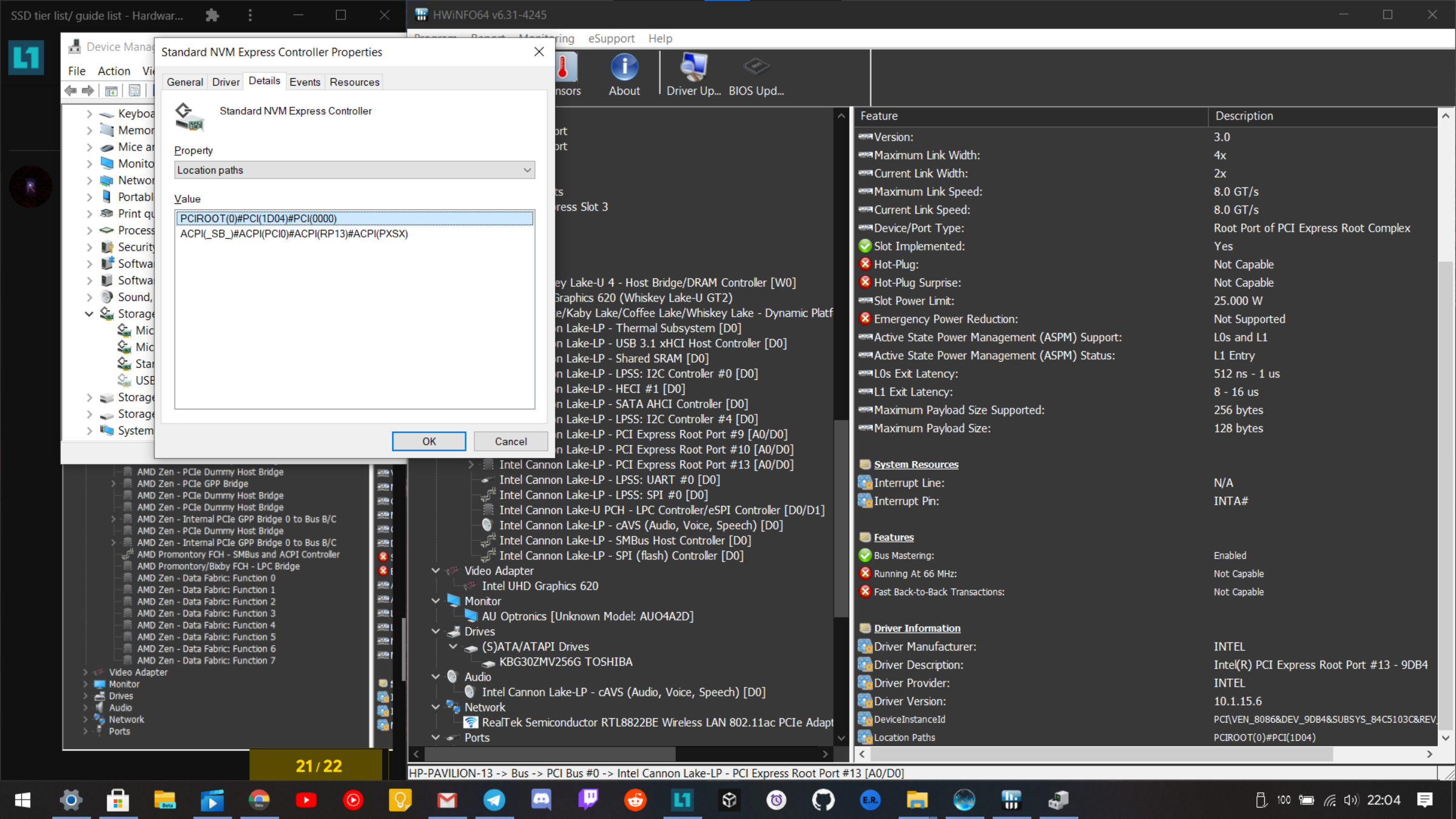
1 Like
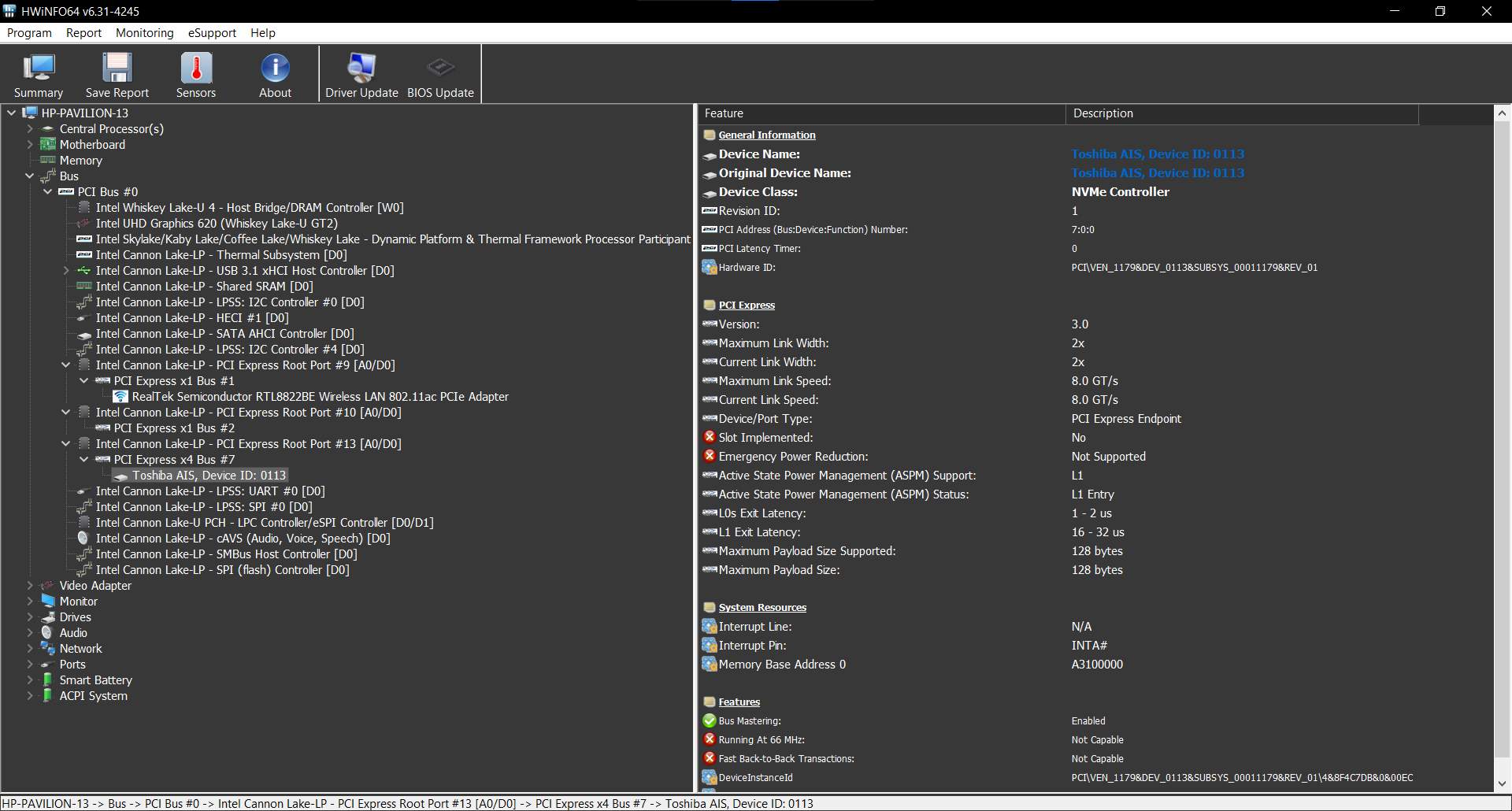
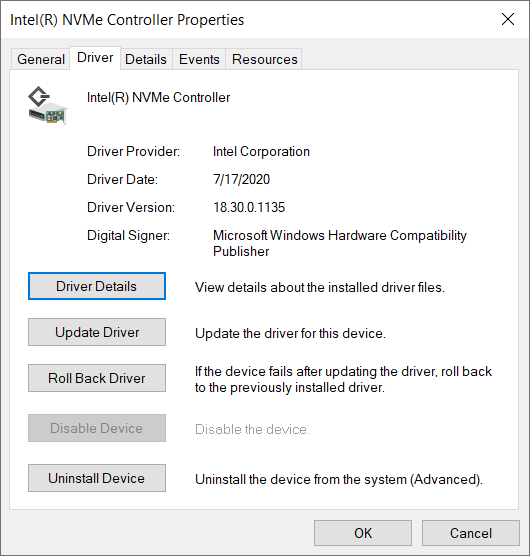
A follow-up: Manually installing the Intel NVMe Controller driver, even though Windows says it’s incompatible, or could be, (RST by default was only installing SATA Controller drivers for some reason) made the PCIe bus show up in HWiNFO.
https://rsload.net/soft/drivers/32058-intel-rapid-storage-technology-rst-17521024.html
1 Like

Thank you @Meicar and @stratego; It seems like everyone makes their own list like this, I too have a rudimentary list, just as a text file, that I slowly have been adding to; mainly to keep track of what is which bit level of MLC (or TLC, QLC if you prefer that terminology). Always nice to have more quick references for comparing SSDs.
To that end, I thought I should share another site/table I have used for comparisons:
This one comes from someone who is primarily on Reddit, as NewMaxx.
1 Like
Yeah, well my driver back when I began this tier lists was that there wasn’t a lot of good info for quick comparisons, but there was a lot of confusion around them, I’m planning on adding more metrics to this spreadsheet, but the wast amount of information is a bit much to include at once, as I’m looking for including IOPS, random speeds and expected life expectancy in TBW, but the issue there is that there is no reliable information for half of the drives and I don’t have the resources(mainly time and money) to even think about validating data on my own.
Anyways, I’ve added a few more drives to the list, hoping that for some of the gen4 drives new information will flow in that’s not just a paper launch.
1 Like
Indeed; maybe I just do not know where to look, but there is an unsettling lack of official information at times. SK Hynix’ consumer drives (S31/P31) for example, have a shocking lack of information, and in my list I just trusted Anandtech to have the acquired the correct information.
The issue is that a lot of the time one model can come in multiple configurations, so even when they test one config a few weeks later another config pops up sometimes with different NAND and controller, which leads to completely different performance.
That stinks. I wonder what sort of internal databases large scale companies like Google, Amazon, IBM, etc. use to keep track of these kinds of shenanigans and make their purchasing decisions. I doubt they just “wing it” from the marketing material.
They simply buy directly from the manufacturer and specifies what specs they need.
Oh noes, it seems the previously highly recommended SX8200 PRO may no longer be good top tier choice.
https://www.tomshardware.com/news/adata-xpg-sx8200-pro-controller-change
Recently got a SX8200 Pro for cheap. Have not tested it yet, but for my uses I doubt I will notice much of a difference performance wise.
1 Like
I take it Adata didn’t learn about Kingston’s V300 shenanigans.
Drastic hardware changes don’t usually go over well without a model number change as well.
Anyway to check what controller your drive has? Linux tools? Aside from taking out the drive (it’s under my gpu, too lazy to do that).
It’s not really that drastic. It’s marketing wise and spec wise pretty much the same. In some benchmarks it’s even slightly faster. In other cases it’s a bit slower though.
But yeah, it’s not a good thing what adata is doing and that hurts me…
It’s recent change and most stores still have the older faster controller. How large is your drive?
1 Like
1TB. Got it last week on a sale from national electronics seller here in Mexico. It could have been old stock they were just clearing out.
A quick boot into Windows to check with Aida64 shows my drive has the SM2262ENG controller (the good one it seems).
At the moment it’s pretty hard to tell whether or not there will be a noticeable performance impact, so far we have one source that has some claims, until there are more reviewers that show performance metrics I am not willing to speculate how it will impact recommendations.
In this case if the offered performance matches the claims of old specification there wouldn’t be any reason for dropping the drive from recommendations, but Kingston’s situation was different and well nobody has been recommending Kingston’s SSDs for a multitude of reason including the fact that they can randomly change hardware that’s inside.
Essentially the SM2262/EN/ENG/G are the same controller with minor changes in hardware and software side of things, as far as I know SM2262G is not available in stores as of yet.