So picture this:
You want to have high cooling performance with relatively low noise.
You could go for a normal setup, but… what if you just add a bunch of CPU blocks to the loop instead of rads, drill holes in the top of the case and then solder a bunch of tower coolers to the CPU blocks and mount them on top of the case, running the tubing out through the drilled holes?
Should be able to effectively fit 3 dual tower coolers sideways on the outside of most cases.
Sounds like a fun project, not so sure it’d be worth trying. Anyone got experience doing something like this?
By blocks you mean radiators; this isn’t nitpicking, this is random folks understanding one another 
You can have multiple radiators in one loop. However, you need also factor in that the more radiators, the lower your flow pressure.
You will soon need a dual pump system, or some good DDC pump, which however is noisier and less reliable and lastly due to the two aforementioned factors, relatively not preferred by people, ergo most good manufacturers don’t “invest” in their DDC variants as much as they do in the ones you’re probably envisioning right now.
Still doable, with padding (for mechanical purposes, ie vibration coupling/de-coupling) below the pump and padding (for accoustical purposes this time) around it; ie a mini-chamber of sorts dedicated to housing said pump, within your PC chassis.
It may lastly get more complicated depending on whether you choose said radiators to be in parallel or in serial a connection to one another.
All said and done, you then have a major headache, ie the maintainance of that thing; good luck draining it “nice and easy” once or twice a year (once a year is the absolute minimum, twice much preferred).
But yes, a fully passive liquid cooled system, zero fans, is 101% possible; just needs time, planning and more money poured into it; pun intended!
With no disrespect to a forum i love (this one right here), this isn’t the place to ask for this.
Head over to dedicated “OC” forums to get this done, if after reading all this you’re still so inclined
My humble two cents, not worth it. This is a “ask me how i know” kind of thing. You can have minimal noise, with a minimal LC setup, if it’s done right. More is superfluous, nevermind the CPU we’re talking about; this stands even for a maxed out Threadripper/EPYC. Likewise for a power hungry GPU.
Depends on the objective, I think. I wouldn’t go into it expecting the block+tower thermal resistance to be lower than a rad, so if performance is the thing it may be disappointing. If it’s about trying something different and quantifying how well it works I don’t know of anything like it.
The soldering part seems enough hassle I’d be tempted to use direct die blocks and AM4/5 favorable coolers to minimize the gap, prototyping with a more conventional gap filling TIM like MX-7 or Frost X55. If it looks worth it then maybe lap and do the soldering.
Since most cases have top 120 and 140 fan mounts I’d probably default to adapting from the mounts to the block hardware and leaving the tubing internal, though that admittedly can get fiddly with fin dimensions, fan clip clearance, and offsets. If you want more towers than mounts then, yeah, external loop.
Woot, i’m stupid!
You did mean actual, literal blocks.. OoooK.
No
-
Blocks are way more restrictive than entire radiators can be; you’d be talking some serious DDC chaining
-
You’d need buttloads of blocks..
Apologies for misunderstanding, i’ve seen the term ‘blocks’ used so often, my mind instantly ‘translated’ for me; my fault; and thus, an extra apology too for the rest of my original post, which in retrospect might appear all too pedantic? Given the original question?
Sorry!
Was this a “why not post this” kind of a thing? Or did you have something in mind that brought this about?
Kind of a stepping stone towards a different project. Been wanting to run an external heat exchanger setup to run liquid cooling with multiple systems in parallel. The reason being that I want to set up a large radiator rig over the window (4x480mm, it’s very wide) so I can exhaust the heat out of my 2 room apartment lol, and I have a natural distrust of quick connect couplings.
If something like 6 cpu blocks could be used instead (like 3 in parallel and 2 in series per system) it’d offer a different option if I skip the soldering and just bolt them together… or at least a fun experiment.
Realistically, a heat exchanger with quick connect couplings would be much more feasible.
No worries lmao, it’s an unusual use-case.
It’s not for an AMD setup, are you referring to direct die blocks specifically because they’re made with tighter tolerances? Soldering the blocks to the tower coolers shouldn’t be too difficult using some insulation and a heat gun with low temp solder… I think? Definitely cheaper than direct die blocks though…
Two room apartment is small (ergo a good thing in our case), but that doesn’t mean much on its own, you’d need take into account i) the heat produced, what’s in it, all in and ii) what/where you exhaust at.
A large window isn’t necessarily a good thing, especially if it’s on the eastern side, or close to it.
So that’s one parameter.
Two, natural law of convection; you want a smaller opening, so as to facilitate an acceleration of the air exchanged through it; and you want it high up. Are you gonna rig the window? Could look awful, lest you fashion some wooden/MDF frame to fit around the exhaust.. and even then, am having ghetto-modding images springing to mind.
That all aside, if i get you right, you’re on a very academic level thinking of an all-in passive heat regulator, on to which you’d eventually hook up the PC(s) as well; correct?
This is.. work
You sure a humble AC unit wouldn’t solve all that for you? Are you in the US? I think you can by now find the non-central unit variety over there as well.
Work aside, humble advice from the old fart, we don’t F around with heated water on pressure. Doubly so in tight enclosures. Not good. So if you dig into this, you better do some science™
On a very theoretical level, there are companies that can fashion you radiators/exchangers that are meant to be external, ie no jerry rigging required. But custom dimensions=one off kind of work; that’s the one you dig deep for. It being why i asked for a humble, single AC unit.
Doable; but.. impractical and potentially either very expensive, or very dangerous.
1 Like
@THEkitchenSINK did something to this effect. Theres a thread somewhere.
2 Likes
enjoy some reading
i ended it cause i had alot of learning to do and moving and life happening
basically thermal mass to thermal dissipation will be the goal. if the thermal mass can lose heat faster than you dump into the overall mass this will work. its how most passive cooled systems work. to avoid high cost i used water and aluminum for thermal mass. think like a hot water radiator for heat
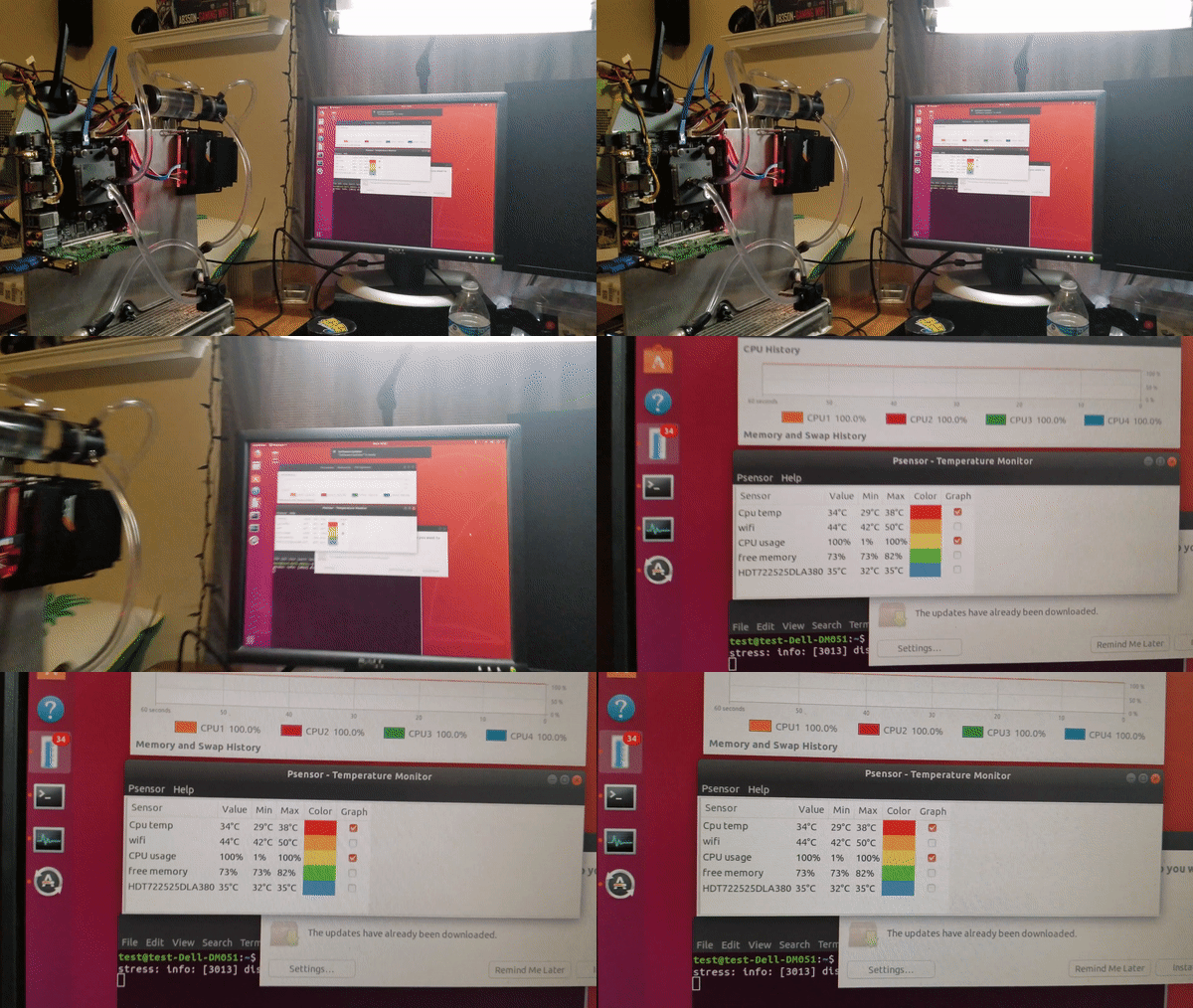
1 Like
But, those tower coolers are effectively radiators in a non-optimal configuration. So you are replacing something that is designed to fit in a spot and work well, with a lot of custom work, protrusions from the tower, and less efficient cooling. On top of that the CPU blocks you are soldering to the bottom of these coolers are not designed to put heat into the air coolers, they are designed to pull heat away from the bottom of the block and put heat into the water, so you lose a ton of efficiency there by having a small area of micro fins to transfer heat back to the air coolers rather than large radiator tubes with the fins right there. Plus CPU blocks have a lot of restriction, so you have to get a more powerful pump and turn it up higher as well meaning less life and more power draw.
In the end you will have spent probably 3-4x the cost of a couple radiators for much worse performance and a lot more work.
If you want a crazy external cooling setup to the tower, look into Heatkiller’s Mora radiators:
Or you can always chain one radiator into another. My setup is ridiculous overkill. It goes from the reservoir with D5 pump into CPU block, to 360mm radiator, into GPU block, to 120mm radiator to 360mm radiator, into reservoir with a D5 pump, into 360mm radiator, into 360mm radiator, back into the original reservoir. Why? Because I could. And yes people should really also ask, “but should I?” before doing a setup like that. lol
1 Like
Within the next 3 months, probably 800W at minimum/idle and closer to 1.6kW on average in my living room. Possibly more over the next year. A portable AC is an option I’ve considered, but my electrical cost is roughly 30c/kWh and it would vaporize the fuse every 20 seconds unless I run a very long extension from the kitchen. It’d get very expensive, very quickly. The ventilation is also pretty mediocre, to the point where I already have to occasionally open the window during winter because it gets too hot.
This sounds way beyond what I had in mind… I think? Unsure about the terminology.
The idea is to have a single closed loop for the exhaust with a liquid-liquid heat exchanger connected to something like a distribution block with the couplings, and then connect the PCs in parallel to that. Ideally they’d all use the same loop to dissipate the majority of the heat. Would very much prefer a solution not requiring fluid couplings as I’ve seen them fail one too many times.
I just want to keep the apartment below 50c during summer, which it’ll hit easily unless I can exhaust it.
It should be possible to attach the radiators to a curtain rod (or an aluminum profile) and some 3D-printed offset mounts and a simple plastic shroud to prevent it from blowing back in sideways. The window tilts inwards and leaves a gap at the top that I was intending to exhaust the air out of.
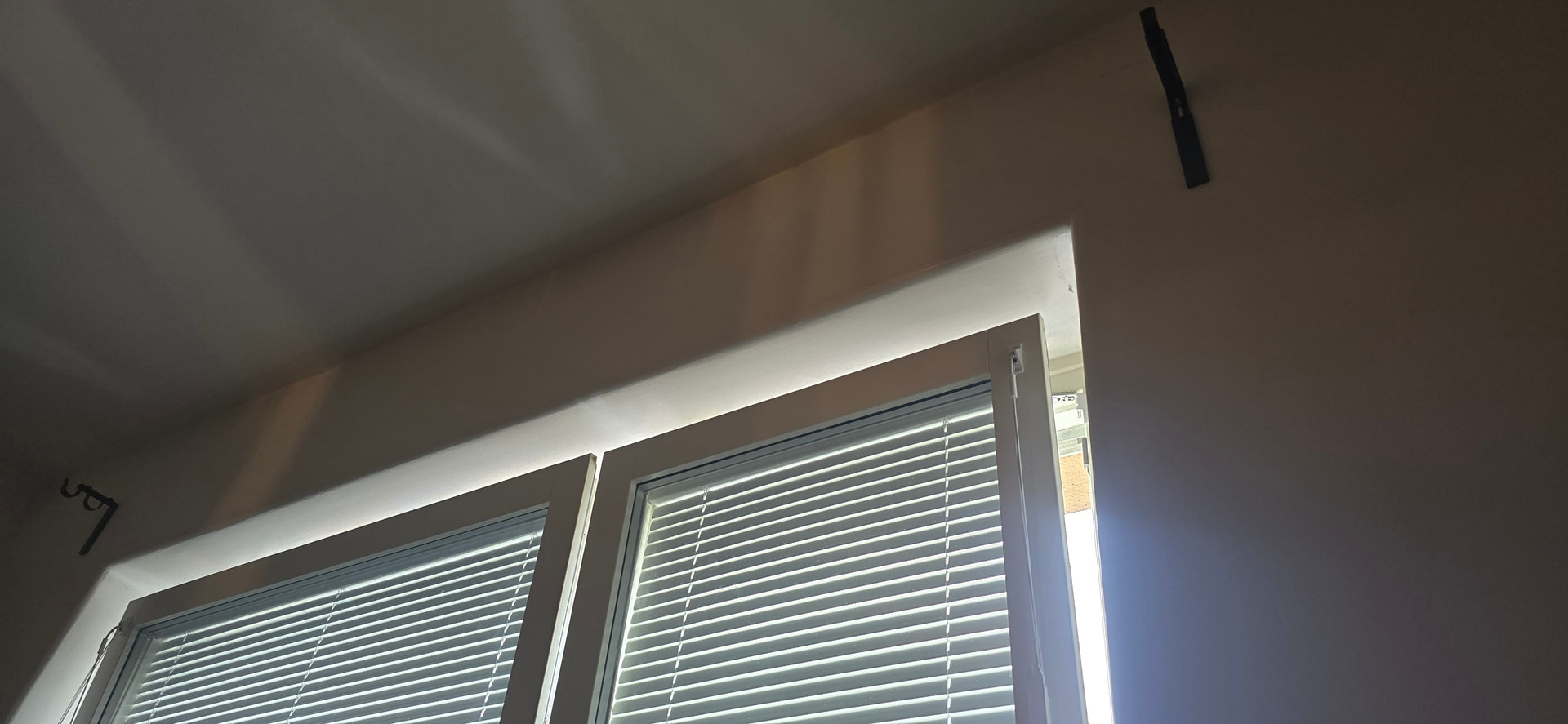
As a mechanic, I’ve seen the consequences before. Not too keen on having a coolant explosion indoors lol. Would likely need an expansion tank in the loop considering the volume of coolant involved. Might try getting something along the lines of a motorcycle coolant reservoir along with a pressure regulator.
It’s a lot of work, but it’d be a pretty interesting project. Am I overengineering a small problem? Absolutely.
How did you come up with that solution in the first place? It’s intriguing.
i was at a car show and saw the transmission cooling radiators those cylinder rads i used (was cheap at the time) and saw a old cooling tower from the early 2000s for external use and put 2 and 2 together to make stupid choices also the flex tape meme was going on when i started documenting
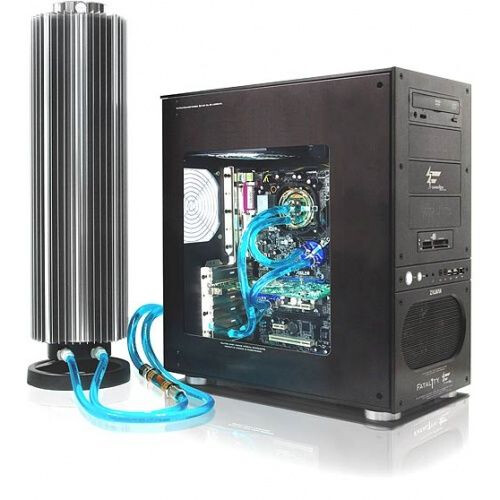
the idea of a fan-less quiet system always has been a thing for me and so i was at a point in my life i had the motivation the money and time. i still have the 3 cylinder rads
2 Likes
Wait… that’s way bigger than I thought it’d be LOL
Fair enough though, a fully passive system would be very interesting. Filling the cylinder rad loop with some sort of alcohol would’ve been an interesting test imo
the radiators i was using were not big like the external tower they could be mounted to the side of a pc case ez like the g5/mac pros
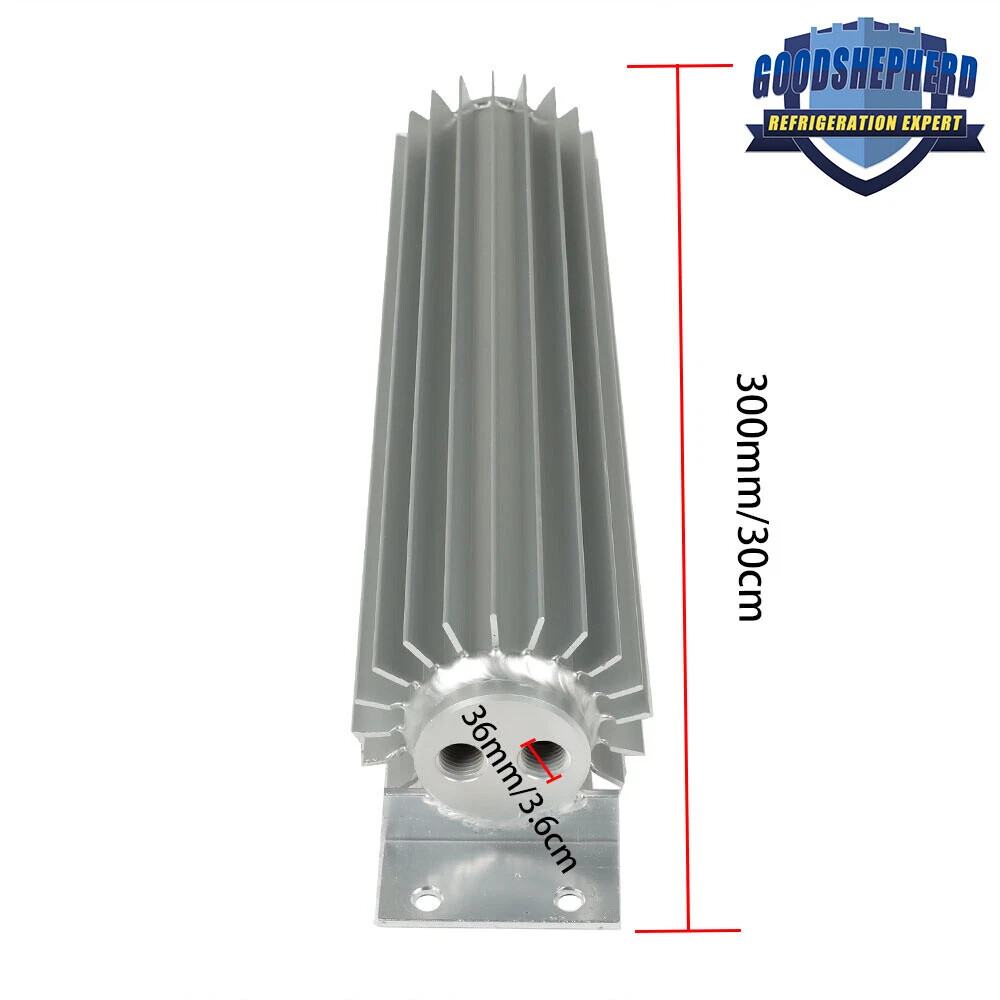
you can still buy these on ebay and amazon
1 Like
Oh, I see!
Unfortunately I don’t think these would be suitable for my usecase as I kinda need to dump the heat out through the window
1 Like
could use a broken window ac as ur rad and antifreeze for liquid i would worry for winter inside condensation as air con for humans means moist air.
That’s not way bigger than what you thought it would be… nope..
That’s way smaller than what you’re asking for needs to be; way, way smaller
Am not exaggerating.
I already mentioned the first big issue. There’s three more:
- you’d need to drill on that wall for what you have in mind; above and to the right of that window. You drill, you lose insulation, out of the box. Don’t care if it’s 60s’ US “stucco” crappola wall or some high-end thermally paneled EU-standards job, you just lost insulation; even warmer an apartment right out of the bat.
- you’d need a floor-to-ceiling (almost) shaft with drills on its side forcing the air to naturally be sucked in it, go through the radiators attached at its top; meaning it would also need a hatch of sorts at its upper end because at the very least once a month you’d need to do some de-dusting in there, how else will you reach the radiators internally; and you’ll need to; small apartment, human+electronics=static electricity. Factor in what we’re talking about (natural vortex), you just created a dust magnet™
- said radiators need in turn have one side completely exposed to the outside, hence the wall drilling. Meaning another cover, externally (are your laws/HoA/landlord allowing you that?), that will also be detachable; dust again. Some dust/panel grill, but.. detachable nonetheless. If you’re in an area with birds, it will also need to be sturdy enough to withstand ‘tinkering’.
Someone linked MORAs above; way, way insufficient for what you’re asking.
Hopefully you now have a better understanding of the magnitude of all this?
1 Like
I sort of wonder if a working window AC might be even better. There could be one water cooling rad mounted to the intake slot of the AC unit so that the AC pulls hot air off the radiator, and then chain into a second rad mounted at the outlet slot of the window AC so that chilled air blows across the radiator. Performing a double duty in a way on the water within the cooling loop.
basically a chiller like linus has.

i dunno if he still has it
1 Like
Hm, figured drawing in air from the other room (which has a similarly sized window) would’ve been enough for the circulation.
Sounds like I’m gonna need to come up with a better plan before I burn a bunch of money on it. I appreciate the feedback 
Afaik, window units wouldn’t work at all for this type of window.
1 Like