https://www.reddit.com/r/nvidia/comments/1ilhfk0/rtx_5090fe_molten_12vhpwr/
1 Like
The user said
- Loki’s 12VHPWR pins are MUCH thinner than in the 12VHPWR slot on 5090FE.
This looks like a user error or an unforseen compatibility issue with the cable used. That could act exactly like an unproperly plugged in cable. Maybe GN will make a piece on it, I’m sure they’re getting flooded at the moment.
2 Likes
Videocardz had a follow up in their article:
Seemed inevitable to me as soon as I saw HUB’s utterly silly 5090 CES coverage video. Not a single model had multiple power connectors…
With a 1.1 safety margin and the 5090’s now drawing 600W… some reviews actually measured cards exceeding the connector + PCIe slot combined 675w power limit, so that extra power has to be coming from somewhere. That was a base model card, now if we look at the Astral which is a 5090 with a $1k price premium built for overclocking, yet it has the same single power connector as the base model FE… where is that OCing power draw going to come from?
In this instance the cable was used on his 4090 for years, so it probably utilized the older 12VHPWR design instead of the 12V 2x6 modifications. But that it melted at the GPU end and PSU end both on different wires is also indicative that it wasn’t a single connector problem unless the user failed to plug in both sides of the cable properly, heh.
This is such a poorly designed specification. EVGA complained about NVIDIA not allowing them to make modifications to the power input on Ampere cards, I’m just as sure NVIDIA prohibited vendors from adding a second 12V 2x6 connector to their 5090’s to share the load. NVIDIA is going to have to face reality eventually and offer dual connectors on the 6090’s regardless, node shrinks aren’t half as frequent or substantive as they used to be.
6 Likes
It’s seriously time to consider 12vhp a failed standard. Revert to 8-pin until something competent takes its place. Ever so slightly modifying the connector but leaving it compatible with the old dangerous one in a wishy-washy state of “is this the latest standard or not” aint it. It’s the usb 3 of power supplies in current state.
3 Likes
12V-2x6 applies to receptacles, which is definitely the case for the 5090 and likely also for the Loki here. Cables continue to use 12VHWPR plugs as those were not revised in PCIe 5.1.
That said, Moddiy apparently claims it’s a 12V-2x6 cable, whatever that means. But presumably it means it’s not an early production cable.
…IMO user and press willingness to take up Nvidia’s user error thing seems mostly copium. It’s understandable as the alternative’s writing off high end cards as too risky, meaning no upgrade path in upper segments (particularly absent a 9090 XT), but no amount of user care in plugging can increase design margin to normal levels.
2 Likes
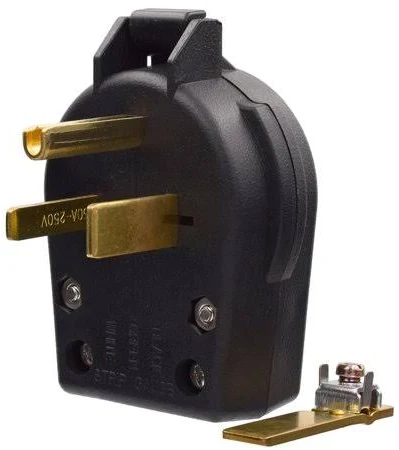
Pushing 50-60 amps over a bunch of little pins is doomed to fail. That’s as much current as a kitchen range. Something like a pair of threaded posts and nuts is probably needed… or use a higher voltage to bring current down.
This is a 50A plug.
3 Likes
12V 2x6 refers to the new connector. Specifically sense pin length was decreased, while the length of the 12 main pins were increased. GN Steve and Der8auer went over the 12V 2x6 spec changes in rather fine detail. So it does matter to a small degree whether this was a 12V-2x6 cable or a 12VHPWR cable that went up in smoke.
Edit: There’s been a second one, a cable slagged on the PSU side for someone else. Videocardz updated their original article.
1 Like
I think a contributing factor to all these melted connector problems are all the goofy sleeving people like to put on their cables that ensures that the wire can’t effectively dissipate heat.
Two counter-points to that:
- These are the plastic-encased (by necessity, that will not change) plugs melting, not the sheathed wires.
- If a power wire gets hot enough to the point where it needs to “effectively dissipate heat” such that sheathing interferes with that, something else is very wrong. Power conductors are meant to be as extremely low resistant as possible and not generate that much heat in the first place.
2 Likes
I agree with both points, but the wires themselves are a heatsink for the delicate, lower thermal mass connectors, the cooler the wires can run the more heat they can take away from the connectors which tend to be the hottest running component in the chain of power delivery.
Some connectors will even specific a higher amperage when run with thicker gauge wires due to this.
2 Likes
(Reddit) OP should post a picture of the cable cut open. If what he says is true (that the connector was inserted properly) I’m leaning to crappy cable as the cause.
Plus, resistivity goes up with temperature, so once things start heating up the process will accellerate. Since it melted on both ends I’m suspecting too thin wires used in the cable.
Edit: I’m not an electrical engineer, but I wonder if a thermal fuse in the connector could solve these issues…
1 Like
I think increasing pins from 8 to 12 was just a bad idea because the more pins the more likely one or more of them will make poor contact leaving the remaining pins to carry the load, go over spec and overheat.
Anyone know why they didn’t just adopt something tried and tested like xt150 connectors?
Xt150 is pretty big and ugly is probably why
lol yeah maybe it was aesthetics. A bundle of a dozen wires isn’t exactly pretty either though.
That’s a good point about both ends of the cable failing pointing toward the overheating of the entire conduction path.
I have a suspicion that implementing a thermal fuse would end up costing as much or more than just designing the connector “right” and using larger or more contacts.
another issue with 12hpwr/12v-2x6 is that they went to the Micro-Fit connector family which while smaller than the previous Mini-Fit family, couldn’t carry as much current per pin as something like a Mini-Fit HCS which is what I think they should have gone to.
1 Like
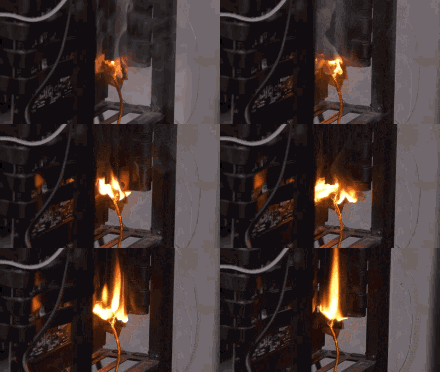
STEVE- It’s happening again!?
7 Likes
Those are two of the several PCIe 5.1 revisions which create the 12V-2x6 H++ receptacle. Since plugs do not change from PCIe 5.0 12V-2x6 has no implications for cables.
I’m aware of GN and der8auer’s coverage, though primarily refer to the ATX 3.0 specification, connector datasheets, and jonnyGURU’s design disclosures. If you’d prefer a succinct summary,
I think PCIe 5.1 might add some language clarifying the AWG16 requirement for power connections in 12+4 cables but that’s been hard to confirm from outside PCI-SIG’s paywall.
Normally, yes, but that’s not the design for 12+4. 12VHWPR and 12V-2x6 are rated for a 30 C temperature rise at the pins’ mating junction and open bench 4090 and 5090 thermography commonly shows conduction away from the mating point at 70 C. Since the plastic’s rated for 105 C that leaves only ~5 C margin for ambient and within case temperature increases in normal operation. Which also easily tips into negative margin if there’s assembly defects invisible to user, such as inaccurate crimping or load sharing tie imbalances. So it’s by design the connectors melt on a regular basis.
Since GPU end airflow over the receptacle and cable is exhaust at +20 C ΔΤ or more the airflow there’s not as helpful as it could be. Cables’ PSU end likely doesn’t get much external airflow, so is mainly reliant on connector side cooling from the PSU fan and down cable conduction as @twin_savage mentioned. (I’ve also been seeing some things about PSU PCBs failing because they can’t handle the current into the 12V-2x6 receptacle, which strikes me as plausible but I’d rate it unconfirmed at this point.)
Not really as the lack of margin means such a fuse’d be pretty likely to blow in normal 4090 or 5090 operation. Like @Kougar, I’m pretty confident Nvidia’s blocking AICs from using dual 12+4s to provide adequate margin. Workaround’s to power limit to normal margins, which is 4070 Ti, likely 5070 Ti, and arguably maybe 4080.
GPUs with 12V-2x6 thermal pads to backplane (some Asus and MSI 5090s, plus probably others I’m not aware of) can have somewhere around another 10 C margin. Heatsinking the GPU die or VRMs to the backplane cuts that down pretty quick, though.
Because of Nvidia’s PCB miniaturization, er, fetish? It not like there isn’t room for PCIe 8-pins or other robust options in a 335-360 mm long dGPU. I understand wanting to shrink the PCB for more airflow but Nvidia’s pushing that to where it’s counterproductive, with both 12+4 and 5090 VRM temperatures.
In line with @twin_savage’s remarks, Corsair suggested dual Micro-Fit EPS, which would have been 12V-4x4, but Nvidia didn’t listen. (It’s implemented on the PSU end of Corsair’s type 5 12+4 cables, though.)
+1
HUB’s review showed the connector reaching 80c under a sustained load for the MSI Suprim. Had the GPU PCB itself not been acting as a defacto heatsink the connector would’ve slagged itself. Ergo, should there be poor GPU cooling, or the GPU PCB gets tasoty for whatever reason, that would also likely pose problems… 80c is not acceptable for normal everyday operation.
Case in point, the connector slagged on the PSU-end in both cases. The PSU end doesn’t have the GPU PCB to act as a heatsink, it only plugs into a connector board.
It doesn’t even follow the micro-fitjr standard. If you spec an 8pin according to molex standard you get a rating of around 250W, where as if you do the same for the new 12 pin it rates at about 432W.
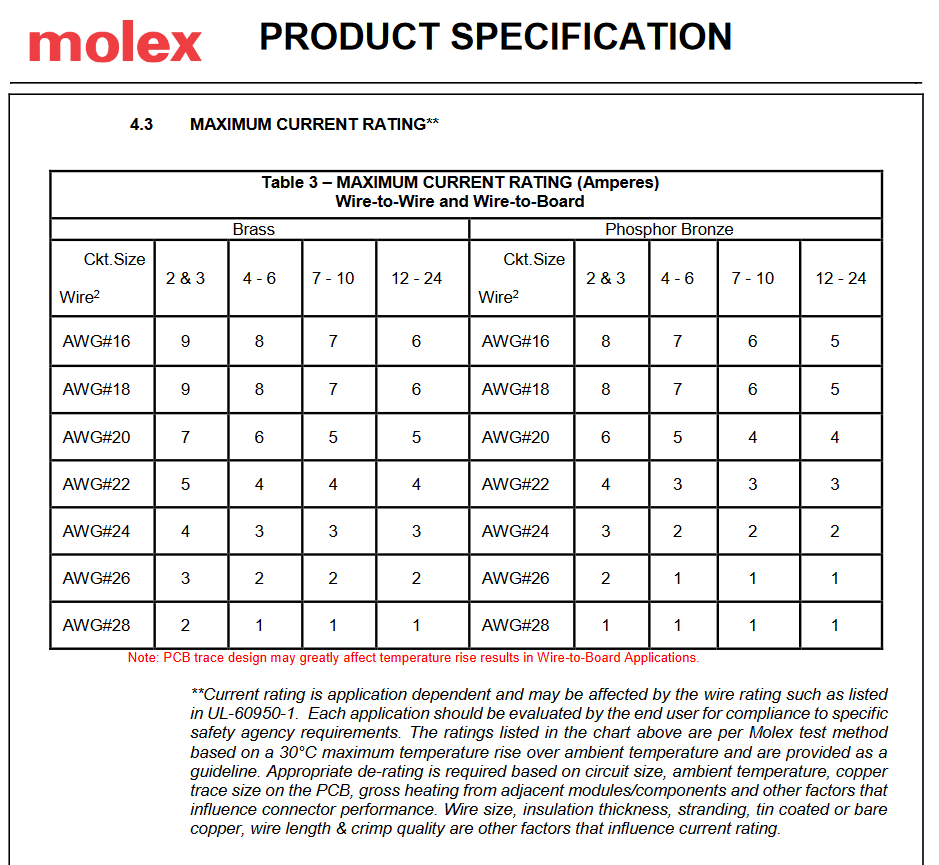
The reason being that according to their specs, you have to derate the current capacity on each pin based on how many pins there are on the connector. Because of tolerance issues that make some pins have more or less contact, and because of heat concentrating on the connector.
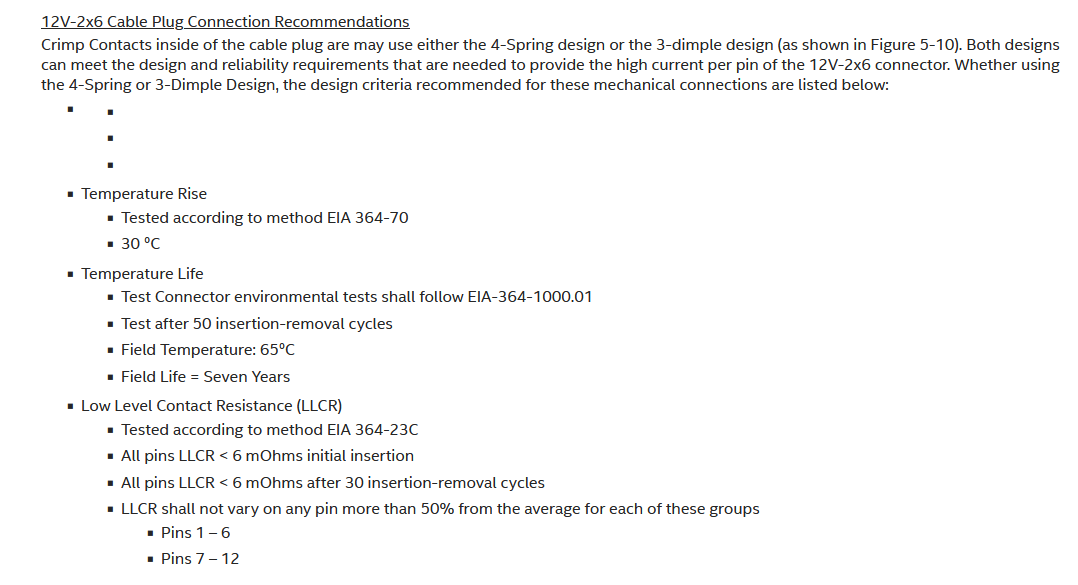
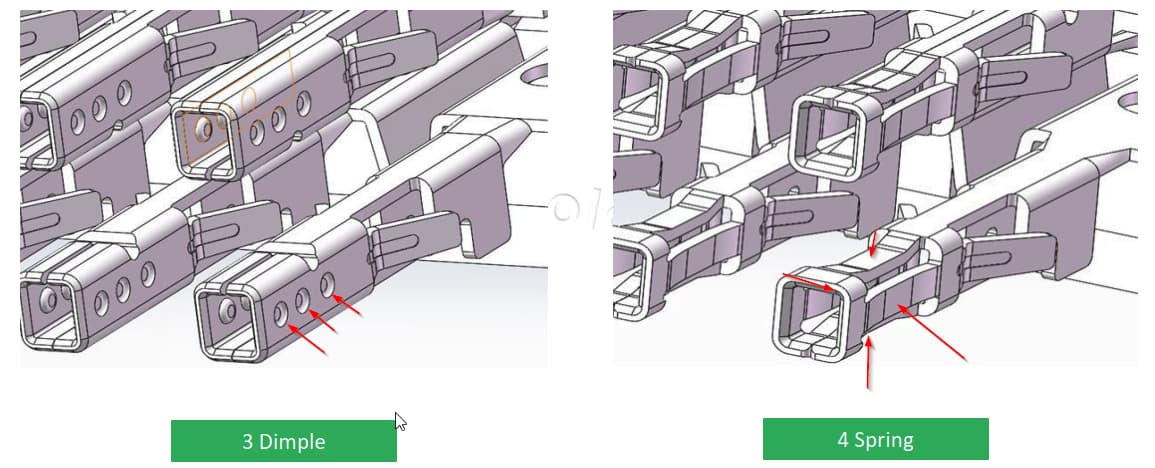
They definitely know this, because they made a very tight specification that doesn’t really hold up to real life. the test for contact resistance and the mandatory 3 dimple or 4 spring design also shows this. Everything to squeeze out performance out of the connector.