…IMHO
Well, then… here are some records on an EPYC system:
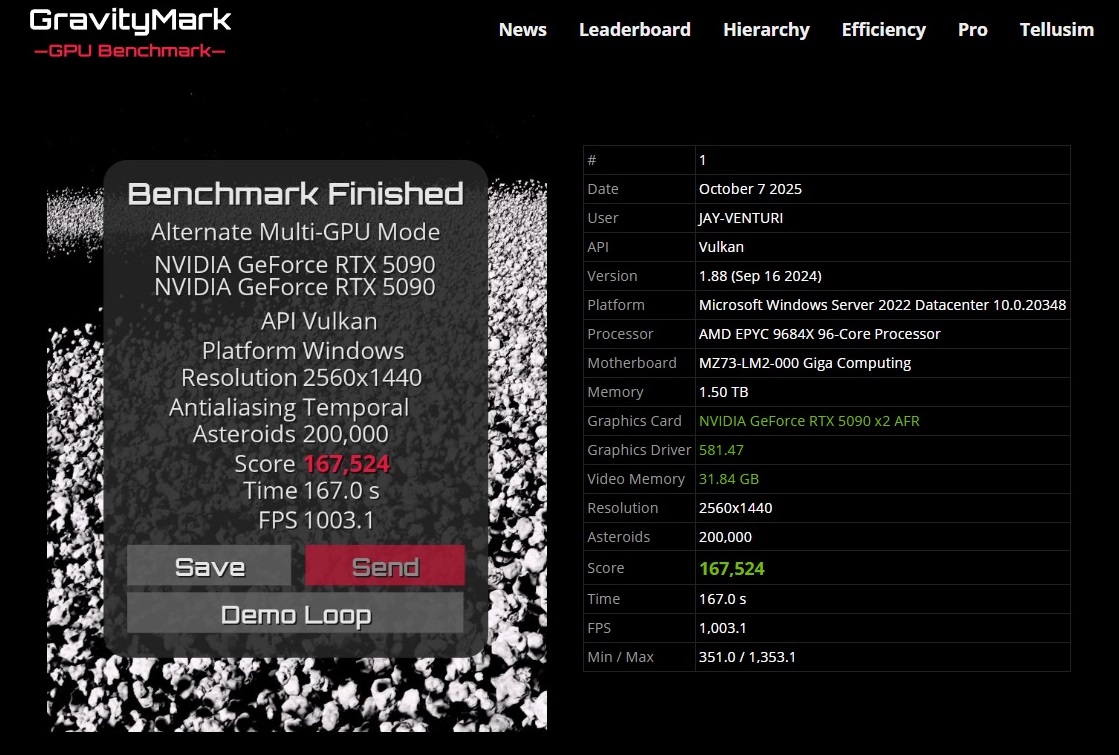
and

Also
records in Cyberpunk with Path tracing,Psycho settings, max visuals, max NPCs, 4k, NO DLSS
records in Superposition, max visuals, 4k
records in Metro Exudus, ultra raytracing, max visuals, 4k NO DLSS
records in RDR2, max visuals, 4k NO DLSS
record in Talos II, max visuals, 4k NO DLSS
record in Ashes of the Singularity, max visuals, 4k
(these are shown in the sample threads)
Runner ups are a distant second…
EPYC also allows for quite fast storage management, memory, and the rest. The whole package turns out is faster than any other chip/board combinations.
The key is to know how to set it up correctly, BIOS and OS.
etc
…all on Epyc, and effortlessly fast. …but there is a steep learning curve. I indulged in many a white paper and other peoples’ dissertations.
if you want to get a quick uptake (alla Matrix - spike in back of neck)
and
again this is only IMHO
~try the challenge yourself:
Chernobylite has a built in benchmark that has results posted at the end with a moving video in the back ground while displaying the actual parameters that were used. Its also surprisingly a great game. On any system you want, beat the score.
GravityMark is also a great bench as it allows for testing across multiple APIs.
The examples I used were for gaming/visuals, the EPYC system is formidable and comes in first on many processor benchmarks as well, but the post was about using Epyc for gaming ~which one should not do JUST for gaming!