Below is what I am shooting for, though my stepfather passed away last week, so I am out of town with my mother for who knows how long. I have full SSH and WebUI access to the machine I will be testing on, but physical access is relegated to how often my son is down to help be my hands and eyes. I built this machine back in Q12026 and spent several months tooling a custom PowerShell assistant from several million .md files from the usual PS places, of note, MS directly. It has worked well and helped me automate a lot of things in my daily work flow for the better without worrying about token costs. But the main reason is anyone that has used the big players to work on intricately detailed PS projects they just are not that good. Even CoPilot I would say is the worst. But I jays2cents. With all of the INSANE advancements in tooling for the ROCm and R9700 platform specifically of late, I figure why not build what I really need. Outlined below is the local AI assisted on my current build goals for this Devember. Again, if I fall short with everything going on with the family life thing, apologies for wasting your time. Admittedly the goals are lofty to say the least, but not entirely impossible.Without further ado:
Darth Omniscience
A Local-First AI Homelab Operator on Dual Radeon AI PRO R9700
Mission
My Devember 2026 project is to learn how to turn a dual-R9700 Linux workstation into a local-first AI operator for my homelab.
The goal is not simply to run a large language model. The goal is to build a system that can observe the state of my infrastructure, correlate telemetry across otherwise separate systems, explain failures in useful technical language, and eventually perform tightly controlled actions on my behalf.
Examples of the questions it should ultimately answer include:
-
Why is this NAS not responding?
-
What is the uptime and current load of that Docker server?
-
Does that Windows host appear to need a reboot?
-
Which containers are unhealthy?
-
Why has a requested movie not reached Plex yet?
-
When was a monitored license plate last observed by UniFi Protect?
-
Which smart-home devices are unreachable?
-
What changed immediately before a service failure?
Project Philosophy
This is a learning project first.
AI may assist with research, code review, debugging, documentation, and boilerplate, but important architectural decisions, configuration, testing, troubleshooting, and integration work must remain understandable to me.
I should be able to explain:
-
why each component exists;
-
how data moves through the system;
-
what permissions each service has;
-
what happens when a dependency fails;
-
how a decision or action can be audited;
-
and how to recover the system without AI assistance.
Core Design Principles
Local first.
Inference, telemetry, automation, logs, and household data should remain local wherever technically practical.
Observe freely; act narrowly.
Darth may receive broad read-only visibility into the homelab, but write operations will be explicitly allowlisted.
No unrestricted root shell for the model.
The language model will not receive direct root SSH, unrestricted Docker socket access, full Home Assistant administrator access, or blanket UniFi administrator credentials.
Tool broker between AI and infrastructure.
Infrastructure actions will be exposed as discrete tools such as:
get_host_uptime(host)
get_container_health(host, container)
pause_download(client, id)
restart_allowlisted_container(host, container)
set_home_assistant_entity(entity, state)
The broker, not the model, defines what is possible.
Read → Suggest → Approve → Automate.
New capabilities begin read-only. They progress through Shadow Mode and human approval before any policy-driven autonomous action is considered.
Everything important is logged.
Tool invocation, arguments, requesting user, result, errors, approval state, and execution time should be auditable.
Monitoring must survive Darth being offline.
Persistent telemetry and logs should live on lower-power always-on infrastructure rather than depending exclusively on the AI workstation.
Recovery before cleverness.
No change to kernels, GPU drivers, storage, networking, or remote access is accepted until rollback is understood.
Primary Hardware
Darth Omniscience:
The first technical phase will benchmark the current R9700 software ecosystem rather than assuming a single inference runtime is best.
Candidate runtimes include:
Radiance
Paiton
vLLM/RDNA4 variants
Strata
llama.cpp
AMD-supported ROCm inference stacks
The architecture will be chosen from measured results on this hardware.
Planned Functional Areas
Infrastructure observability
Linux hosts
Windows endpoints
ZimaOS systems
TrueNAS/Synology storage
Docker containers
UniFi networking
UPS/power state
system logs and metrics
Home automation
Home Assistant
approximately 90 WiZ lights and sensors
local-only device control wherever possible
inventory, location, naming, firmware state, and health
IT management
NinjaOne/NinjaRMM read-only telemetry initially
pending reboot and patch state
device health and alerts
future allowlisted remediation
Media automation
Plex
Sonarr
Radarr
Overseerr/Jellyseerr
Transmission
related storage paths
Security and cameras
UniFi Protect
camera health
event history
ALPR event research
local retention/querying of useful event metadata where supported
Remote Access
Private administration will not require direct public exposure of the homelab.
A small client application, provisionally called DarthConnect, will eventually:
-
determine whether Darth is securely reachable;
-
establish the approved VPN path if required;
-
validate the service endpoint;
-
open the Darth interface;
-
report connection state clearly.
UniFi WireGuard, Teleport, Tailscale, or another appropriate private-access method will be evaluated.
Devember Judge Access
Judges will not receive broad VPN or LAN access.
If a live demonstration endpoint is provided, it will use a separate Judge Mode with sanitized telemetry and restricted read-only tools.
Private systems such as cameras, ALPR data, household automation, NAS contents, NinjaOne endpoints, and unrestricted infrastructure controls will remain inaccessible.
Default Assistant Personality
The default delivery profile is Captain:
calm
measured
precise
authoritative
dryly understated when appropriate
British in cadence
The intent is a distinguished Shakespearean-command style rather than a literal imitation or clone of any real actor.
Shadow Mode
Before Darth receives meaningful write authority, new integrations operate in Shadow Mode.
Example:
User:
“Why is Zima2 behaving badly?”
Darth:
Diagnosis: HandBrake has been continuously CPU-bound for 47 minutes and its worker stopped producing output 19 minutes ago.
Recommended action:
restart_container("zima2", "handbrake")
Shadow Mode:
No action performed.
Only after repeated correct recommendations will a tool graduate to approval-required execution.
Success Criteria
A successful Devember project does not require every planned integration to be complete.
The core project succeeds when Darth can reliably:
-
observe several independent homelab systems;
-
correlate their telemetry;
-
answer useful operational questions;
-
explain how it reached its conclusions;
-
recommend a remediation;
-
execute a small set of explicitly authorized actions;
-
record what it did;
-
remain remotely recoverable;
-
and demonstrate meaningful use of the dual R9700 hardware.
The project should leave behind not only a working system, but documentation sufficient for someone else to understand the architecture, reproduce the important pieces, and learn from the failures encountered along the way.
 . Let’s see how far I get. I’ll have a public repo soon.
 , now to the disassembly part

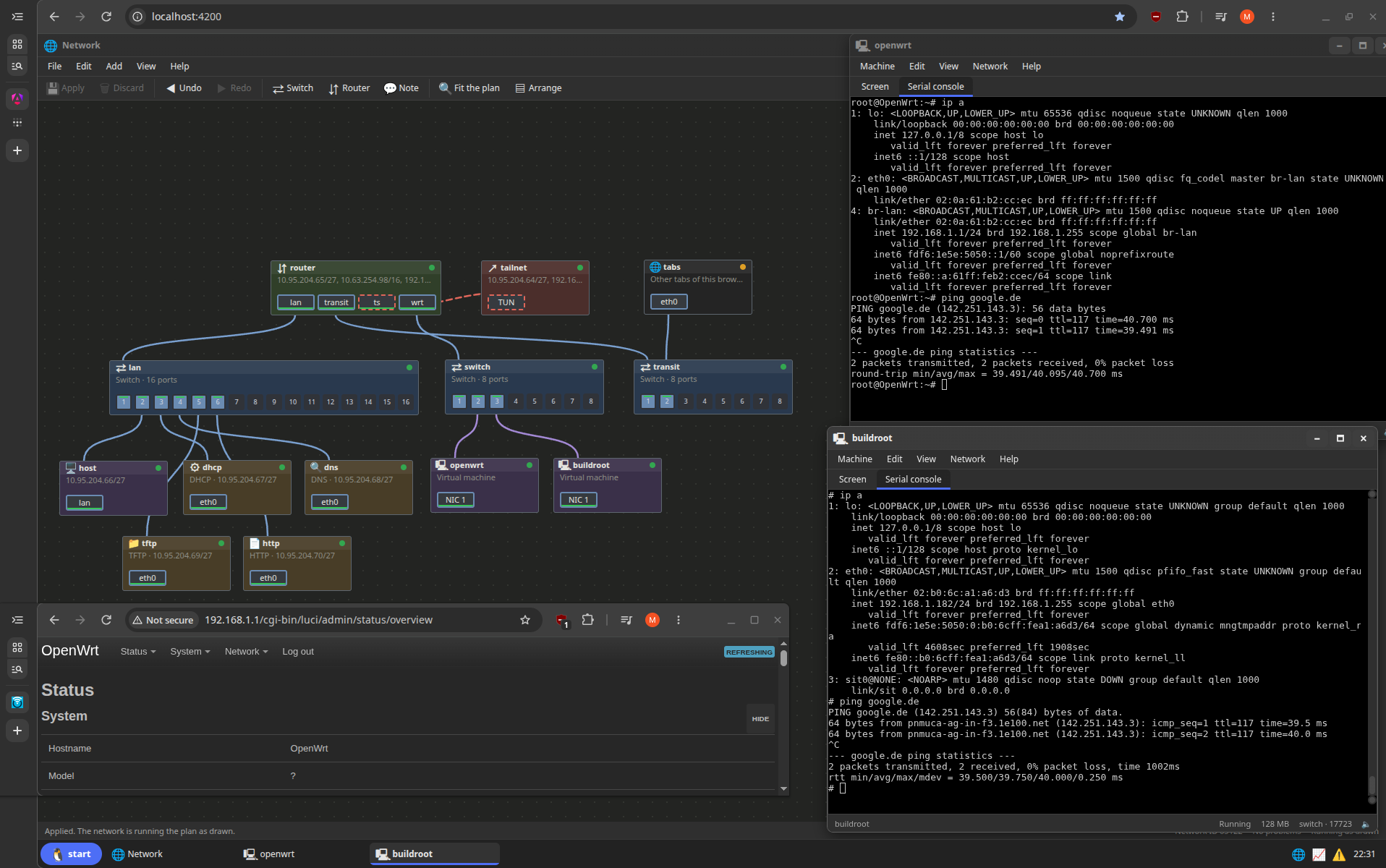

 I have thought about this for some time now, (possible) remote access to my devices home w/o DDNS (writing this, I’d guess tor/i2p works too…) & routing my internet traffic from my phone/laptop to originate from my home. That’s cool, I am of the opinion that tech serves you, not the other way around.
