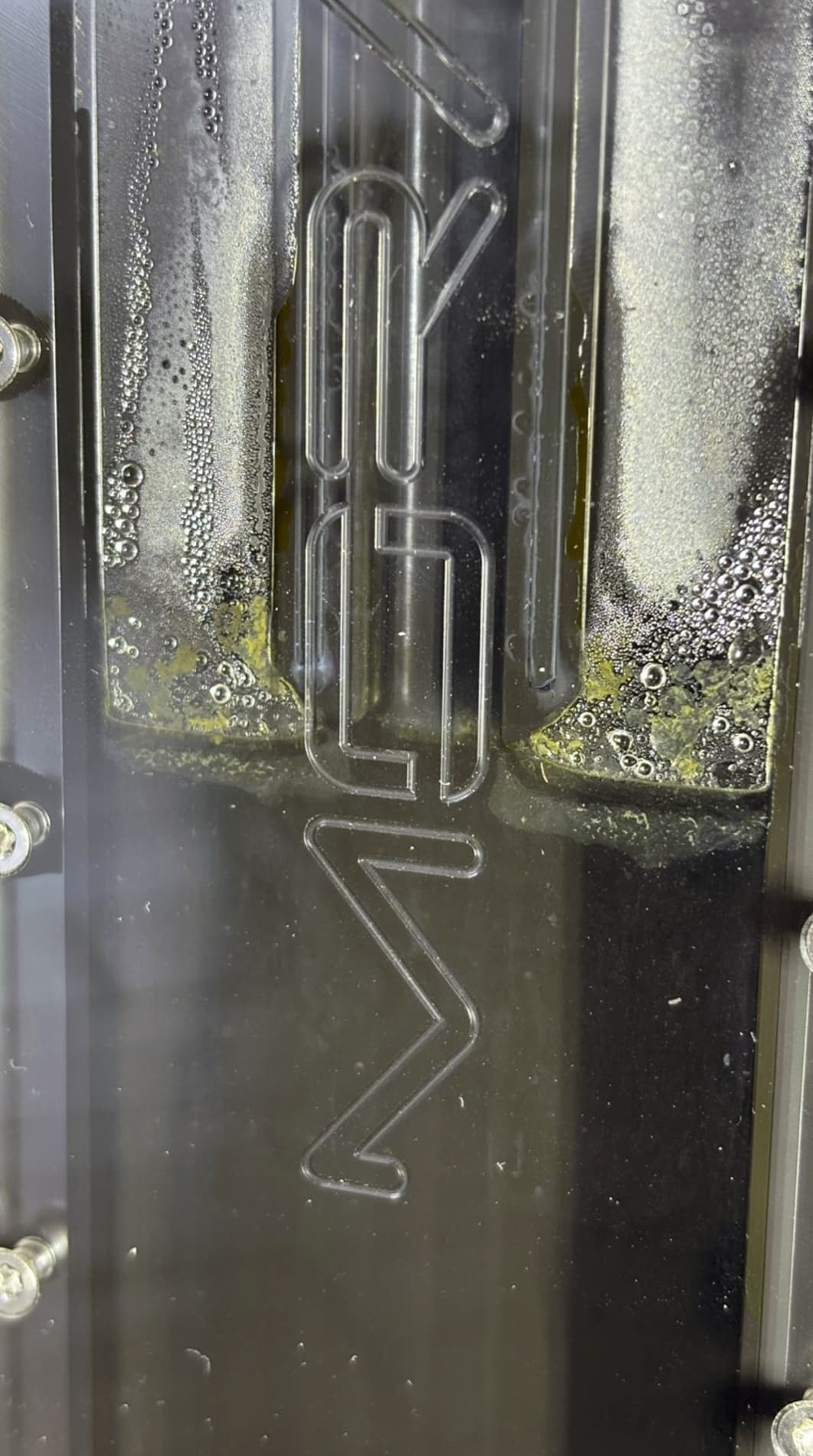
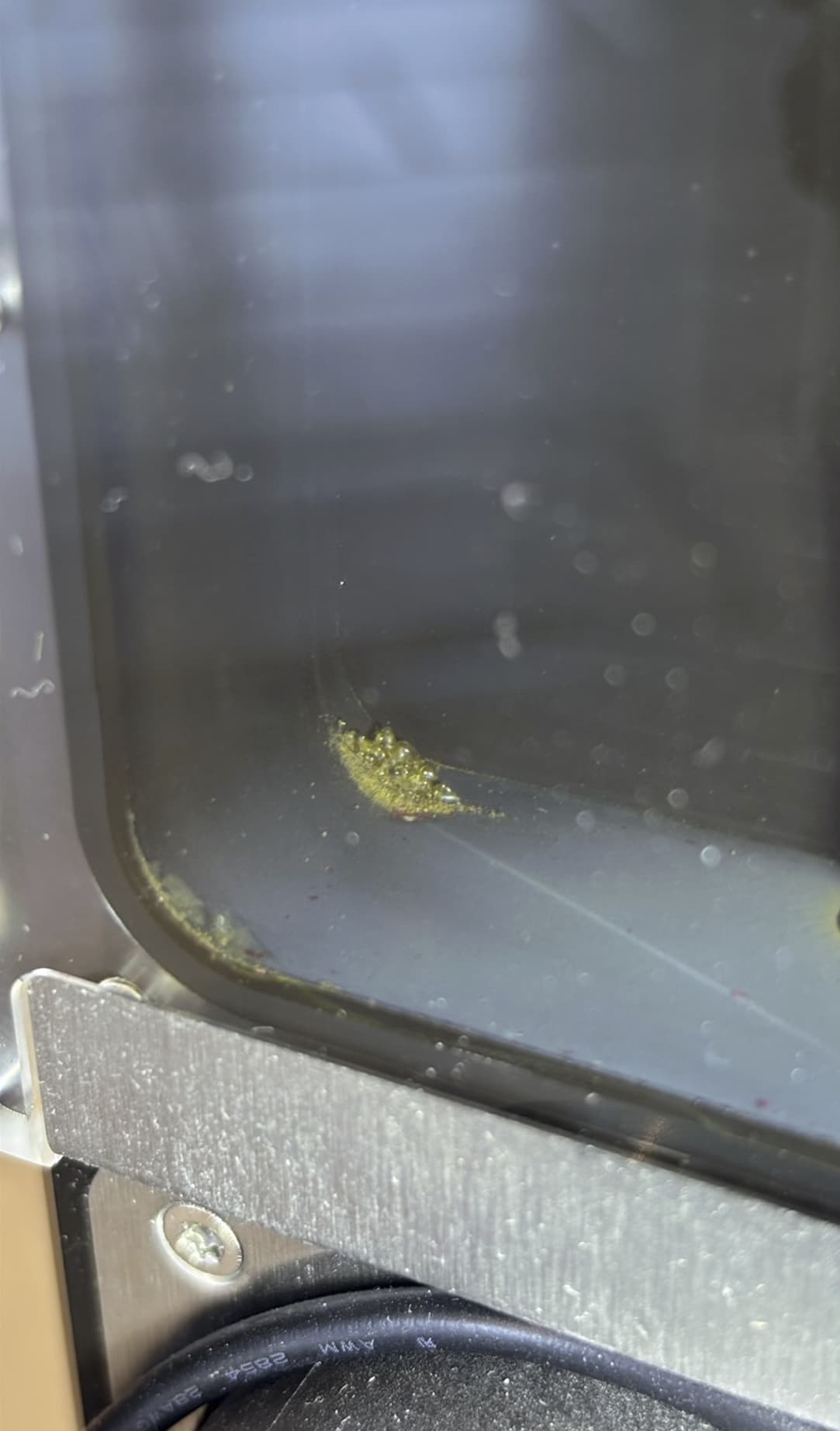
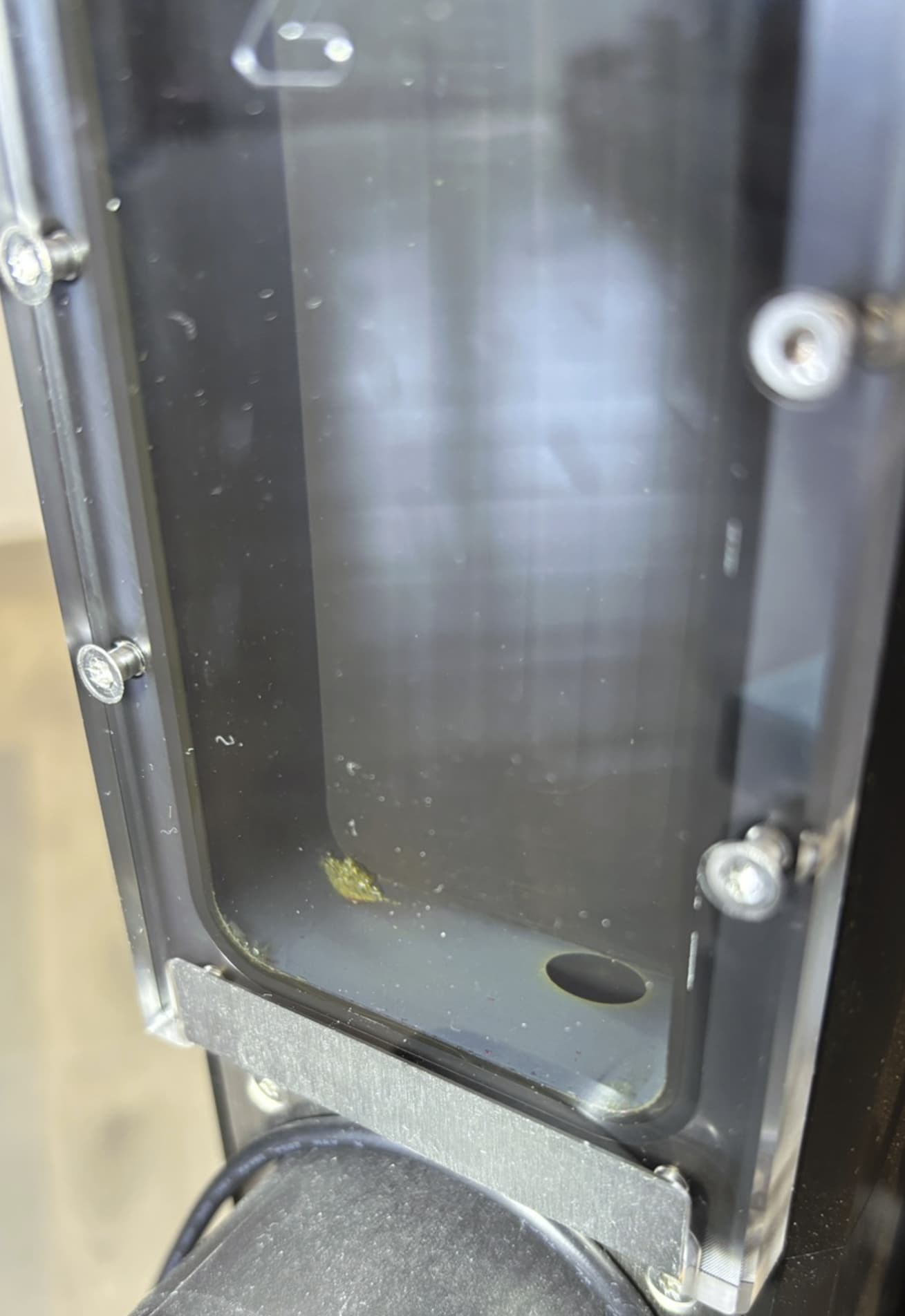
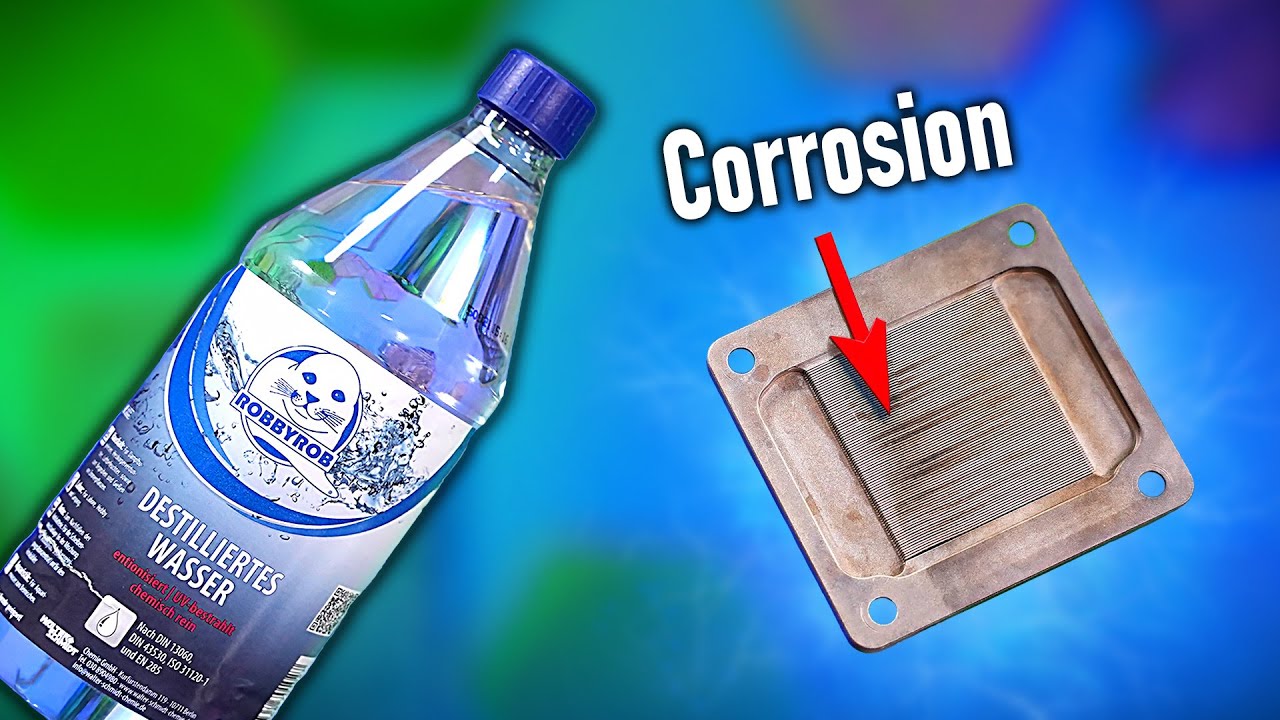
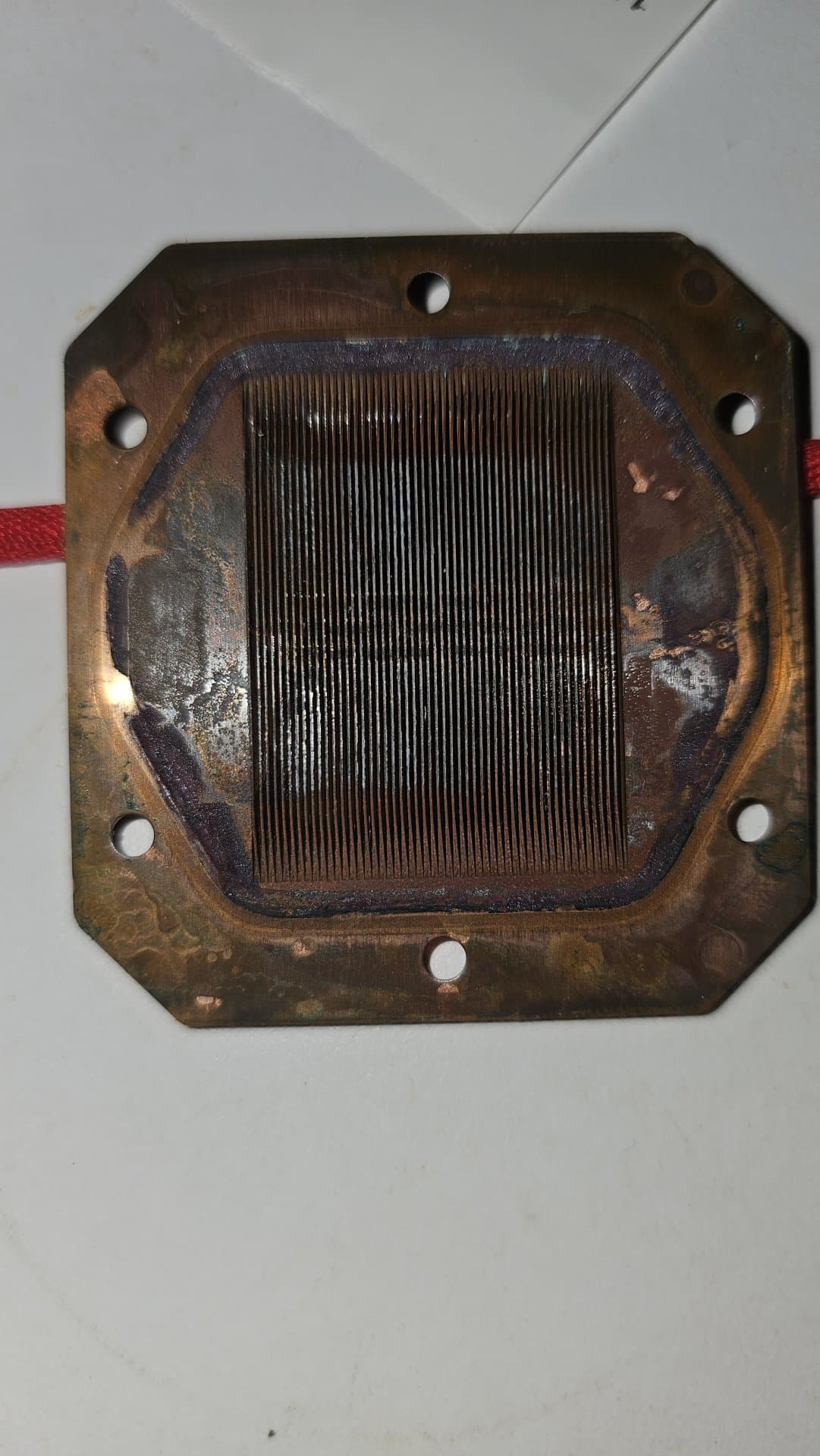
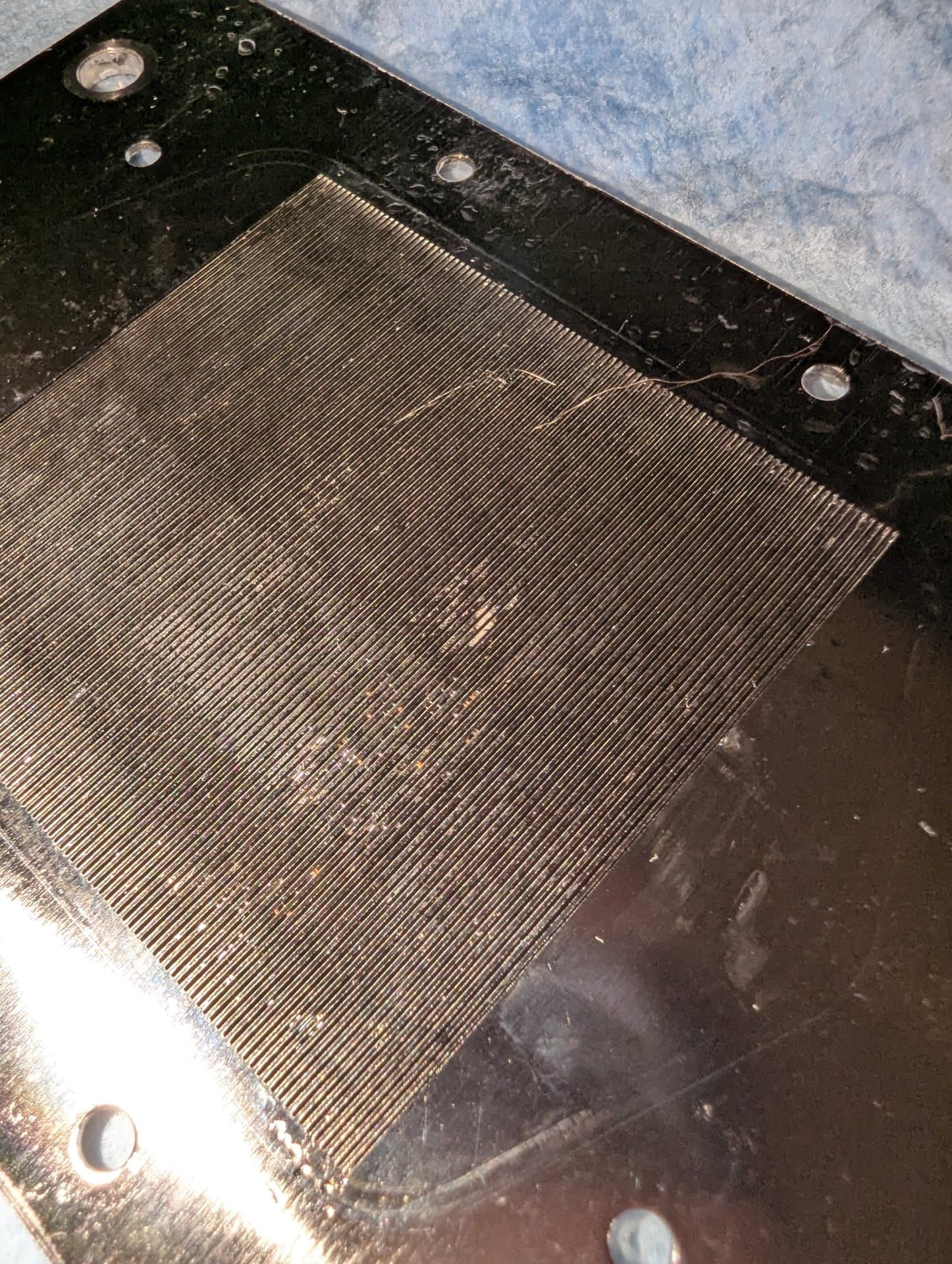
This is why it is a bad idea to use just distilled water as a coolant.
I’m, not 100% certain what that is, but the truth is that whenever water cooling you need a coolant with a growth inhibitor, a corrosion inhibitor and it is usually a good idea to have a surfactant as well.
Even a thoroughly cleaned loop with pure distilled water will eventually experience microbial growth. Not many microbes will make their way in, and there won’t be much for them to feed on, but over time it will build up.
Way back in the day people used to use distilled water with just a drop of copper sulfate solution (like PT Nuke). Since then we have learned that this tends to react with and corrode metals.
Then many switched to pure distilled water with just a silver “kill coil” in it, with the silver giving off silver ions that tended to be somewhat effective as a growth inhibitor, but that has some problems as well.
Even if you closely match the metals in a loop, you will never have an absolute 0V galvanic series. There will always be a small voltage difference that can cause corrosion. Also distilled water will actually rip ions off of the metals it contacts over time. So you really want something with a corrosion inhibitor in there too.
A surfactant (to eliminate the surface tension of the water) is very helpful too when you fill the loop to get rid of water bubbles and ensure better liquid contact with the micro-channels in your blocks. This is totally optional though.
Now, as for what to use? That’s where there are as many opinions as there are assholes.
When I built a new loop back in 2016 EK’s nickel plating corrosion/delamination issue was fresh in my memory. I really wanted to avoid EK all together as a result, but the only fullcover block I could find in stock for my Pascal Titan at the time was EK and nickel plated, so I decided that if EK was finger pointing at everyone and everything after that issue, my best choice would be to use their coolant, because then they can only blame themselves.
They sold something branded as Ekoolant at the time, which is what I used. And then when their Cryofuel came out I bought the concentrate and used that.
It worked well. My loops stayed clean and blocks came out years later looking squeaky clean with no corrosion.
The only downside was that it was more viscous than water, so it slowed flow rates a little bit.
Now with EK collapsing again, for my new build I am currently working on, I need something else.
I recently did a test build that is currently cooling my workstation. I wound up using Primochill’s concentrated Liquid Utopoia both because it was cheap, because I had it handy, and because reviews were decent. It appears to work well. It performs well and gets good flow rates, but I haven’t had it in long enough to know if it has any corrosion or growth issues.
I also have several bottles of XSPC Pure coolant. This appears closer to EK’s Cryofuel. I’m not sure if I want to use this or Liquid utopia in my new build. Time will tell.
The TLDR version is this:
1.) Absolutely do clean your components before use. Even if it is just a thorough flush. There is usually crap in the parts from the factory, and you don’t want that crap in your pumps and microfins in your blocks.
2.) Absolutely use something with a growth inhibitor, or your loop will gunk up. It won’t even take that long. yes, even if you thoroughly clean and use distilled water and try your best to not “infect” anything.
3.) Absolutely use something with a corrosion inhibitor, or over time (though usually more than two years) you will see some corrosion. Even if all of your metals are the same
4.) Ty to avoid “showy” coolants. Clear undyed coolants are the best, colored coolants are OK (but they usually put so much damn dye in there that it stains over time). Shimmery or opaque coolants all eventually gunk up and are best avoided.
As for what to do now?
You have gunk in there. It looks like growth. You are going to want to get it out, and it is not going to be easy. You are at the very least going to want to do several flush cycles through the loop, filling, flushing, draining, over and over again. If you are lucky this will get everything out.
You may want to alternate flushes with slight amounts of dish soap (like dawn) and diluted household vinegar to try to clear out the gunk. Only use a drop, maybe two of dish soap, or it will foam like crazy, and take several flushes until you get it all out.
Same with vinegar. Don’t use too strong vinegar (dilute it to like 1/4 or 1/5) and don’t leave it in there too long, as vinegar is an acid, and will start eating into your metal parts if left unchecked.
If you use any cleaner at all in there, flush and drain several times with distilled water after to make sure you get it all out, before refilling.
Unfortunately based on my experience, once you get gunk there is no way around needing to open parts up and scrub them out. I’m talking at the very least the blocks. Unless they have completely clear tops and and you can see the fins and confirm they are not gunked, you are going to want to take the tops off, and scrub the fins with a (clean new) toothbrush and some sort of cleaner. Vinegar can work (with the same corrosion warning as above), dish soap can work, ispropyl alcohol can work (but don’t get this on any acrylic parts or rubber seals, as it can cause them to crack)
Then lube the o-rings/seals, re-assemble the blocks, and put everything back together again.
Then re-assemble everything again. If you have a pressure tester now is a good time to test the blocks you opened and re-assembled. If not, run the loop for several hours without powering on the PC and monitor for leaks.
As for what to use next time? Try Primochill’s Liquid Utopia. It’s a little 15ml bottle that supposedly is good for up to a gallon of coolant, and it is low cost, small bottle and seems to work really well.