So I just got my Schiit Gunnr and when I connect it to my laptop running Linux Mint, I play a song on Qobuz, and Linux automatically outputs the audio on the song’s high resolution (e.g. 24 bit 192kHz). When I plug it in to my PC running Windows 11, I have to go into sound settings and manually select the output resolution to match the song resolution. Is there any way to get the Linux behavior on Windows, where it just detects the source resolution and outputs at that resolution instead of me having to change it manually?
I don’t think Windows can unless the DAC has some very good drivers with it.
Damn, okayy 
Not within Windows proper, so far as I know. WASAPI exclusive and ASIO bypass SRC and allow to request sample rates. So, depending on the apps in the audio chain, Linux levels of sanity about this are in principle possible. Quobuz supports both.
1 Like
WASAPI and ASIO bypass SRC??? Can I get that in dumb english please? 
1 Like
WASAPI and ASIO can run in exclusive mode and have the ability to set the sample rate of the output device. Normally an output device is set to a fixed sample rate and everything goes through the systems audio mixer. In order to mix audio from multiple channels they all have to share the same sample rate so the first thing that a mixer does when fed audio that doesn’t match is resample it so that it can be mixed. In exclusive mode a single application takes exclusive control over the output device so no mixing is needed and by extension no sample rate conversion is needed because the application can just set the output device to the desired sample rate.
I think it’s just a matter of finding a player that outputs using WASAPI exclusive mode. There’s also WASAPI shared mode which uses higher quality resampling but exclusive mode is what you’re looking for.
Foobar2000 has an output plugin that supports WASAPI exclusive mode and I think MusicBee and JRiver have native support. I’m sure there are others.
3 Likes
So do I just download WASAPI, install it and it runs in the background or do I have to choose which apps pipe audio through it?
What’s Foobar2000?
WASAPI is built into windows but most players don’t use it, generally just pro audio applications.
Foobar2000 is a software audio player.
I honestly wouldn’t even worry about it… every track typically goes through multiple rounds of being upsampled then downsampled during mixing. It’s highly unlikely that’d you be able to recognize material that was resampled one more time vs material played back at the native sample rate.
Not in my experience. Typically for redbook you’d record at 176.4 and downsample to 44.1 as the final production step, or maybe record at 88.2 if that’s what’s available. If 48 or 96 is the target recording’s generally at 192 or maybe direct at 96 if redbook’s not an additional output. On the high end, recording might be at 176.4 and 192 to run both mixing and mastering chains without sample rate conversion.
I find a single 44.1 ↔ 48 conversion in the Windows mixer readily audible. It’s an issue with, say, YouTube playlists since audio tracks’ll probably be 44.1 but I at least get music videos in both 44.1 and 48. Also an issue with Windows Update as it periodically reverts audio devices to 48.
Since smaller changes are more audible, a mitigation’s to push up the output sample rate. Steps like 44.1 ↔ 96 are still obviously off to me, though it’s more of an ABX thing than 44.1 ↔ 48 mush.
Qobuz as noted upthread. Foobar’s got an ASIO plugin as well. I’m sure there others but Foobar meets my needs so I’ve never particularly looked.
1 Like
That’s not a typical workflow. Most professional tracking and mixing is done at 96 or below. It’s also very common for audio filters to perform sample rate conversions internally so even if you’re not doing any explicit conversions they’re still likely to be found in typical filter chains.
I suspect you may be fooling yourself and that an ABX would result in a wash. Going down to 44.1 can be an issue because the low pass filter sometimes touches the high end of the audible range but conversion above 44.1 should be transparent. A null test of the windows resampling filter going from 48 down to 44.1 would be interesting though.
The video below was also an interesting combination of expert opinion and testing in regards to project sample rates vs filter oversampling.
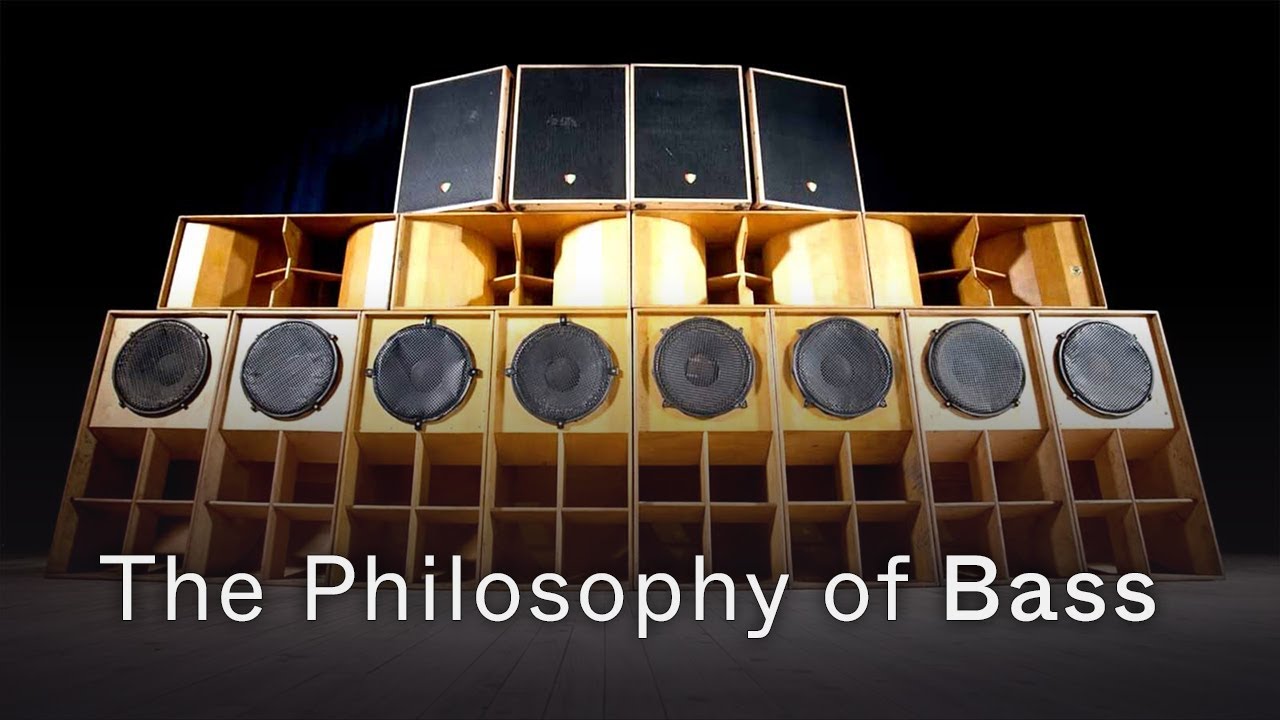
No argument that bit perfect playback is ideal but being able to hear audio from multiple programs is also nice. Outside particularly demanding listeners using pristine analog gear most won’t be able to pick out even several rounds of conversions.
Used to be 88.2 or 96, yeah, because you didn’t have 176.4 or 192 on the interface. Diminishing returns there and it’s something of a religious issue. ¯\_(ツ)_/¯
That’s not how biquads and FIRs work. If you meant oversampling effects that’s not formally a sample rate change, though it’s pretty much a semantic bookkeeping distinction at power of two multiples due to window sidelobe cancellation. More important differences from sample rate conversion are the effects’ input and output rates are the same and that 44.1/48 = 0.919, 192/44.1 = 4.354, and so on aren’t powers of two.
It’s unfortunate redbook didn’t just pick up Soundstream’s 50k or DAT’s 48k and, as a consequence, that 96k DVD became popular instead of 88.2k, but here we are. On some level I have to admire Hitsujibungaku for having the chutzpah to release their albums at 48 or 96.
Nope, it’s obvious and I’ve been getting ABXed a few times a year by Windows updates for years. Not so obvious you can’t casually listen to something for a bit before going wait this sounds like sht and checking if sample rates are fcked up again. Sooner or later I’ll be wrong but so far I’ve yet to find Windows hasn’t reverted sample rates.
With videos it’s harder to tell because there’s more potential for YouTube or whatever to yoink things around, lossy compression tends to be more aggressively applied, and if it’s not a source you’re already familiar with there’s figuring out how good the recording and production is. It’s not something I particularly keep track of but I’m pretty sure every time this year I’ve heard the mush and checked if 48 → 44.1 was happening it was.
Recall from Fourier there is no free lunch. The more linear phase brickwall something gets in the frequency domain the more intrusive the impulse response is. If you do the filter design (which I have) having the octave above 20 kHz, rather than just 2-4 kHz, goes a long ways for time domain improvement by relaxing the lowpass slope. The disadvantage is letting more ultrasonic through is more demanding of analog amplifiers’ gain-bandwidth product, increasing the chances of audible ultrasonic downmod.
Which happens to be much the same engineering constraint as…
I read through the transcript and what the author’s struggling to express is ultrasonic components downmod back into audible, so lowpass if you want to reduce that. Seems to me the video’s a very circuitous way of saying if you want digital stuff to sound like analog stuff then probably it’s good if the people doing the digital go through the analog schematics and get their heads around all of what they need to replicate.
2 Likes
Biquad and FIR filters are linear which don’t generate harmonics… ultrasonic content is generated by non linear filters and that’s where internal oversampling is very common. This includes “analog” simulations of tubes, transformers, etc. and clippers, limiters, compression (dynamics not bitrate), and distortion/saturation effects in general.
No but decent SRC is extremely cheap. Maybe you can reliably ABX windows default SRC but you’d be the exception not the rule.
Using a project sample rate other than the rate intended for delivery is itself a testament to the transparency of SRC because doing so basically necessitates it’s use. Artifacts introduced by SRC just aren’t important enough to warrant avoiding its use which is why it tends to be ubiquitous both in production and playback.
It’s not too difficult to find windows software with WASAPI or ASIO support though so if anyone needs/wants bit perfect playback it is available. My point was just that for the sake of audio playback in general (especially anything compressed as you mentioned) degradation caused by one more rate conversion will tend to be overshadowed by a number of other factors.
I wouldn’t say so. In projects requiring multiple output rates it’s more about SRC often being less unattractive than recording and processing at multiple rates to avoid SRC.
There appears to be little data on SRC audibility and most of what I know of is incidental to other study purposes and thus confounded. But the overall pattern of results is people definitely can hear conversion and the more exposure they’ve had to different sample rates the more likely statistically significant ABX discrimination is. Anecdotally, what I’ve seen of forum conversations and such is consistent with the published literature.
So it’s difficult to make any kind of strong statement but the balance of direct evidence suggests SRC is not transparent and it’s not all that uncommon to pick up on it. But neither is it particularly intrusive. It seems to me two other things are going on as well. One is the ongoing gradual improvement in audio hardware, software, and production practices makes SRC more noticeable than it used to be. Second, SRC’s audibility varies with the input and output sample rates.
Last I checked Windows was implementing a typical linear phase brick (see Dave Horrocks’ data, for example). Maybe 11’s doing something different but probably not, Microsoft doesn’t seem to document the mixer behavior, and I haven’t migrated my home machines yet to check.
Personally I’m more inclined towards intermediate or minimum phase and to accept some phase error, a bit of rolloff in the upper highs, and very low level aliasing in exchange for a shorter impulse response with less preringing. While such approaches are 30+ years old in DACs and have gotten to be pretty common choices, they remain uncommon in SRC and I actually can’t point to an SRC with a preset that I consider a good balancing of all the tradeoffs. There’s enough SRCs probably there is one, I’m just unaware of which it is.
I don’t think I’m at all unusual here. Enough people find a single pass through brickwall linear phase lowpass dissatisfying to motivate industry-wide design shifts in DACs. It’d be weird if a single pass through a linear brick wasn’t also audible in SRC.
THANK YOU. Somebody else gets it!
When I, as an instrumental musician, moved to 96/24 from 44.1/16, I struggled to explain what I was hearing. Many, many moons of learning later, I found out - it’s the down modulation I’m hearing. It’s as clear as day to my ears.
That was… 20 years ago? I can’t believe there’s still an argument about “well ACKSHULLY humans only hear 20 - 20,000”
That sums up the issue with SRC perfectly. Anyone can do a null test easy enough so data is readily available. Data just doesn’t support people’s perceptions so pretty much all talk about SRC degrading audio is based on anecdotal reports that perpetuate the confirmation bias.
The windows default SCR was/is? (it may have changed) relatively poor so if there’s an exception that would probably be it but one round of any half decent SRC should be transparent which is why I mentioned that using WASAPI in shared mode uses higher quality resampling.
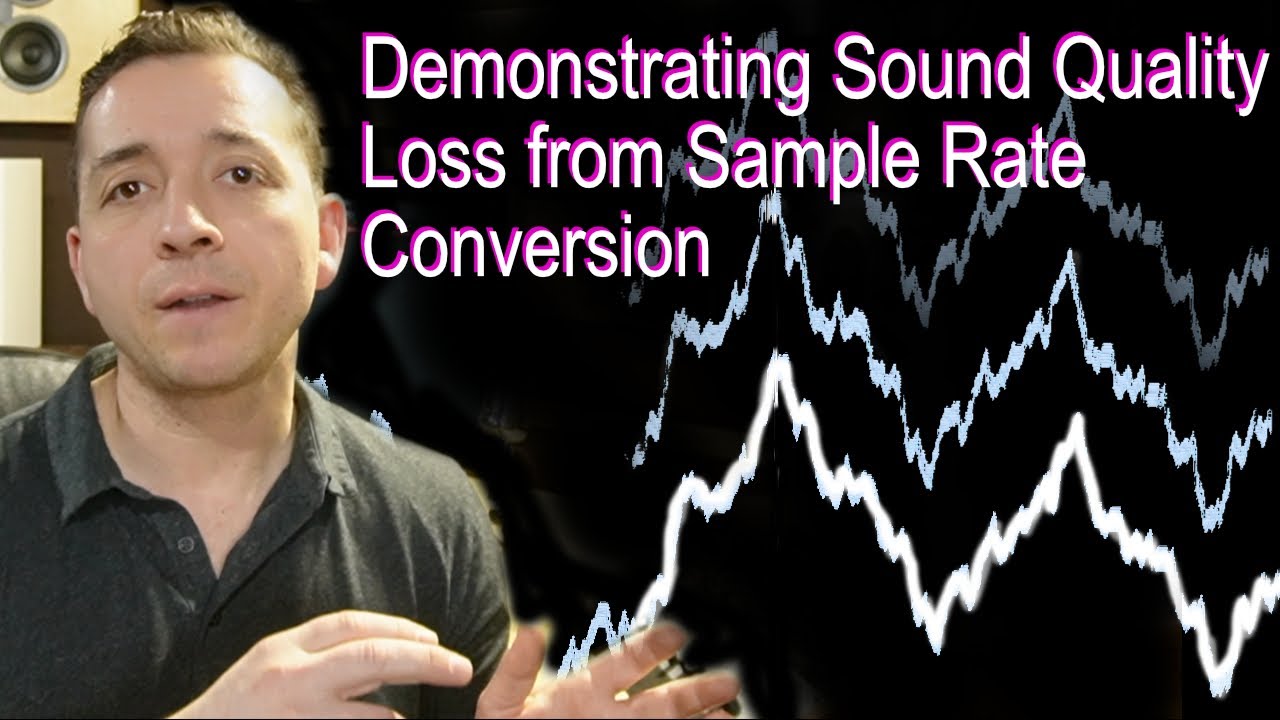
This guy took the time to loop a track through hundreds of round.
I spent a few hours setting up for and remeasuring 10 22H2’s impulse responses (with current patches) for all 16 and 24 bit WASAPI shared upsamples, passthroughs, and downsamples among 44.1, 48, 88.2, 96, 176.4, and 192. Passthrough is fine and 48+ out is mostly not terrible, though certain specific sample rate pairings have problems and I disagree with most of the filter design choices. In particular, 48 is ultra bricky. There’s also certain pairings with glitches that look like numerical issues in filter synthesis or coefficient entry. However, there’s minimal to no response error and baseband (20 Hz to 8 kHz or so) is fine so if these got attention in 11 I wouldn’t anticipate much subjective change.
Downsampling to 44.1 is kind of a mess as antialiasing seems mostly lacking. 48, 96, and 192 sources all get, er, creative passbands with what look like coefficient errors affecting 18+ kHz and 88.2 and 176.4 sources also get odd passbands. Hopefully somewhere in 11’s development somebody at Microsoft spent a day or two making this less stupid. But I wouldn’t expect it.
Foobar quit DirectSound a while ago and the WaveOut plugin’s not maintained so I didn’t check those to see if they’re less problematic. WASAPI is all sinc based linear phase so, not surprisingly, it sounds to me much like most other SRC. The problems at 44.1 and the 48 bricks match my experience those are subjectively the most intrusive SRCs, consistent with the amount of pre- and postringing in the impulse responses.
TL;DR there’s objective and subjective support for ASIO and WASAPI exclusive as mechanisms for suppressing problematic Windows mixer SRC behaviors up through at least 10 22H2.
It’s difficult to miss in your writing, yes. For example there’s a comment on the linked video saying the single pass is audible and it sounds off to me as well, in the blurry way I’ve come to associate with linear phase SRC, even with whatever YouTube’s doing to the original. Frankly, it’s kinda weird the guy doing the video says he can’t hear this obvious difference.
The video’s not much of a test though as it’s sighted AB rather than ABX. The basic experiment’s easily replicable as all it takes is running a clip through SRC and dropping the SRC and non-SRC versions into an ABX tool on ASIO, WASAPI exclusive, or an equivalent. I’ve done this for a variety of SRCs with tracks I recorded at 44.1, 48, 88.2, and 96 as controls (as well as for most other audibility questions amenable to the approach).
One confound with evaluating SRC this way is DAC filters change with sample rate, so separating the two requires a test matrix crossing multiple different kinds of DAC and SRC implementations. Though if you have an ESS implementation with switchable anti-aliasing filters that simplifies covering the DAC axis (maybe ESS isn’t the only company with programmable FIR taps anymore but I haven’t come across anything else). It’s a lot to go through, so it’s time consuming and involves spending some money, but that’s what an evidence based approach requires.
Ah, no. Downmodulation doesn’t occur in downsampling as it’s a linear operation without frequency multiplication. Aliased components that get past the anti-aliasing lowpass do, by definition, change frequency. But that’s a mechanism formally distinct from downmod and most SRC filters permit negligible aliasing.
20-20k’s youthful hearing. Even then, phase accuracy doesn’t matter much above ~10 kHz. By the time you’re 80 normal hearing approaches some definitions of deafness at 8 kHz.
1 Like
Yeah, this is really the problem right here… all MS had to do was make the mixer use the same SRC as WASAPI.
I think the intent was more to tease out what kind of artifacts were actually being produced. I find extreme examples are often helpful for developing the ability to recognize more subtle cases.
Yeah, someone always has the combo of great equipment and great ears.
I wouldn’t argue that SRC makes zero difference and I have on occasion argued for avoiding it myself, generally just in regards to 44.1 though because as you’ve mentioned the filter needs to be very steep. I just wouldn’t put too much time into avoiding SRC in general because the degradation is so subtle that any number of other concerns tend to overshadow the difference. Adding or removing a piece of furniture from the listening environment, moving speakers a few inches or even changing headphone / speaker wires can all make a more substantial difference.
While most will be hard pressed to detect if even windows crappy SRC was being used or not getting a decent audio interface, decent amp, decent headphones / speakers, putting a bit of effort into improving a listening environment, and fiddling with speakers placement are all just a lot more likely to lead to improvements that anyone will be able appreciate and I encourage anyone to do all of the above.
1 Like
Mmm, I’m mostly using some lower midrange IEMs, an E10K Olympus I got used off eBay for like US$ 30 shipped, and my audiologist’ll tell you my ears aren’t anything special. I can hear one of the four SRCs in the pass there, so not surprising four’s pretty easy to pick up on in an AB. Particularly as they’re intentionally chosen not to be power of two multiples to boost audibility. ¯\_(ツ)_/¯
The results above are all through WASAPI. I’d have to measure DirectSound but, based on Windows 7, 8, and 10 experience there, I’m not sure Windows has multiple SRCs to choose from.
I’d say I’m split relative to the OP question. Windows SRC, at least with WASAPI that’s presumably as good as it gets, is worth some effort to avoid for like half the SRCs between standard sample rates. Since both 44.1 and 48 out are included in that half that makes avoidance a pretty common case. But if I’m tracking at 88.2 or 96 and have flexibility to choose the SRC used to render to 44.1 or 48 then I’m not particularly concerned. To be a little more specific than I was upthread, for projects needing that I record so the secondary output’s the power of two downsample and leave 88.2 → 48 or 96 → 44.1 for the tertiary output.
I believe the windows mixer either uses or did use quick and dirty SRC and using WASAPI in shared mode enabled better conversion but I have no idea if that’s still the case.
These foobar WASAPI plugin notes also state:
Added advanced config setting to adjust the quality scale of the automatic resampler.