Tea and coffee

I just want to boost the population and popularity of this relatively small section of the Tek Syndicate forum. I just feel that too many people in the United States have no idea what good coffee and tea taste like, and with the prevalence of coffee and tea-like beverages at all of the fast food restaurants, I wanted to create a forum post where people can provide their tea and coffee experiences, preparation methods, favorite blends or varieties and the best local places to find or taste these products.

if you just want to follow my tea reviews, I've made a separate website as a journal here: http://mndless.weebly.com

Now because I know people on Tek Syndicate forums like to provide insubstantial comments, I do want to provide a set of guidelines for how these posts should go.

Experiences: Try to describe in detail what happened. For many people, significant experiences with tea and coffee occur when they first try a certain type of beverage, or when they succeed in preparing something properly themselves.

favorite blends or products:

  1. Name of product
  2. Place of acquisition (if applicable or available)
  3. Picture (I love seeing what these things look like. If possible, I would love for people to post pictures of what the product is, or just what it looks like once prepared.)
  4. A thorough description of the experience with the product. For blends of coffee or tea: what does it look like, what does it smell like, taste like? How did you prepare it and did you have any difficulties?
I'll provide some basic information about brewing tea in a teapot here:
 

So, the best way to make tea in a cast iron teapot is to start with some water. Fresh from the tap if you have good clean tasting soft water. If you have hard water, you might want to use a filter. If you have a pitcher-style filter, make a fresh pitcher of water for each batch. I, personally, use a filter that attaches to my faucet. The reasoning behind this is because you want freshly aerated water. Stagnate water has low levels of dissolved oxygen and tastes very flat. On top of that, it has difficulty dissolving some of the soluble compounds from the tea. So freshly drawn water.

Concerning the temperature of the water now. For black teas and maté and pu-erh you should use water that is at or very close to a boil. I like to take it off when you have readily forming pea sized bubbles, this gets you about 205-210 degrees throughout the pot. For white and green teas you should be at no more than 180 degrees, so very fine bubbles should be forming and rising to the surface like champagne. Oolong takes about 190 to 200 degrees, depending on the level of oxidation. Now for proper pot preparation. Once the water has come to temperature, pour about half a cups worth into the bottom of the pot and swirl it around to coat the bottom and sides of the pot. put your hands on the sides of the pot. When the pot feels nice and warm, it is ready for you to add tea. Now, as to the importance of warming the pot: proper tea extraction. You want the water to stay at the ideal extraction temperature for the entire duration of the steeping time. If you were to pour your water into a cold pot with your tea, the pot would steal so much heat from the water that your tea would be weak and flavorless. Pour out the water that you used to warm the pot and measure out your tea.

When doling out the loose leaf tea, it is typically recommended to use a full heaping teaspoon of leaves per 6 to 8 ounces of water, then another for the pot. My preferred measuring method is to dip out a full teaspoon and give it a little shake to knock off some of the loose leaves. Whatever stays goes into the pot.  

Steeping times vary, and most brands are more than happy to give you recommendations for them. My rule of thumb is to let white and green teas steep for between one and a half and three minutes, oolong should absolutely be no more than three and a half minutes and most black teas can be steeped up to five minutes, depending on the preparation and flavor desired. Other teas like pu-erh and herbal infusions as well as matcha and maté are different stories. Maté can be steeped for in excess of five minutes, pu-erh for as little as thirty seconds and matcha may be mixed and consumed almost immediately.

On to the subject of straining. Do not use the included tea holders with teapots. Ever. They do not allow the proper room for the tea to bloom. Do not use teapots that have holes punched through to the spout to try to catch the tea leaves. These do not work and they are practically impossible to clean. In most cases, cast iron or glass pots lack these to begin with, so it isn't an issue. I like using a portafilter fitted either with a standard paper coffee filter or a very fine stainless steel or gold plated mesh. I have one that I got from an old and useless boiler-style espresso machine. It came with a fine mesh insert and a claim to make drip coffee as well as espresso. It did neither well, but I got a carafe and a portafilter from it, so I've got that going for me. Anyway. Strain the tea out of the liquid as you pour. you may also look for what is often called a pot skimmer or you could use a single cup coffee strainer.

If you intend to leave tea sitting in the pot for an extended amount of time, you should consider getting a warming pot to place the strained liquor in to, such as those sold by Teavana. These are typically made out of glass and feature an extended base designed to sit within a wooden cradle over a candle or alcohol flame. It is preferred to store tea in this manner as leaving the liquid in the pot with the leaves will only over-extract them and leave you with a bitter liquor.

As for serving, I prefer glass over china or ceramic, as I prefer the appearance. The main reason why you will not typically see people drink fine tea from metal cups is because the cups will add their own metallic flavor to the tea. Some brands will coat the metal in enamel inside to prevent this, but it has the possibility of chipping or cracking with use. Double-walled glass cups from Bodum are fairly easy to find and work fantastically well for tea as they add no flavor, are quite durable and allow you to see the beautiful color and clarity of properly steeped tea. In many tea ceremonies, the cups are warmed along with the teapot. This doesn't necessarily serve much of a purpose, unless you want to try to keep your tea warm as long as possible. Even so, it doesn't help very much.

Other things to know about tea: some flavoring agents commonly used with tea may create a cloudy liquor, these are typically your spices such as cinnamon and pepper. Most teas, when properly extracted, have very high clarity. Since I commonly drink mine from a high-ball glass, I will hold it up to a piece of text and try to read through it. If I can, then I know it is not over-extracted.

The other thing to note: black teas are not all dark when steeped. I find that people try too hard to reach this ideal of blackness with their liquor, and it doesn't bode well for the flavor of the tea. Some teas, such as Earl Grey, have very light red-orange liquors, while some English Breakfast blends may be a very dark reddish brown. Some green teas are yellow when steeped, some are almost as dark as black tea, and some are actually green. Oolong is a peculiarity as it can be a beautiful dusky red or it can be a pale golden-brown color. Pu-erh is almost always a beautifully deep warm brown, with hints of red and purple in the liquor. 
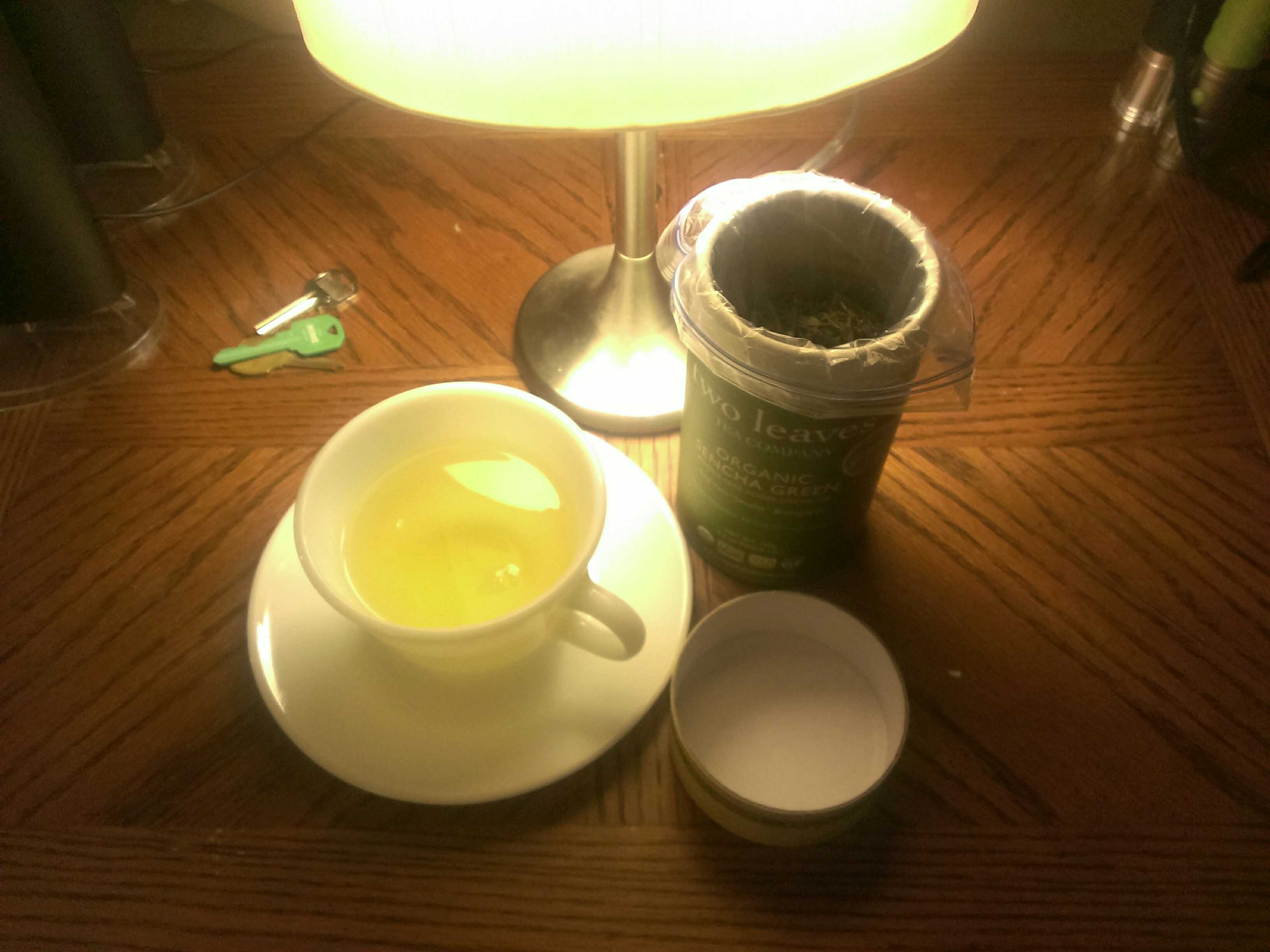
 

Product: Sencha green tea

Brand: Two Leaves and a Bud

This is a delightfully fresh flavored tea with a vivid greenish-yellow liquor. This tea has primarily vegetal aromas  and flavors similar to white asparagus with hints of herbs like mint and parsley. This tea is highly aromatic with a mellow flavor on the tongue and a refreshingly smooth mouth feel. The liquor feels slightly more viscous than water and leaves behind a faint dryness on the tongue. Although light sweetening does improve this tea for some, it has a natural sweetness and as such some drinkers may find sweetening to be entirely unnecessary.

Preparation: my method is somewhat different than usual, so I will instead provide a more generic description. Prepare fresh water and heat to approximately 175 degrees Fahrenheit before pouring a small amount to warm the pot. Empty the pot and put in a heaping teaspoon of leaves for each 8 oz of water and then at least half a teaspoon for the pot. Pour in the water and allow to steep, stirring slowly, for 1.5 to 2.5 minutes. This tea is best when hot and becomes astringent easily, so be very cautious about the water temperature and the steep time. Going over three minutes for the first steep will result in an almost undrinkable pot of tea. If a short steep is used for the first pot, the tea may be steeped again. When re-steeping, adjust the time by adding another 15 to 30 seconds to the steeping time. 

Place of acquisition: I purchased this product on sale at my local Fresh Market store for about $5. This product typically retails for about $8.5 for 100g of tea.

This is interesting. I myself love tea, but I've never gotten around to trying other blends other than the the green, black and jasmine tea I usually drink. So recommendations from a community I respect would be really nice.

Do you have any information about those teas? Brands would help me determine if I already own the tea and can provide a description of it. Also, expect more such tea profiles in the future, as I make more pots of tea. I make them three mugs at a time, and I can only drink a pot every two to three hours, so it takes me a bit of time to get through with these descriptions.

Hmmm, even though I said I loved tea, it's been a while since drank a cup.

The last one I made myself was from some green tea bags my Aunt sent, and I never really took notice of the name lol. The jasmine tea is the one I get from this Chinese restaurant I usually eat at during weekends, and the black tea is from a Korean barbecue place I go to when I get bored of the Chinese one( BTW, they're not fast food), so I don't really know the brands.

All I can say is that the green tea tasted generic, the jasmine tastes subtly sweet and smooth( it's my favorite), and the black had a strong, smoky, somewhat burnt taste.

Yeah, I know, I don't sound much like a tea lover lol ^__^"

Sorry if I'm not adding much to the conversation.

I'm getting a shipment of some teas from Adagio soon, I'll post what I find

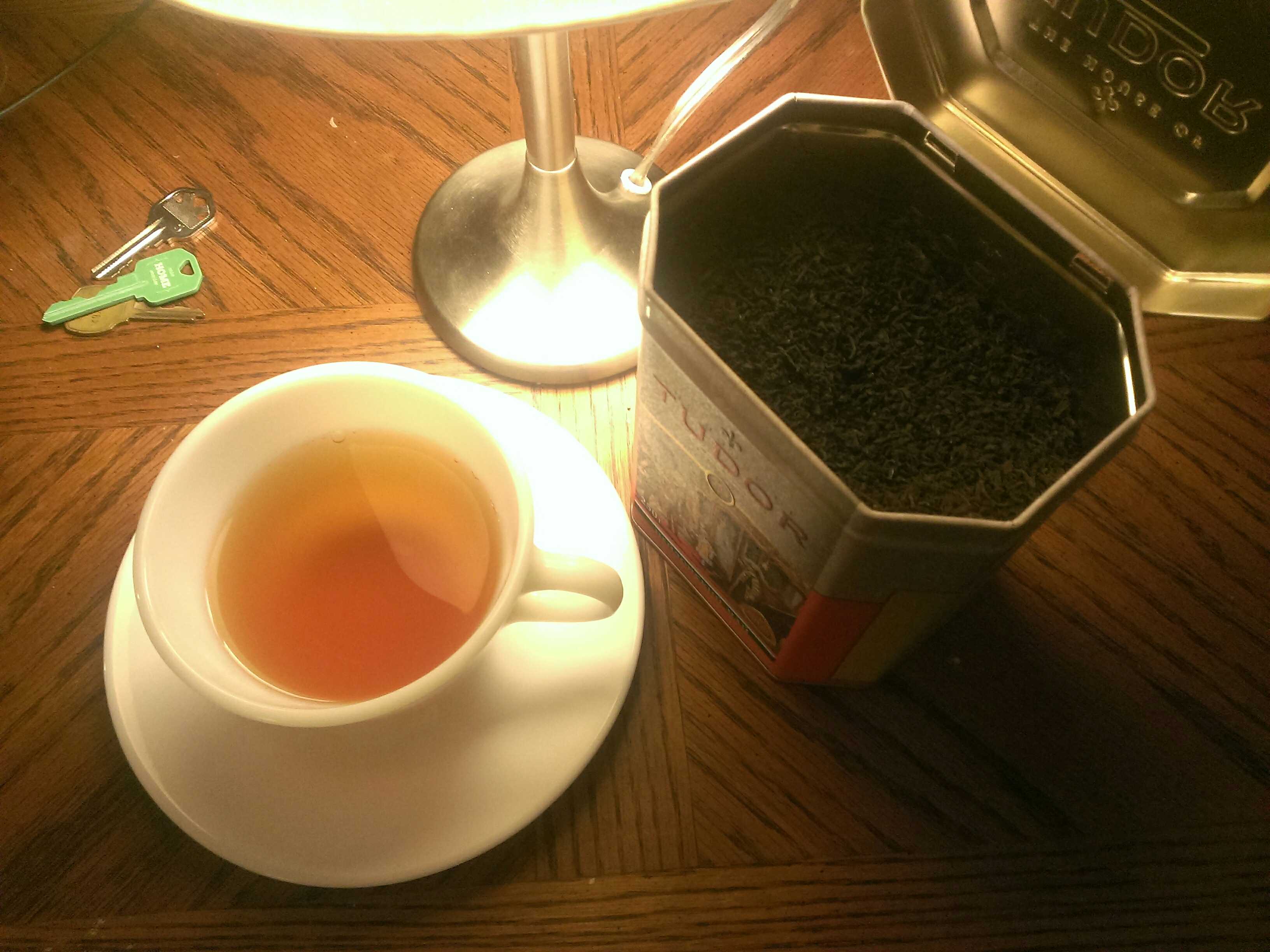
Product: Ceylon black tea

Brand: The House of Tudor

This richly colored warm brown tea hides a surprisingly delicate flavor and aroma. This tea has a light flavor on the tongue and is primarily aromatic with nutty flavors reminiscent of black walnuts, however, the primary flavor is almond in both the form of the drupe and the blossom. This tea also has a slightly earthy aroma and a more noticeable earthiness in the flavor. The most astonishing part of this tea is the mouth feel. This tea has, despite the vivid color, a rich and velvety mouth feel that still manages not to contaminate the palate with an aftertaste or any other sensation such as dryness or astringency. It seems almost as if it were already prepared as a milk tea.

Preparation: my method is somewhat different than usual, so I will instead provide a more generic description. Prepare fresh water and heat to approximately 205 degrees Fahrenheit before pouring a small amount to warm the pot. Empty the pot and put in a heaping teaspoon of leaves for each 8 oz of water and then at least half a teaspoon for the pot. Pour in the water and allow to steep, stirring slowly, for 2.5 to 3.5 minutes. This tea is best when hot and becomes astringent easily, so be very cautious about the water temperature and the steep time. Because this is a cut-leaf or processed tea, this is unsuited for re-steeping. This tea is, however, an excellent candidate for preparation with milk, and a tablespoon of almond milk per mug is recommended.

Place of acquisition: I purchased this product on sale at my local T.J.Maxx, so I have no idea where it can actually be purchased at normally.

Don't worry about that. On this post, any conversation about tea is one worth having and any input is good input (if not just because it keeps this post spamming the top spot on The Feed.)

I like that brand. I've tried their standard Rooibos (quite sweet, but it tastes like stevia, with a vivid red coloration and a flavor that is a bit one-note.) and their Citrus Green (bright yellow liquor with very vegetal aromas and flavors such as zucchini with some citrus aroma to add interest; a faintly sweet tea that is good for the stomach) and their Peachy White (also bright yellow with less vegetal aromas, those being replaced by the sweet scent of peaches, the actual flavor of peach is very understated in the liquor and the tea is not particularly sweet in flavor and is quite drying on the palate.)

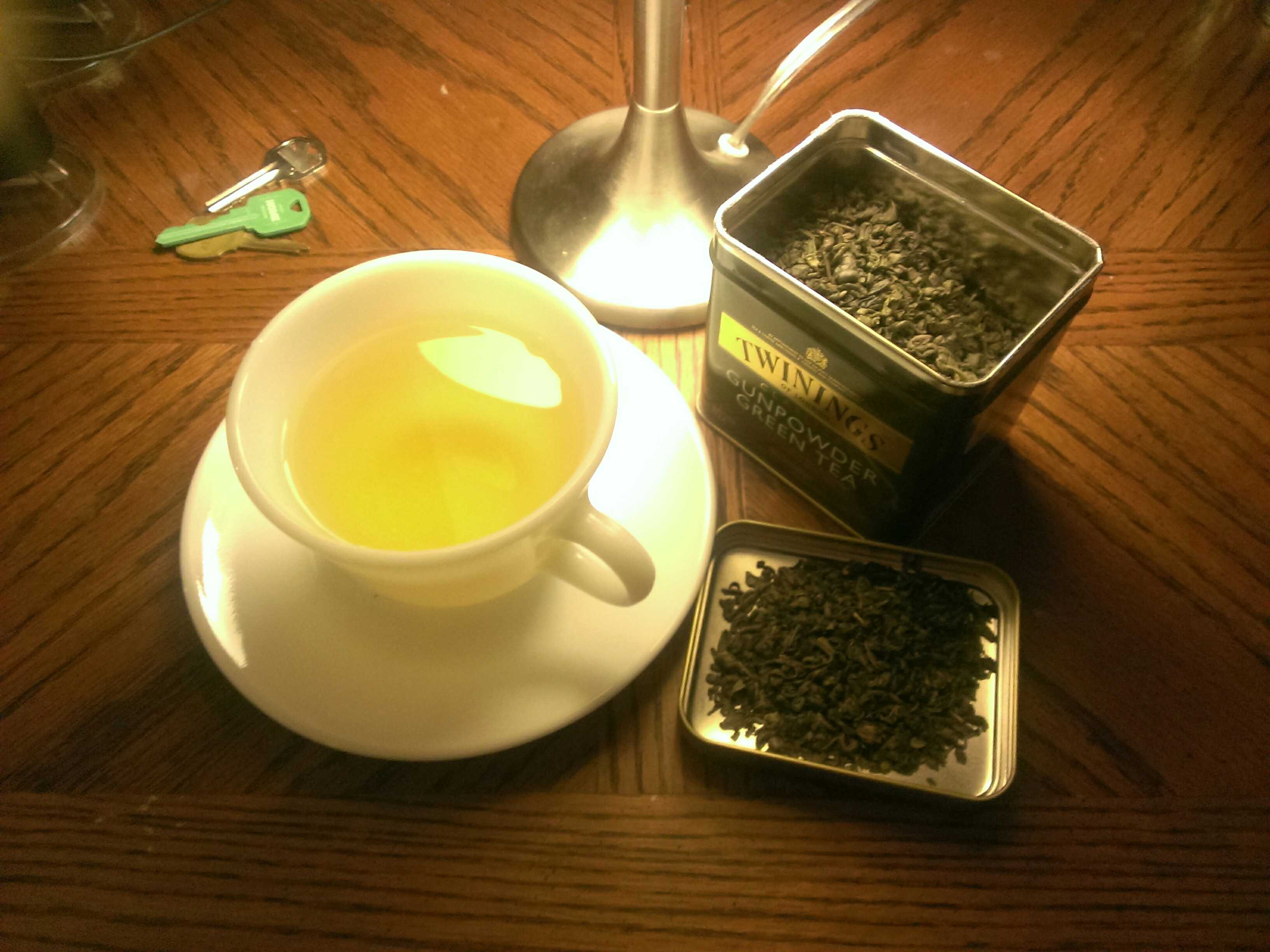
Product: Gunpowder green tea

Brand: Twinings of London

This tea has a beautiful golden liquor and a heady smokiness that, along with the carefully rolled leaves, lends the name of gunpowder to this delightful green tea. This tea has the usual gamut of vegetal aromas and flavors, but this time they are tempered with a faint earthiness and a  distinct smoky aroma. flavors that can be picked up on the tongue include faint traces of mint and pepper that remind me of butter lettuce. The mouth feel is thick and heavy, almost viscous like honey and it has a very dry finish, especially after multiple cups. This tea also has a natural sweetness that may remove the need for sweeteners. This tea is an ideal candidate for mixing with spearmint to create Moroccan Mint tea.

About this variety of tea: rolled teas are prepared by picking, steaming or frying then partially drying and rolling the tea leaves. Most leaves are now rolled by machine, although some high-quality leaves are still prepared by hand. This labor intensive process typically raises the price dramatically, yet may not be an indicator of better flavor. These rolled teas should be tightly wound into even pellets and have a sheen to them. Rolled teas stay fresh longer than others because less surface area is exposed on the leaf.

Preparation: my method is somewhat different than usual, so I will instead provide a more generic description. Prepare fresh water and heat to approximately 180 degrees Fahrenheit before pouring a small amount to warm the pot. Empty the pot and put in a heaping teaspoon of leaves for each 8 oz of water and then at least half a teaspoon for the pot. Pour in the water and allow to steep, stirring slowly, for 1.5 to 3.5 minutes. This tea is best when hot, it resists astringency rather well, so there is less of a need to be very cautious about the water temperature and the steep time. Due to the nature of rolled teas, the tea may be steeped again after the first batch has been served. When re-steeping, adjust the time by adding another 15 to 30 seconds to the steeping time. 

Place of acquisition: I purchased this product at my local Fresh Market store for about $5.5 dollars for 100g of tea.

Most people say that they don't think they'd like a tea that has flavors like smoke or spicy lettuce. I wouldn't go for it having only heard that, but this tea, and most green teas, defy logic. They smell like lettuce or asparagus or even just grassy, but their taste is astonishingly good. This tea is one of those, where the actual flavor is much more than the sum of its parts, and it is a tea that I highly recommend people try if they say that they don't like green tea. A week later you visit those people and they've picked up five different types of green tea.

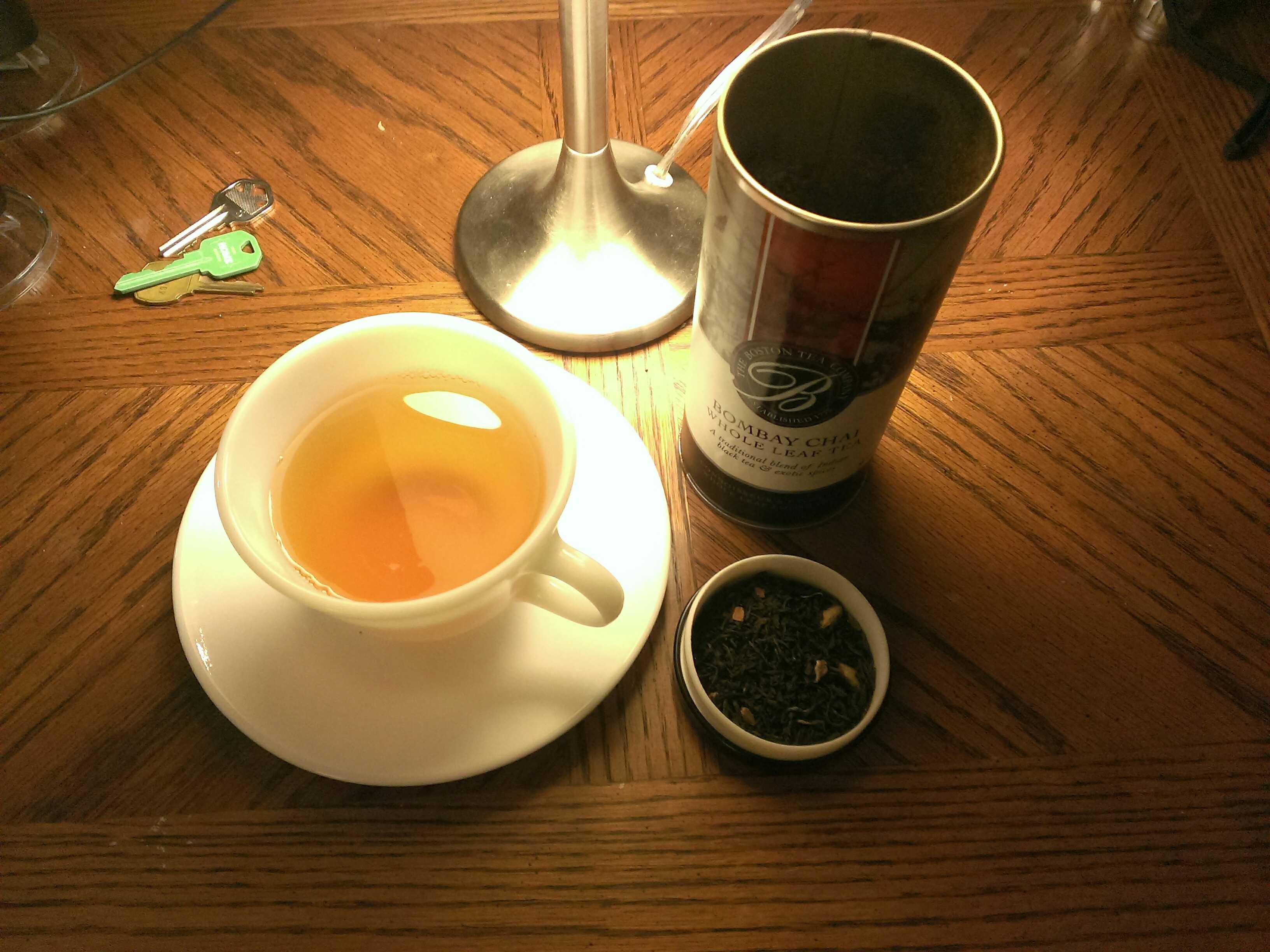
Product: Bombay Chai

Brand: The Boston Tea Company

This tea has a beautiful spiciness in the aroma that cuts completely through the usual aroma of Assam tea. Strong aromatic notes of cinnamon and cardamom are accented by flavors such as ginger and cloves that tickle the tongue and provide a minor heat on the palate. A very faint orange flavor blends wonderfully with the smooth tea. The tea provides earthiness and a very faint smokiness to the tea and a smooth body to the liquor.

Preparation: my method is somewhat different than usual, so I will instead provide a more generic description. Prepare fresh water and heat to approximately 205 degrees Fahrenheit before pouring a small amount to warm the pot. Empty the pot and put in a heaping teaspoon of leaves for each 8 oz of water and then at least half a teaspoon for the pot. Pour in the water and allow to steep, stirring slowly, for 3.5 to 4.5 minutes. This tea is best when hot and becomes astringent easily, so be very cautious about the water temperature and the steep time.If a short steep is used for the first pot, the tea may be steeped again. When re-steeping, adjust the time by adding another 30 to 60 seconds to the steeping time.  This tea is, however, an excellent candidate for preparation with milk, and a tablespoon or two of whole milk or almond milk per mug is recommended.

Place of acquisition: I purchased this product on sale at my local T.J.Maxx, so I have no idea where it can actually be purchased at normally.

i drink my tea hot with honey and my coffee coolatta cold  

1 Like

You seem to have a very low level of respect for people in the US (from a couple posts). I like Chinese green tea and my wife grinds fresh and uses a french press or vacuum pot if a whole pot is needed. Her uncle roasts them, I brew the wine and beer... It's a big country.

Tea at 190.

No wonder you don't like US drinkers with their washed up tasteless Starbucks and similar coffee & donut shops everywhere. I've tried twinnings green with honey and it's just right for me. I like earl gray with milk, other teas just don't mix as well.

You've got a good thread going with those pictures and descriptions and instructions.

http://www.youtube.com/watch?v=pDPrh35dC0A

you are the exception, congratulations. All people have the capacity to rise above the ordinary into the grace and wonder of a higher level of food enjoyment. 

To be frank, the US is a fantastic place to be. We are an extraordinarily wealthy country with vastly diverse cultures that have melded to create a singular entity that we deem as being an American. Unfortunately along for the ride have come certain concessions such as time and quality. It definitely didn't start with us, but we American innovators, for the sake of our busy schedules out innovating us a sparkling new future, made such things as fast food. Now there is a whole slow food counter-culture as people go back to the roots and the golden period of food. The US is just beginning to experience such a thing in our prepared beverages. So it isn't that I necessarily think poorly of the US, I just know how pervasive the poor quality standards have become. Nowadays such concessions are necessary for most due to the price of other forms of preparation, so my main goal is to show off things that, well, I can afford and explain what you can expect and how it should look. If I can afford it and make it, then anyone can afford it and make it.

Tea temps vary based on the size of the leaf, the origin of the leaf, the oxidation of the leaf and the shape of the leaf. So a chopped black tea can be prepared at a slightly lower temp than a whole large leaf black tea because it extracts so quickly that there really isn't a need to have carry-over heat during the rehydration process. The case is different for white teas which will literally scorch at temperatures higher than 180. Burnt, almost papery flavor from scorched white tea. So take temperature recommendations to heart. Coffee is the same way. The finer the grind, the lower the temperature necessary for full extraction. Certain beans from varying locales prefer different temperatures.

If you like Earl Grey with milk try this: acquire two pods of Madagascar vanilla and cut them in half. You can usually find these at the grocers, if you are willing to pay their price for them. Indian markets or a Fresh Market/Whole Foods ought to have them for a better price. After cutting them in half just bend them around a bit until they become quite flexible and fragrant. Then stuff them into about four cups of sugar and let them sit, with the daily shake, for about 2 weeks. Mix some of your new vanilla sugar in with your Earl Grey and milk for what has been dubbed London Fog.

unfortunately I cannot appreciate honey or agave nectar because they give me really bad indigestion. Quite unfortunate, really, because I like the flavor of honey in my green teas.

The peculiar thing about Starbucks is this: the coffee itself isn't bad. Their preparation, and most drip coffee preparation with Starbucks coffee is bad. Starbucks coffee is actually quite good, but for some reason most of their blends are incredibly delicate and should be made at lower temperatures for slightly less time. I played around by preparing it in a french press. You cannot use water fresh off a boil. Try 185 degrees for three to four minutes. It's actually pretty good. Still not as good as my Gevalia, or as I like to say, my cup of Johan.

Trying this ASAP!