You know how 110V/220V appliances never really corrode and “voltage drop” vs. anything 12V? It’s been awhile since I researched but from what I remember the lower voltages have a lower resistance to the air? They easily condensate and something about the larger current putting more stress on the metal contacts
like motherboards run at 24V last I checked and we never have to clean them like automotive batteries
the downside apparently is higher voltage can’t handle impacts as well as lower voltage. So a 24/48V lightbulb will blow out while a 12V from the same shock will handle it and keep working
Never really heard that (besides, I saw old aluminum wires in old houses pretty much corrode so badly that if you try to bend the wire, it just snaps the conductor inside the plastic sheathing). But I could see how copper wouldn’t really have that disadvantage.
Well, the higher voltage and lower amperage means less losses on the lines. Expected.
Ok, I can see that. Pulling a lot of amps heats up the wires and terminals, making them more susceptible to corrosion. It makes sense, although it’s not something I heard people complaining about (aside from marine applications, or places with humid and salty air, like near the ocean).
Not sure what kind of motherboards you’re talking about. Most PSUs in computers come with a large 12V rail (and PC fans are all 12v, so are HDDs and SSDs, along with a small 5v rail if you use sata). But their connectors are so close together and wire-runs are so small it probably doesn’t really impact them (if it’s the PC mobos we’re talking).
Part of the reason I was so into 12v for so long is the plethora of things that run at 12v (fans, car cigarette lighters with type-C 100W power delivery, fridges, even monitors, speakers and computers - although in my case I have a 19v monitor and 16v speakers, which I needed to adapt).
But 48v has so many advantages that it just makes sense to go with that and use step-down converters where you need only 12v.
I don’t think that would ever be an issue. In my economic theory I see 24/7 economies what will pretty much end the current stagflation.
And power grid photovoltaic probably won’t ever go beyond 50% as we still have hydro, wind, hydrogen, fission and fusion at some point.
That is already a thing. But bakeware is usually cheaper because it is from “yesterday”. Still 24/7 there is always someone awake. So there has to be people making sure they are safe, these people won’t necessarily go to store in the day time when they sleep. This has been a huge problem for me as I worked in a 12h shift night and day, coming back home to notice that everything is closed is quite annoying.
Adoption has been slow and companies still have no ““incentive”” to build locally. Same with the chip and electronics industry, clothing industry and car industry. That is what ““free”” market capitalism gets you. Production moves to cheaper places to get more revenue.
Solar can also be installed by anyone (depending on local laws). HV electricity is quite simple as most parts come pre built so it is just to connect one cable to the other and insulate everything. “Ground your devices before the devices ground you”
Depending completely on the region and local electricity prices. Some times electricity is free or almost free (0,01€) as the production increases. There are always some outages some where or maintenances on production facilities that increase prices. Then you notice that you save quite a lot. Some people can have the investment fully covered by their own production in a year and some already earn money adding to the electricity sold on the market.
The thermic summer is also getting longer and in that way making even more sunny days.
There are many different types of batteries and many of them are not harmful, toxic nor unsafe to touch. It could even become a thing for you to sell to the local battery bank.
Electricity decentralization would allow for more bargaining power against producers and line maintainers. In Europe it doesn’t matter as much as most lines are owned by the state as it is a natural monopoly that would allow companies to increase the prices over time. Or worse, see South Africa.
But this is just what yellow and black (ancap) gets you.
Not after we increase carbon tax. Easy way to incentivize non polluting electric production
And probably not many will as other options become cheaper and bans and fees on polluting engines come into law.
Germany does have local photo voltaic production for a long time and they were the pioneers.
Wind is also built in Europe by Vestas and mechanical workshops.
NorthVolt is currently having trouble with finances as there is not enough business incentive to produce in these expensive countries. It would require further subsidies or tax incentives on fossile production methods. But mining is starting and someone is or has done the math already to setup production near by.
There is a large battery that is being built somewhere in Finland that utilises geothermal properties to store it. Might be sand based but I’m not sure and I can’t find the resources that I saw.
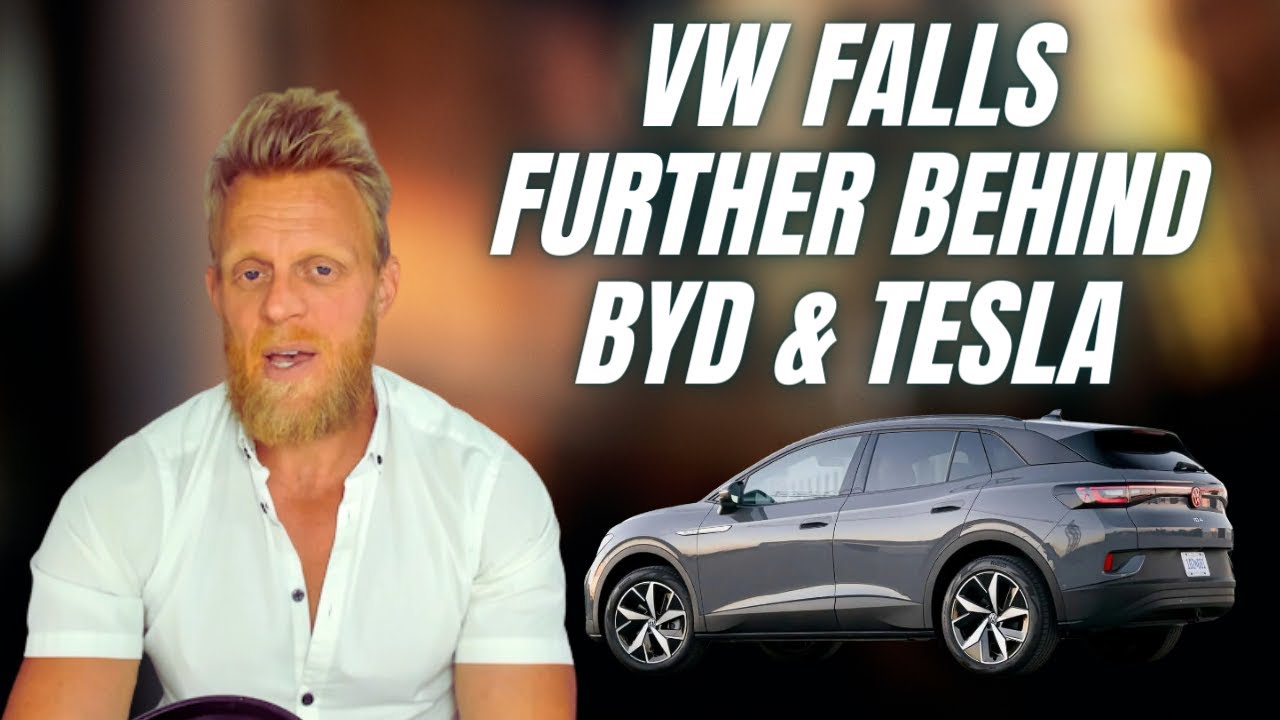
From stock and production capacities you can see that companies still focusing on fossile fuels are going down. You can ser VW as a prime example.
And especially when the youth’s buying power is way lower and all the extra costs of owning a vehicle and the fact that many live in a city. People are not buying cars new anymore and whatever there is now is slowly being used for spare parts or melted down or even converted. The share will slowly decrease.
These empty wastelands also exist in other regions of the world and not only on your plot.
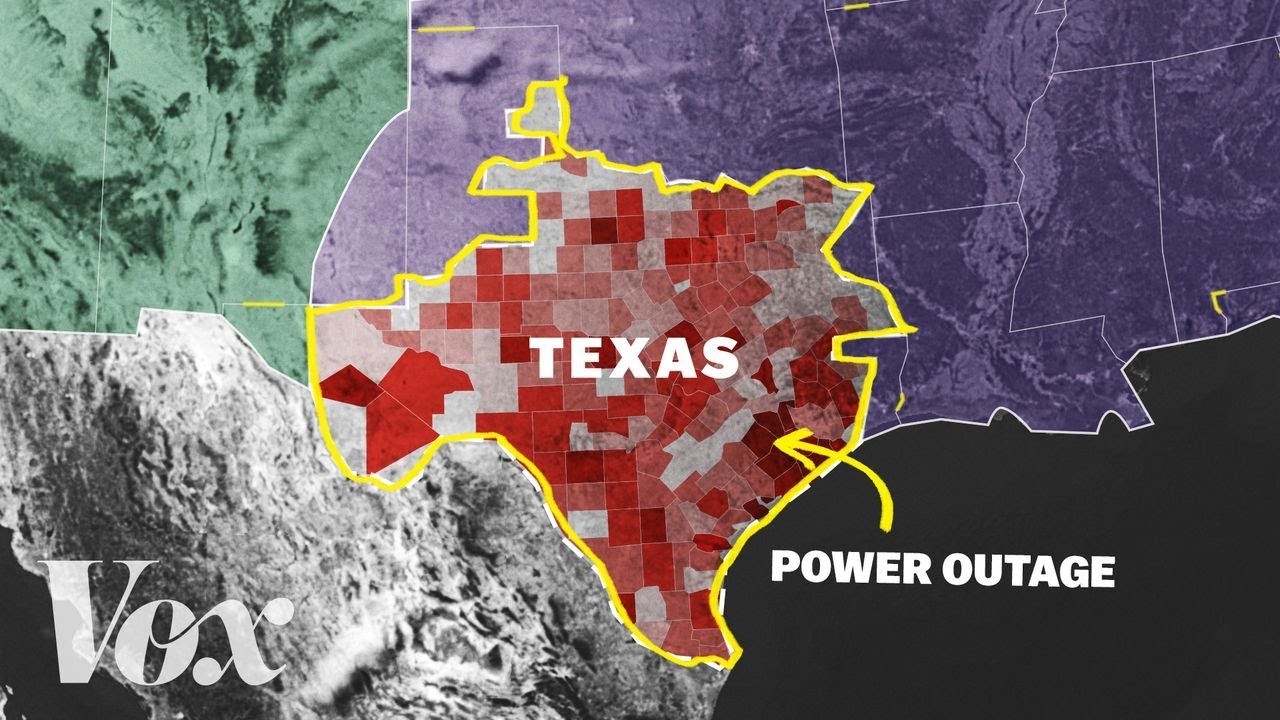
The issue could’ve partially been mitigated by connecting to the neighbouring states or Mexico. Even in Europe all the states are connected.
Because there is not enough financial incentive to stop new plastic production. There is a reason “Just Stop Oil” exists. I think the message is quite clear on that one. It would definitely create a lot more jobs in recycle, mechatronics, automation and machinery.
Because electricity prices have been rising in countries where the producers are few and own mostly the lines. So self production would reduce demand and so costs, in a “fair” and “free” capitalist market.
Gas is not cheap. The production of solar or wind electricity doesn’t require almost anyone on site. For gas you have to build pipelines, protect these from elements and people, build shipping terminals if you import or export, refineries and the burning facility, then the security of that and the maintenance crews that measure constantly for leakage.
Currently in the USA the companies “self report” so guesstimates if they even want to. Why continue the pollution?
If you are smart you could have your back up hydrogen fuel cells. Like having a jerrycan.
Nobody except right-to-repair laws are stopping you from upgrading/converting your own property in a way to make it not fail.
Totally agree. The problem I mostly have is that it does not save money for most people, they were just tricked by a sales man with wrong calculations.
I like these hippie ideas, especially because I like to thinker with stuff.
There is just one big problem. They use a lot of space, complicated installation and maintenance.
But in reality, in a EU home, you basically need zero energy besides heating.
You need that heating in the winter, when you don’t have PV energy.
Thanks to the 400% efficiency, heat pump can almost keep up with the fossils in terms of pricing.
One good example would be using solar to heat up water. We used to do that here for warm water. Then we realized, that thanks to the 400% efficiency heat pumps, it makes zero sense to install them and switched to PV. So even that not so much hippie crazy idea is not feasible anymore. If we now look at your example, a fridge, I am sorry to tell you that a fridge uses basically zero energy and there is absolutely no point in store cold water. It is so little, it is not even worth making it smart to adjust it to your PV production.
That does not matter. Even if you expand the grid, the numbers stay the same. Just add a zero at the end. The only thing that changes is that maybe you can produce wind in the north, when there is no sun in the south and vice versa. The peak problem is still unchanged, no matter what the scale of it is. You can only make it a little bit less bad.
Totally agree. Unfortunately not realistic.
That is all based on assumptions. I am not even sure if the gas ban will stand until 2030 in Europe.
Bad examples. Germany sold everything to the Chinese. Yes, there were pioneers like Meyer Burger. Now it is not even sure if Meyer Burger can survive another year.
@Rogue-agent my argument is that EVs are not as cheap as gas cars. You respond with 5 videos? Are you serious?
Bingbingbingbing! 100 points for you!
Now, until we start to recycle PET, can we please stop pretending that we actually do recycle PET because it is financially not feasible? Yes, we might recycle PET and batteries in the future, but we are certainly not doing it now! And please don’t give me now a link to some obscure 10 people company in Norway that claims to recycle batteries. We are not doing it right now! And that is fine be me, we don’t recycle a lot of things. Even worse things like PET.
That is why it makes sense to spend the amount of 16 years of my electricity bill right now?
Ignoring opportunity costs? How is that freeing me in any way? My grid provider is not my enemy I am enslaved to. Again, I am not saying that it makes sense for nobody. I am just denying the fact that it makes sense for everybody.
You can replace the example with coal. But still, gas, coal and nuclear are all dirt cheap.
Why does Amazon, Microsoft and Bitcoin miners reopen old power plants in the US instead of building solar? They all have the optimal use case for solar, since they can scale their power needs up and down. Still they are going with fossils and nuclear.
There is only one reason: money!
Yea fissile fuel cars are cheaper. I can go to a farm and buy one that has been standing there three decades and have it probably for 100 bux. Electric cars have not existed for long enough to make production efficient enough and exist in the wild to drive the price by competition. But many of the producers probably don’t even want to drive the price down as the prices bring in good money.
Then we also have government subsidies when buying and tax exemptions which help with buying. But still personal cars are still loud, producing pollution and take a way space in cities.
We do partially recycle plastic and it is increasing as you can’t just dump it or burn it everywhere. But still, plastics need to be drastically cut down as they have a severe impact on life for thousands of years to come. As nano plastics clog up our blood vessels or transfer in food to infants to cause miscarriages or hinder the growth of the infant to develop properly. Or currently Influence of Bisphenol A on Type 2 Diabetes Mellitus - PMC causing diabetes and hormone changes in people. https://youtu.be/PJnJ8mK3Q3g
But I don’t know if you noticed all of this is quite up and coming and new. Electric cars, batteries, recycling. Because there has been no proper move to stop ruining the planet we only now get the first row seat on tackling all of this and forming the laws to make it the defacto standard to continue. And the next generation can fix the imperfections.
And I’m not disputing it either. In some places the electricity bill for their 30m² apartment falls to 40 or 60 bux a year. Then it is perfectly understandable that it is not suitable. But owning the means of production, your own resources and tools, allows you to never go beyond your bills. See if you have a financially hard month, you can produce all you need and save the rest, but on connected households without any means, you have to pay for the electricity as you need your devices to work. And in dire times the prices can rise and the transfer prices can also.
Because it exists. Hydrogen platforms are basically a dream becoming reality in a decade or so. Hydro usually requires water, which is becoming scarce because of climate change. Wind is still being hampered by permits and old people yelling at clouds. Bio fuel plants are also on the come up, as we need to get rid of excess bio waste. Geothermal is rare as people don’t know about it but some 80% of Iceland is using it.
See the issue here. Because these energy producers have been allowed to run rampant they have not done anything for the future. Like I said before the projects have now started or a while ago. This is all WIP.
Capitalism, gotta love it. “They would throw your mother in the chipper if it made them more money.”
Going to the cause and solution for the mess
In the end it just depends on the laws that are passed and we end up with politics and go passed it to representation because compared to companies you don’t probably have much. So increasing the size of the senate and the congress and changing voting systems to ranked voting will give you the best representation and get your voted people into government. https://youtu.be/jucDFrO89Ko
i dunno how many times I repeat 3 year life cycles, but that comes from my EE and applies to all semiconductors.
Unfortunately, everything from LED light bulbs to SSD’s are 3 year life cycles.
You can see the components on Digikey / Mauser and see it’s the industry standard.
Mission critical appliances are 10 years, but still supposed to be replaced after 3 hence why enterprise electronics are surplused and perfectly good for home applications.
My concern is the trickle down to automotive. I’m an ASE certfied Master Technician from a past life and can guarantee this trend has been infiltrating ALL cars since the early 2000’s with trucks being the last hold out.
Europe pushed for recyclable vehicles back in the 90’s.
Soon your $80,000 EV will be forcibly locked for being unroadworthy™ after 4 years.
ECM’s are already shipped locked from European auto and bike makers, many do not function if the clock is disconnected and the time is set to a date prior to activation.
That same tech will be applied to brick vehicles in the near future.
inb4 “acktually someone will h4xx0r it… muh environment… consumer rights pushback…i’m OK with this”
We aren’t ever getting off this fucking rock in any significant numbers, if you’re waiting on the amazing magic Mars colony or whatever you can get the experience today: Move to the atacama desert, recycle your piss for drinking water, live in a shipping container, eat cultured mould.
Its not quite there, you’re missing out on all the organ damage from cosmic radiation, and the Chilean government will probably treat you better than your owner on Mars would, but its pretty close.
We’re one angry rock away from being dinosaurs 2.0
That’s before realizing a solar fart will destroy over a century of advancements, though the .gov’s will stay intact. It’s just you that’s rolled back to pre industrial living.
Chernobyl and Fukushima proved humans are far, FAR less impactful than originally hoped.
We’re running devops and production on the same server with no backups. Oh, and half the world has a room temperature IQ with root access.
No amount of virtue signaling will be able to stop that. Unironically, a pandemic that wiped out 2% of the world pop followed by a world war was our best hope.
Kinda fumbled that first one.
Mars is a play thing, generation ships to the stars is humanities’ best chance of surviving our environment.
Been there, done it. It’s how I know most subjects in first world nations will die off when the core infrastructure is disabled for a few weeks during WWIII.
Solar panels are great for backups / off-grid living but not feasible (or rational) at scale.
No amount of muh climate change can override physics when your plan is to increase the net energy on this planet by more efficiently absorbing the single largest source of energy this planet is exposed to.
As for wind: storms occur due to pressure differentials. Wind turbines increase this pressure differential. I understand 1/8 Americans live in California where tornadoes are fiction; food comes from the flyover states.
These same places are experiencing record storms in the immediate vicinity of wind farms.
How about we give third world nations a leg up by outsourcing our energy production? Stop being greedy by installing renewable energies stateside and cover other countries with net positive energy generation?
Then build the infrastructure to carry it to first world nations?
This should be illegal. I just puked in my mouth reading this.
It’s the Engine Control Modules. Moving all the critical engine functions to a “black box” e.g. proprietary ECM motherboard processor, and of course locked-down OEM software with all sorts of key checks to keep anyone but the most skilled programmers out aside from java applet updates in the shop… it’s a locked down system. Even the marketed ways to program them for custom builds (I won’t name it here) are also locked down, key licensing scams. Charging you a license fee for every damned ECM you buy. It’s disgusting.
And the fact that literally, every single ECM is different year by year. and they’re all discontinued now. So it’s only a matter of maybe 5-10 years before you’ll be forced to buy new, or if you’re me say F it and learn how to build software for a high speed communication bus engine using realtime linux (mainlined now!) and sit in a garage for years working at it.
I’m not a car guy but I’m pretty sure aftermarket ECMs are available for a wide range of engines. Can you even run an OEM ECM with any forced induction mods?
You mean the refurbished units from china? Yeah I think that service is still available.
In terms of getting one for a custom build I’m pretty sure it’s still very locked down but at least there are competitors now price checking each other’s license fees
I’d like to learn how to repair capacitors on burnt solar charge controllers and ECM’s myself. I know it’s possible and it would be a very good skill to have. Especially being able to run the soldering iron off of solar.
Mars does not have a magnetic field anywhere close to Earth, so electronics will get cosmic-evented even quicker
To second @Silt1077 , the “lets just move away”-excuse, the problems of humanity are not part of the planet, but part of humanity. Trying to flee the planet will just spread the problems instead of fixing them.
2 000 installed GW of solar panels beg to differ (so far). Oh, and globally the world is adding another 2 000 within three years, at current pace. But don’t let facts get in the way of your skewed worldview
Globally the world had ~9 TW total installed capacity of all kind of power generation by 2022, of which ~11% is solar. So if we add 2 TW of solar every third year, what do you think will happen after 15 years?
Given that every report, chart and trend line — regardless of source — clearly points to an exponential global rate of solar adoption measured in the order of TeraWatts per year, what is the logical basis for that particular worldview?
Do you not think that TeraWatts/year is “at scale”? If not, what unit would be? PetaWatts?
Despite the actual existence — and profitable operation — of many, many, many grid-scale solar farms, do you have some insight (that neither the operators nor owners of those farms have) that makes them “not feasible”? If years of proven and profitable operation is not an indicator of feasibility, what is?
Do you think there is a massive worldwide cult of irrational people who are frivolously squandering hundreds of billions of dollars per year on solar panels? If so, how did those “irrational” people manage to earn their hundreds of billions of dollars in the first place? Irrational people tend not to be good money managers.
Or do you think that some sort of statistically-likely future event will occur that renders every solar panel on the planet inoperable, whilst having absolutely no effect on any other type of power generation system (or the grid as a whole)? Do you think that solar has some sort of Achilles’ Heel?