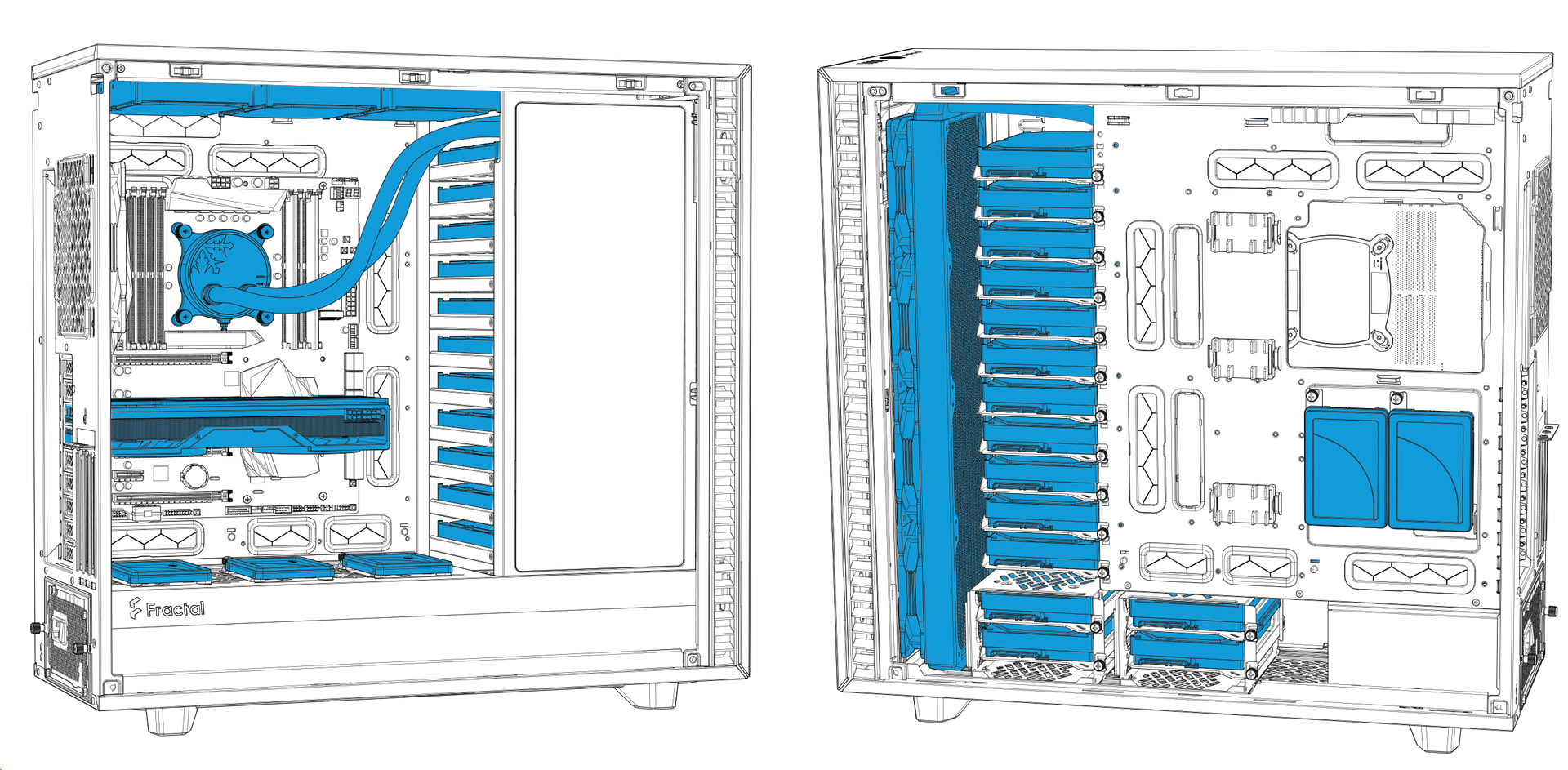
The Build

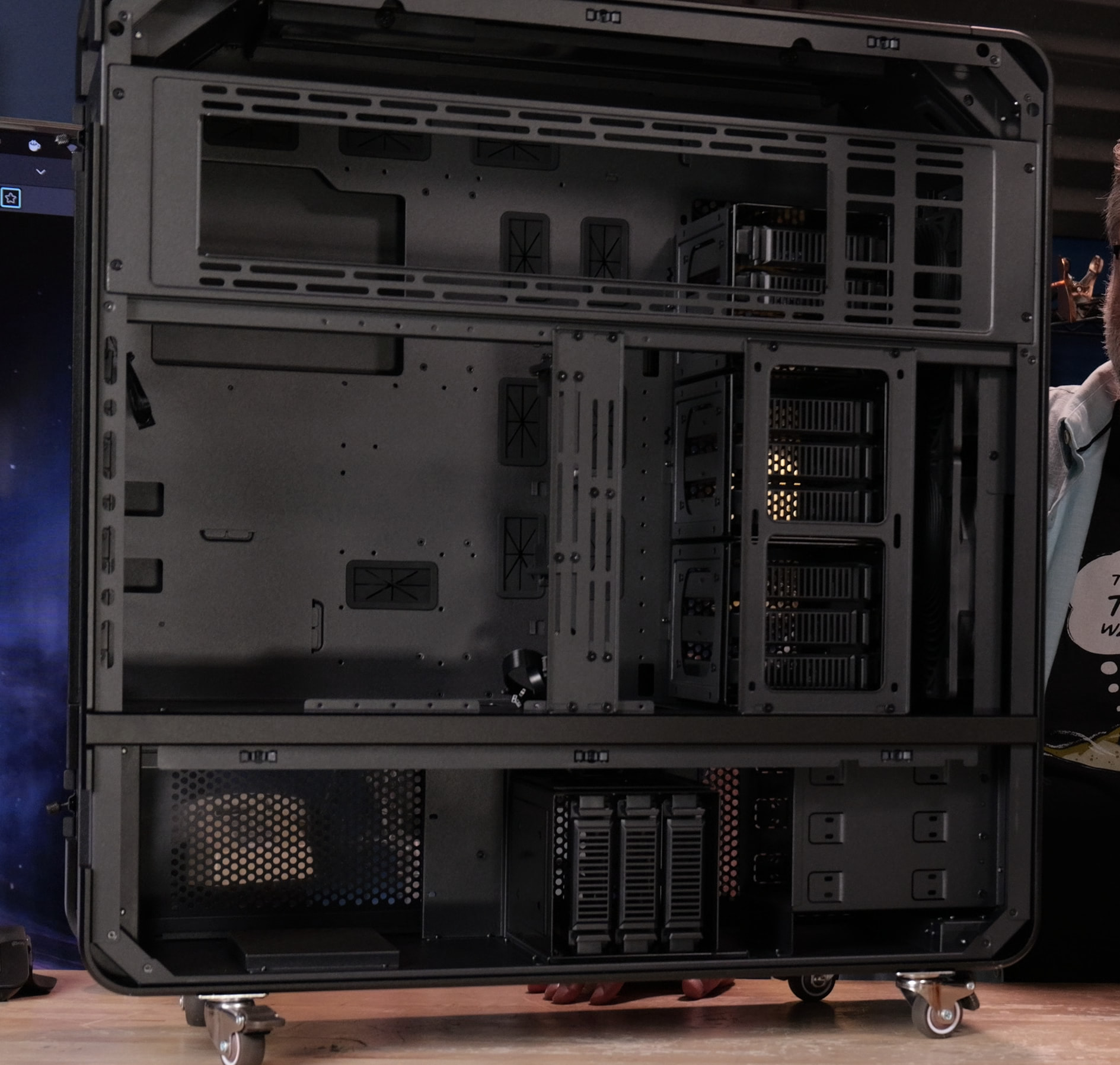
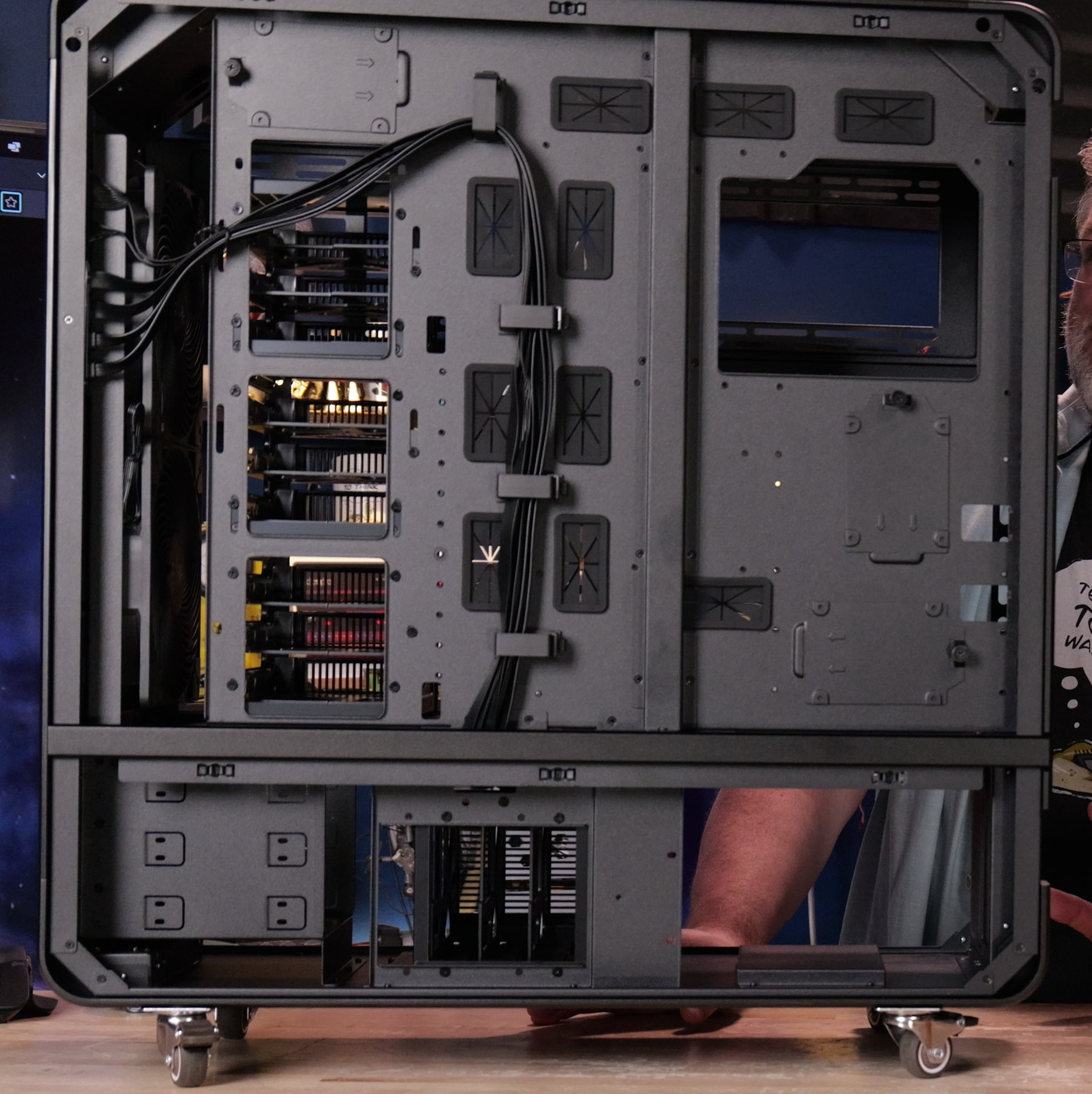
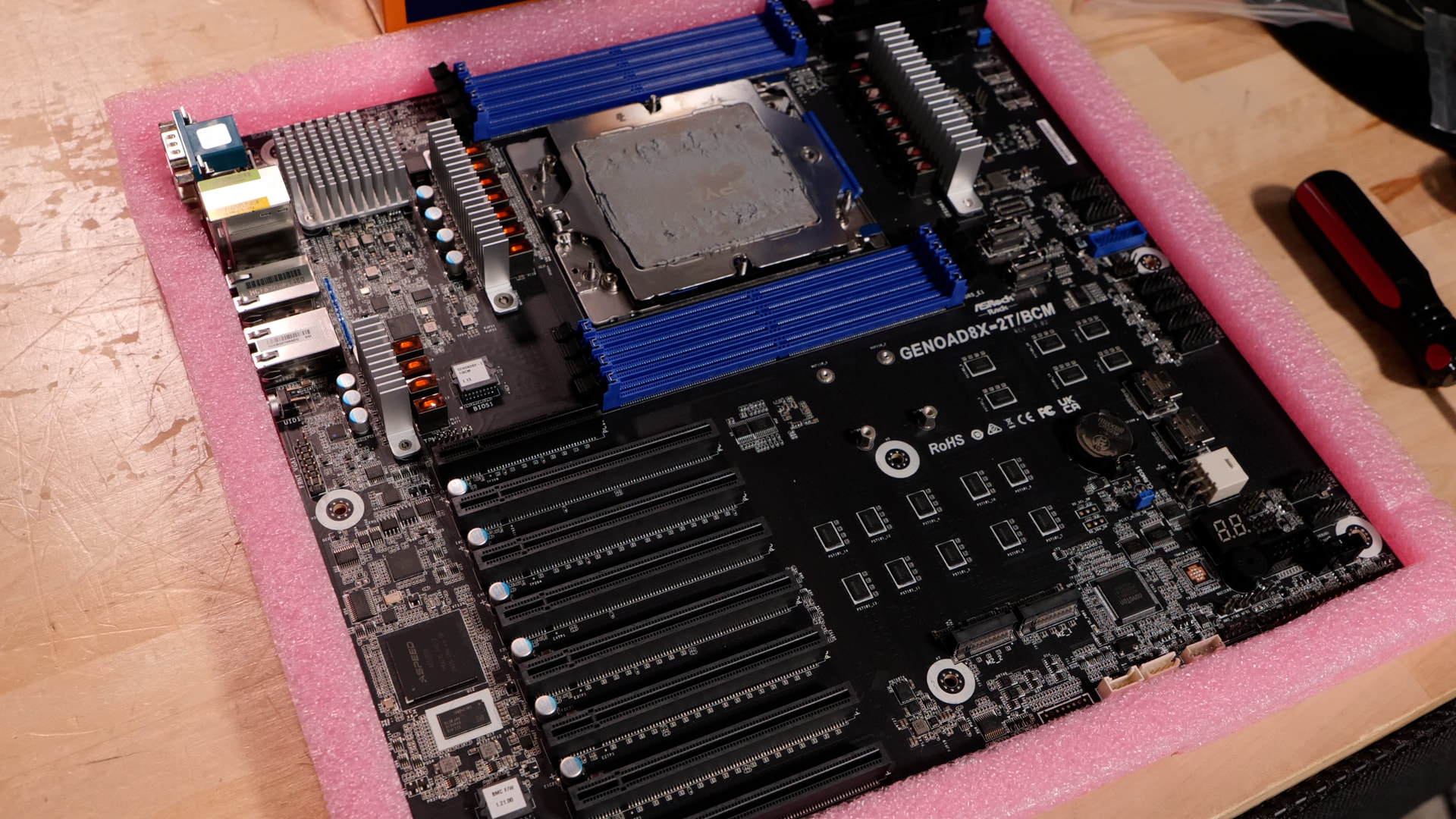
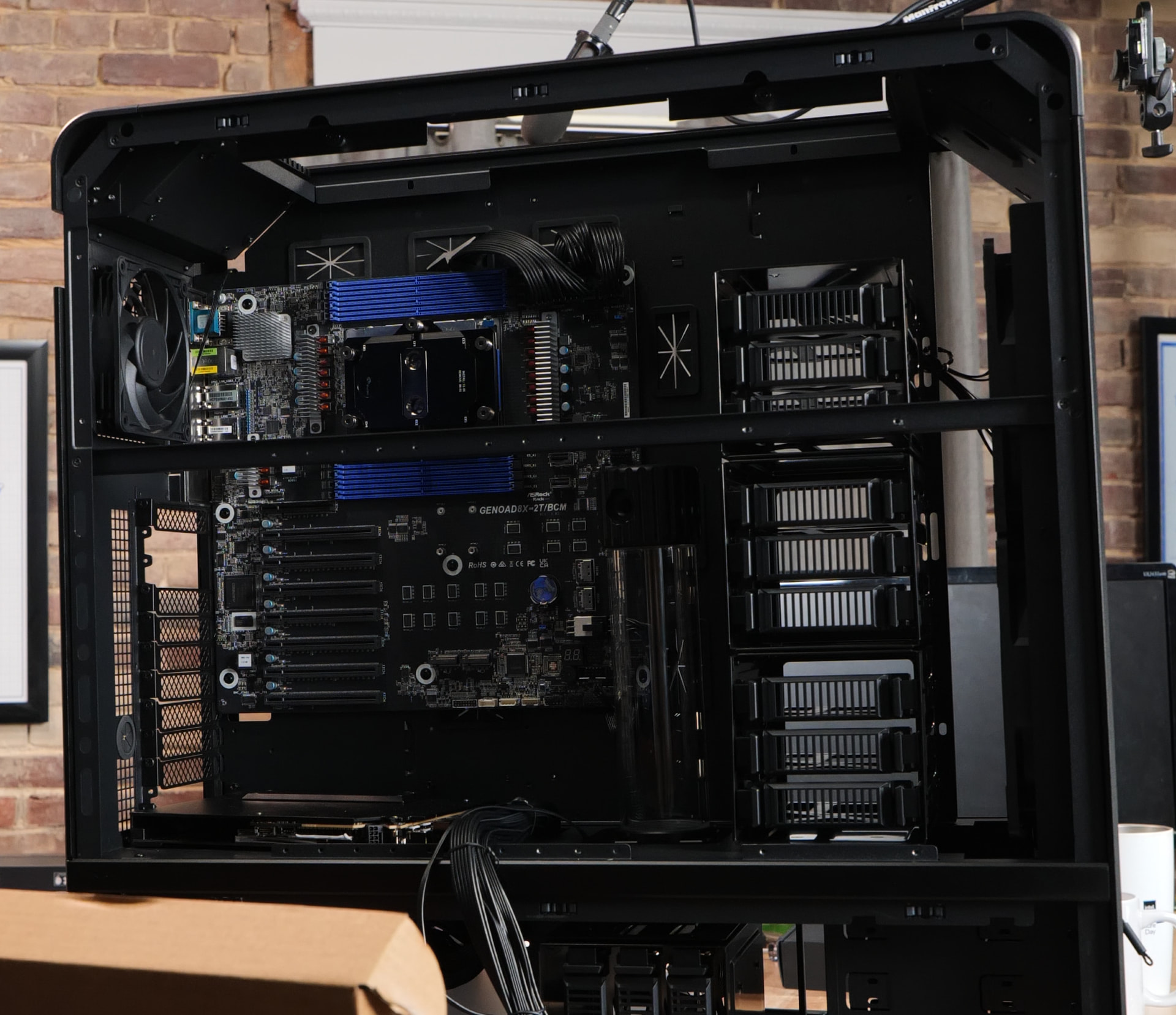
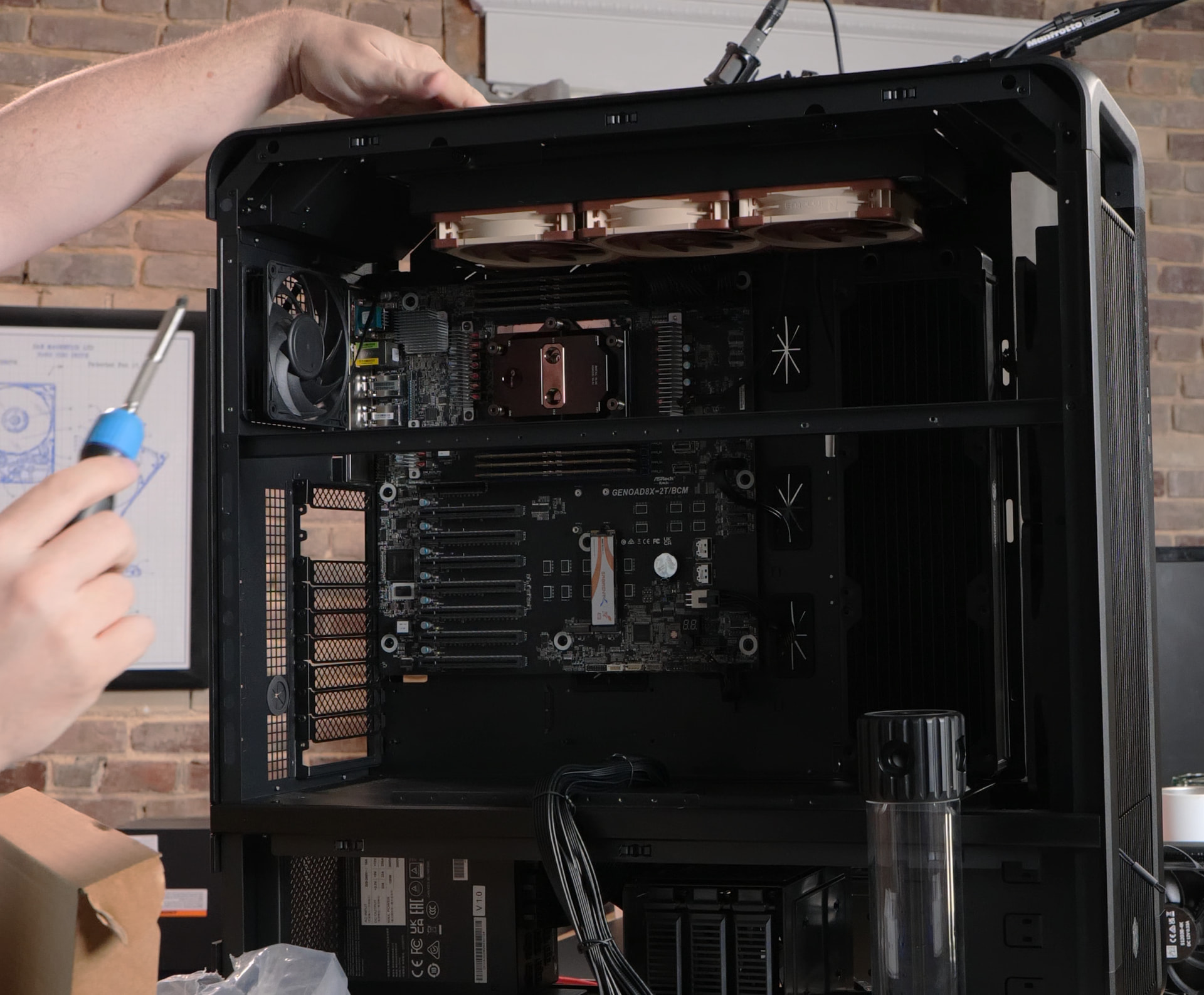

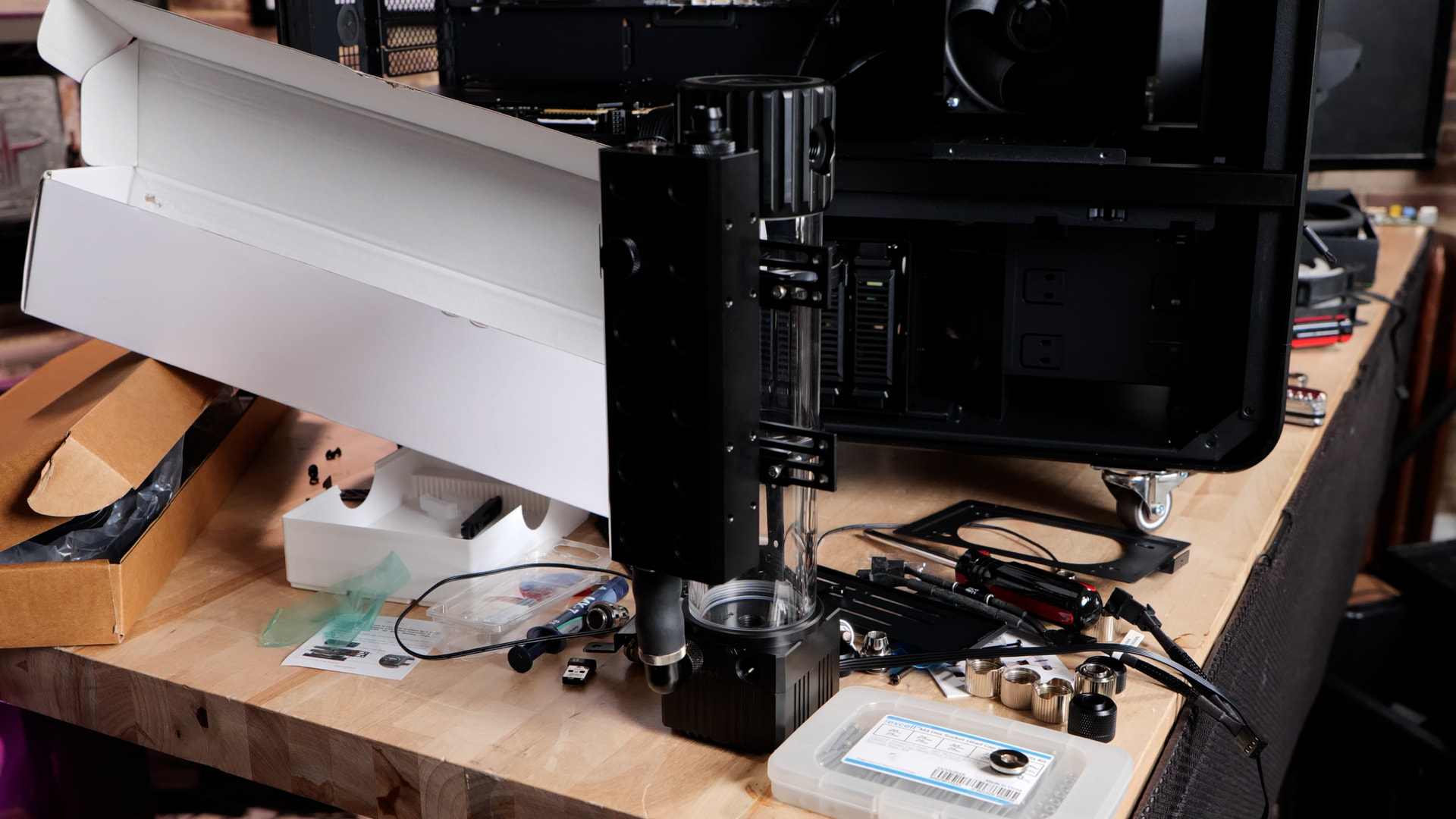

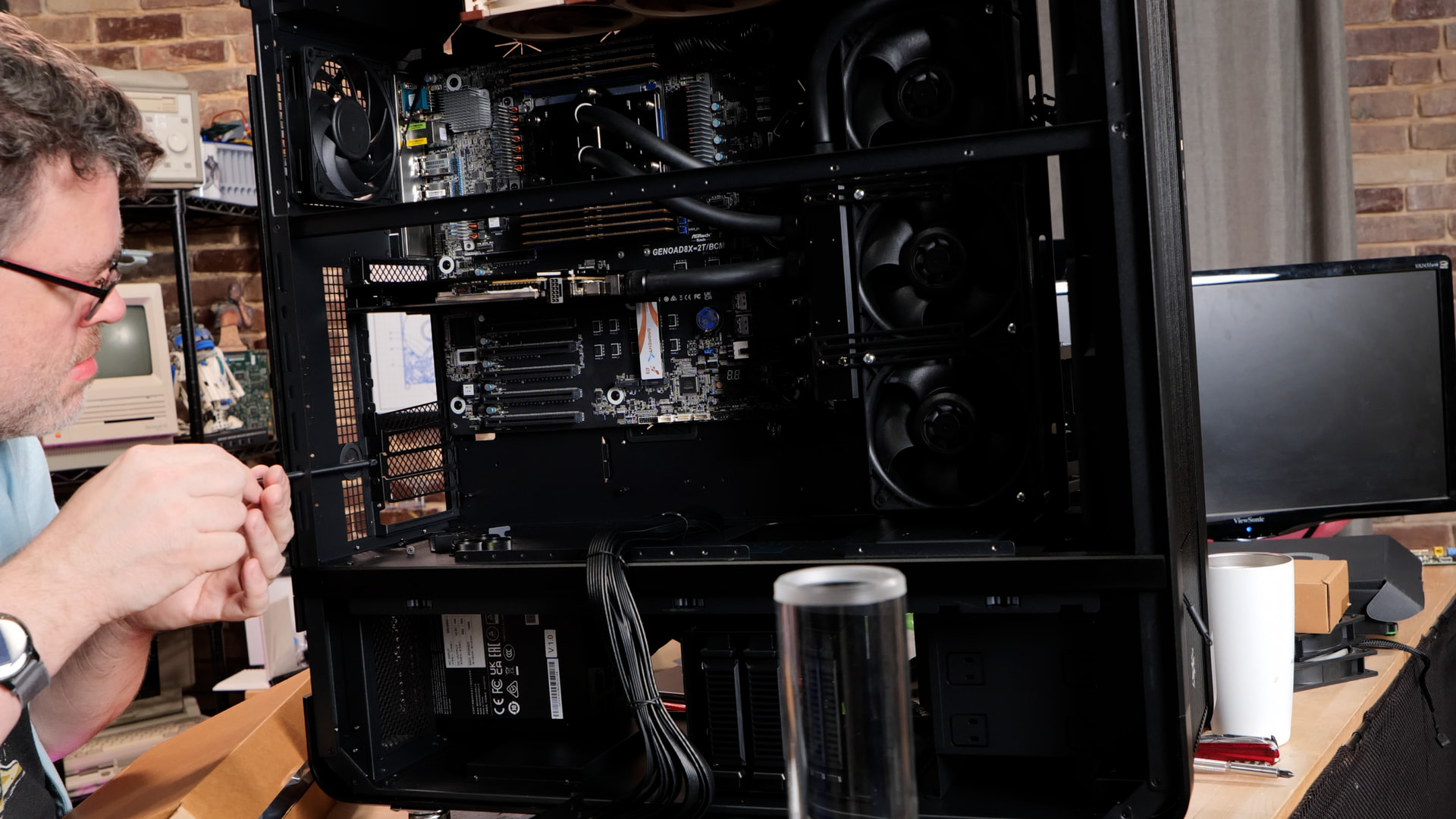

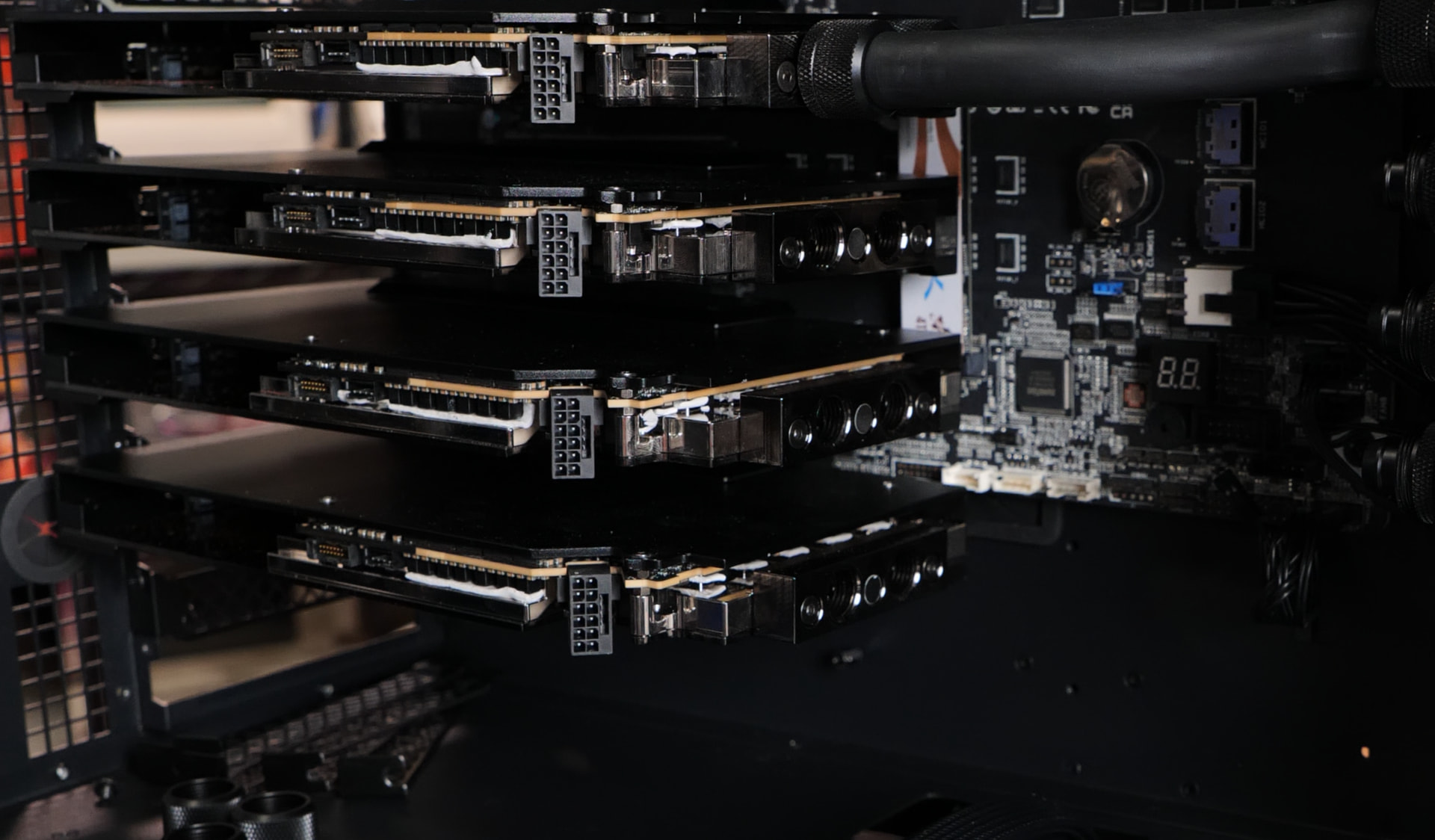
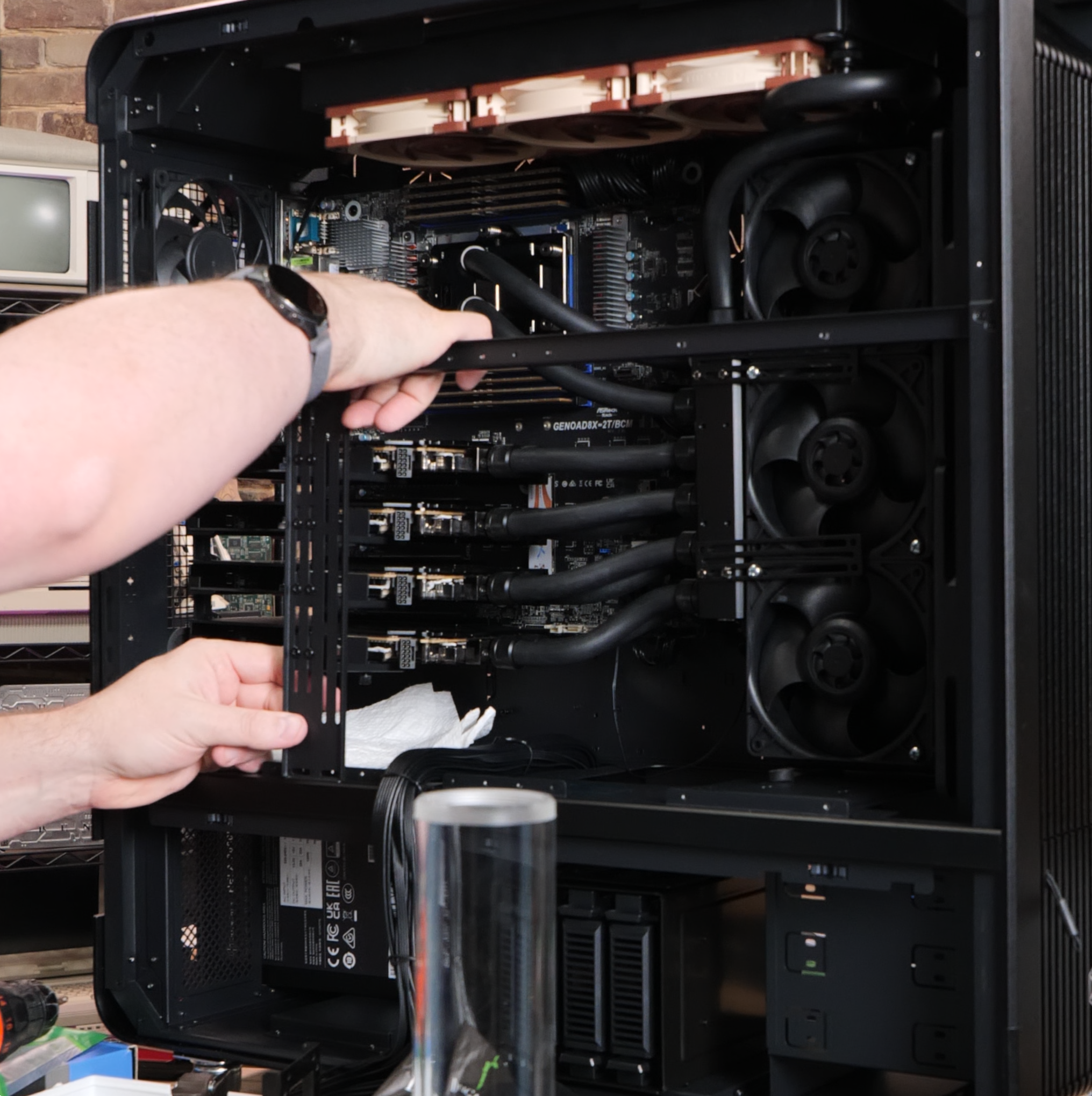

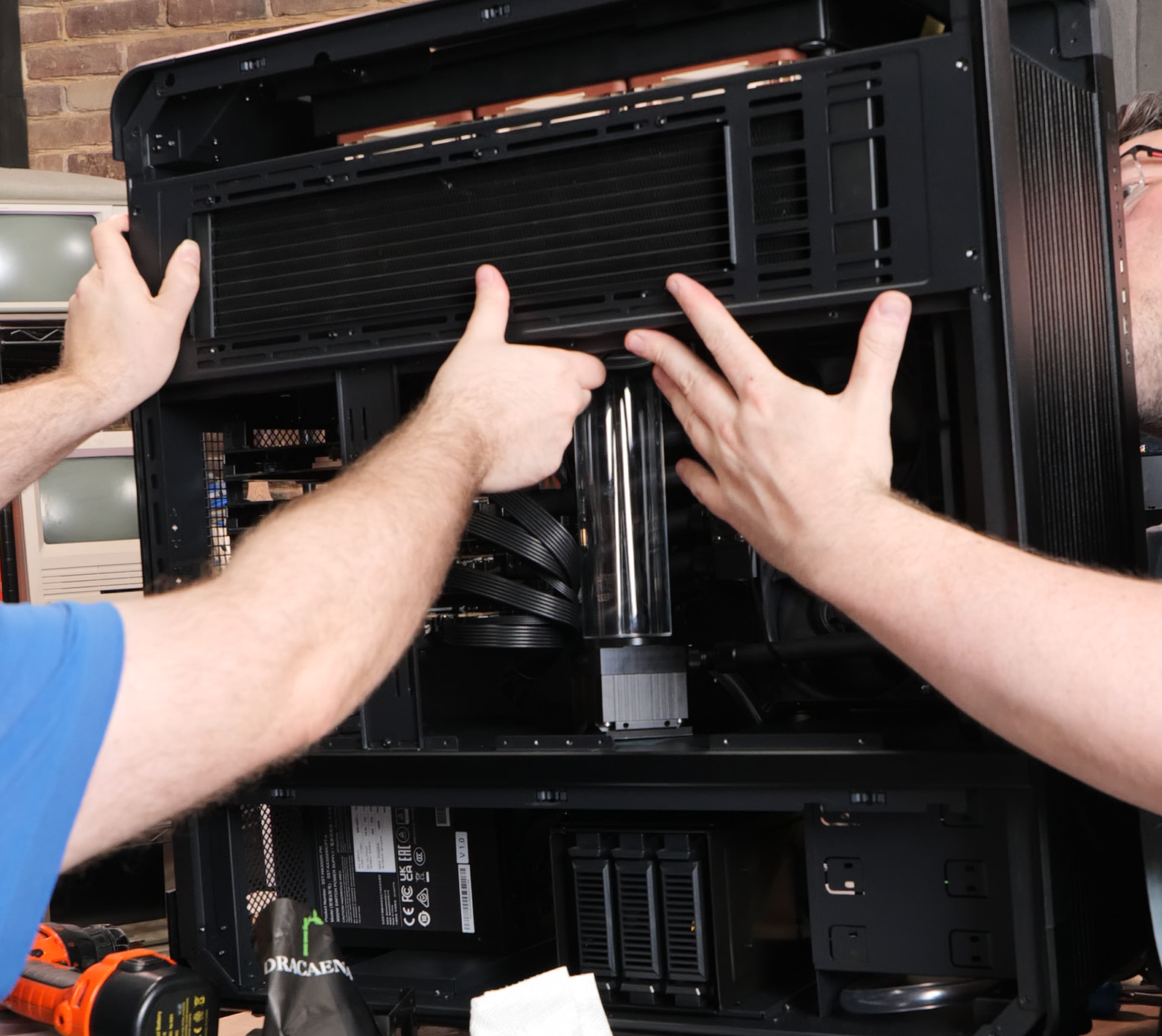
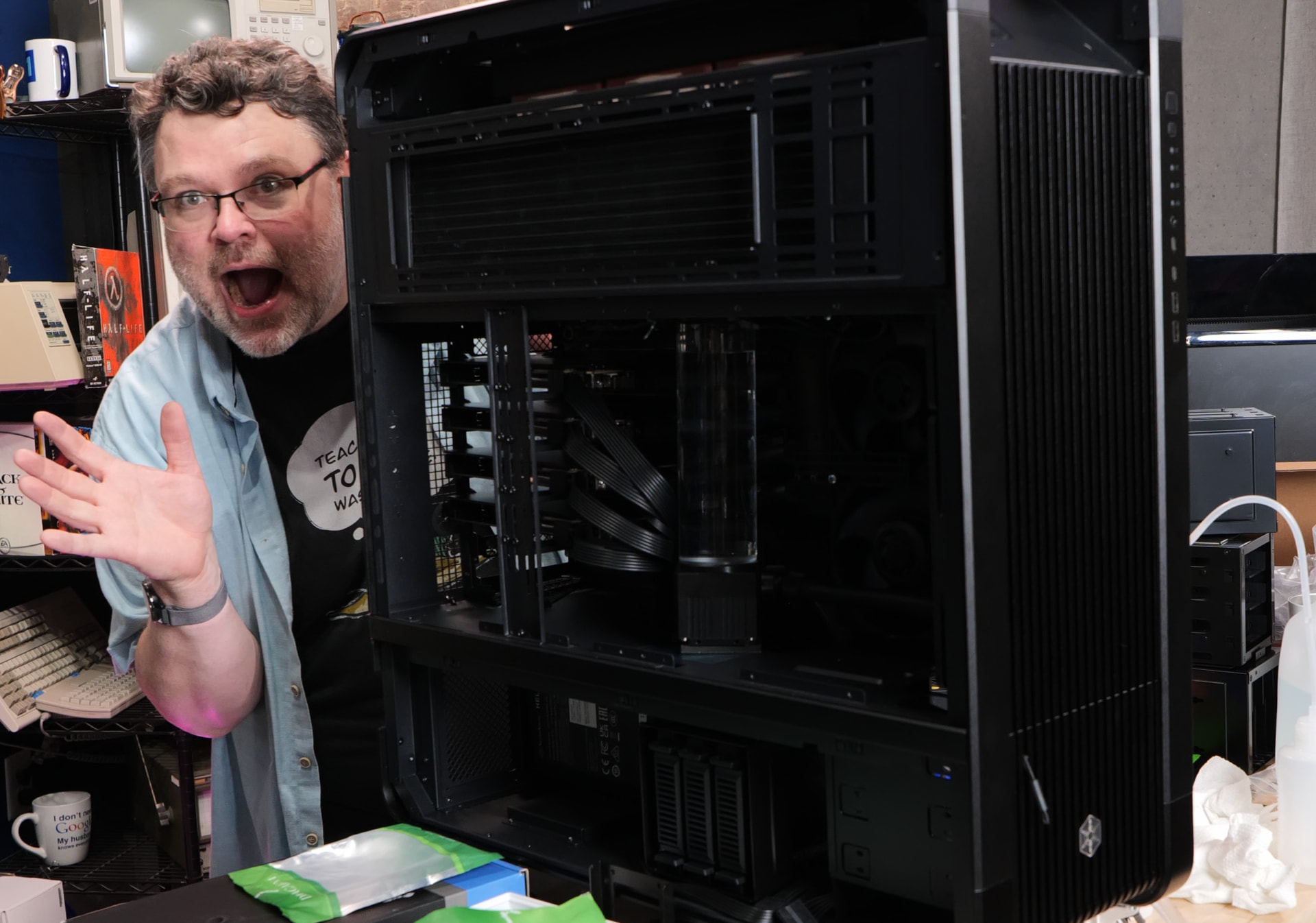
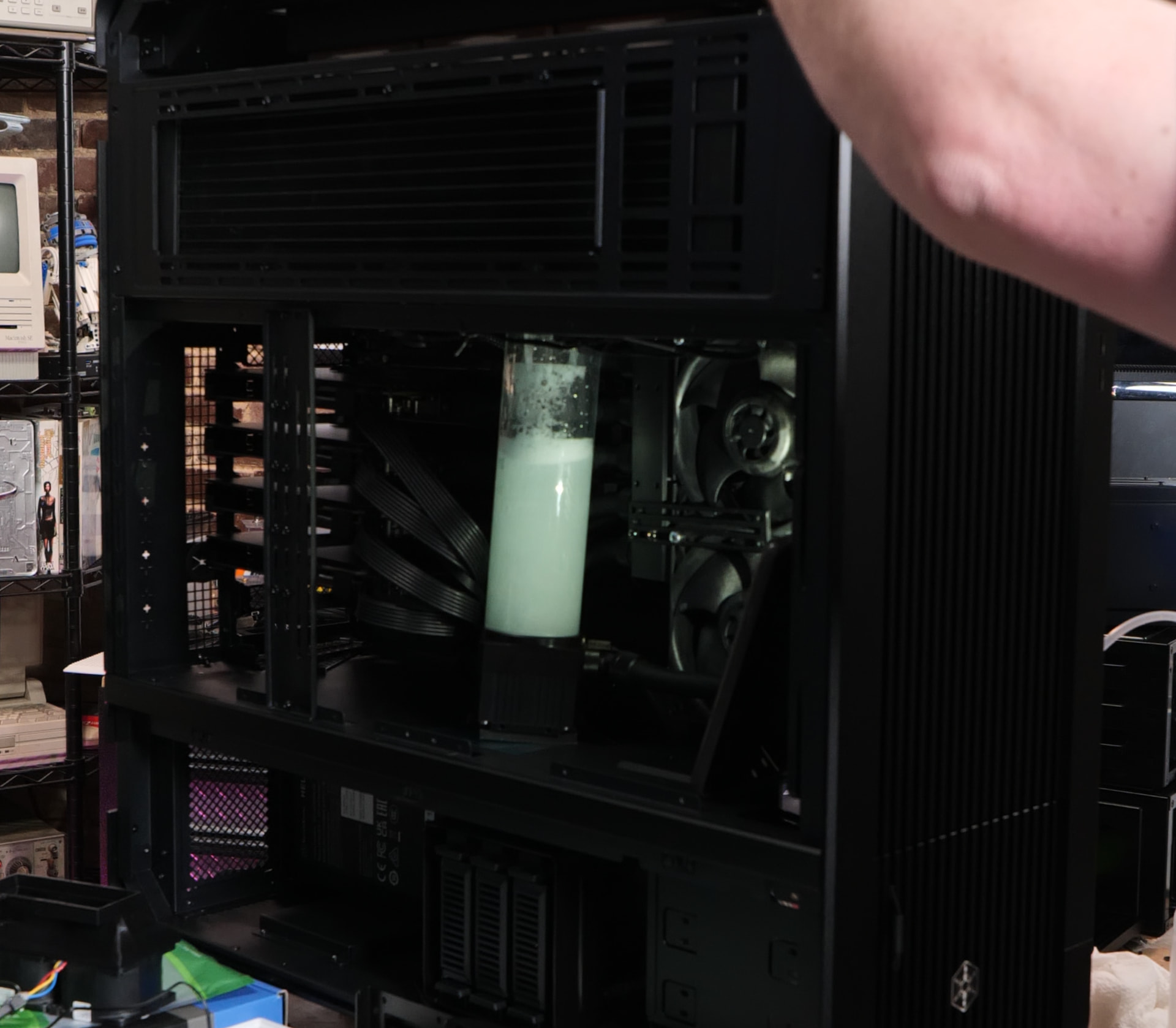
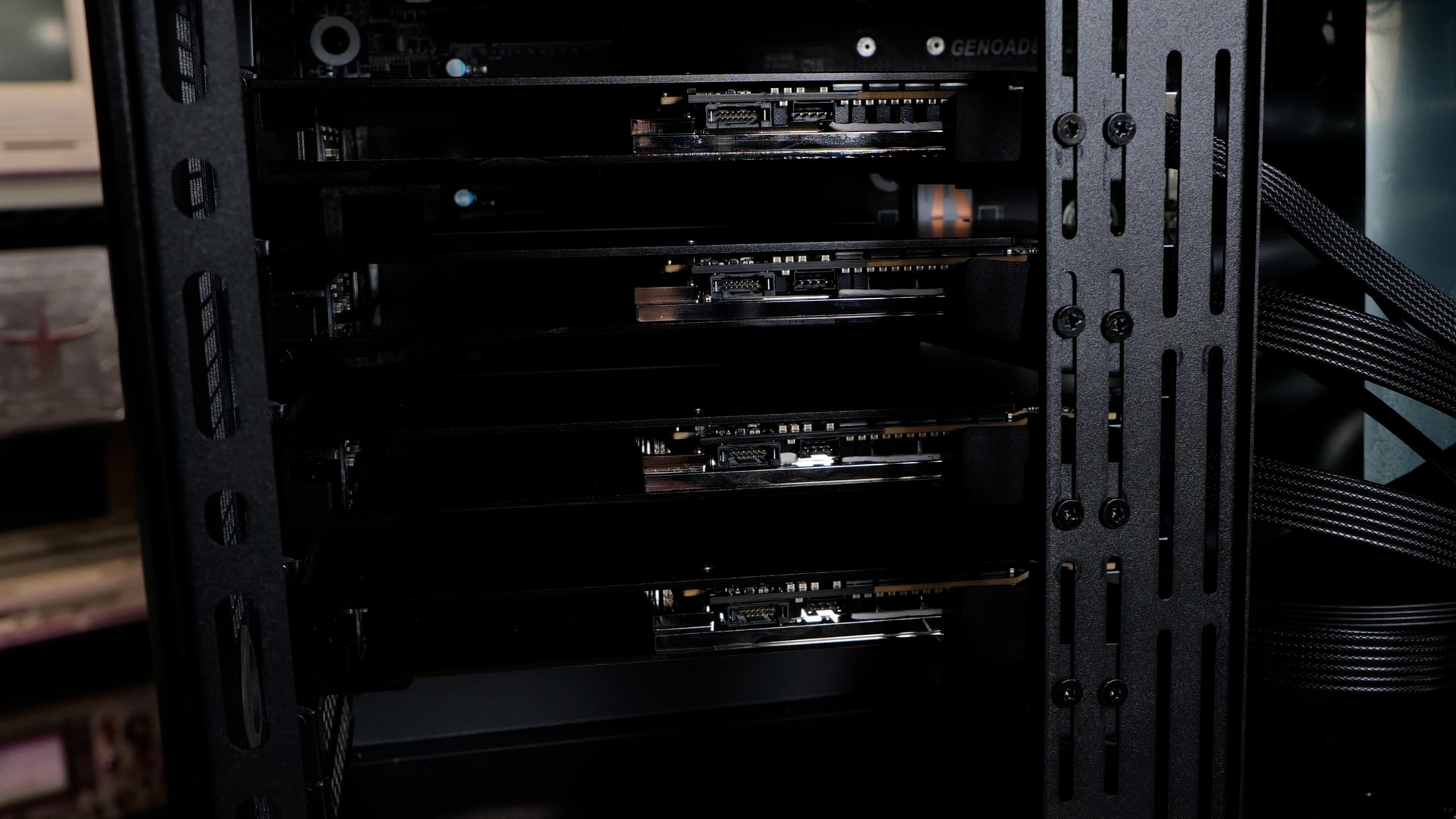
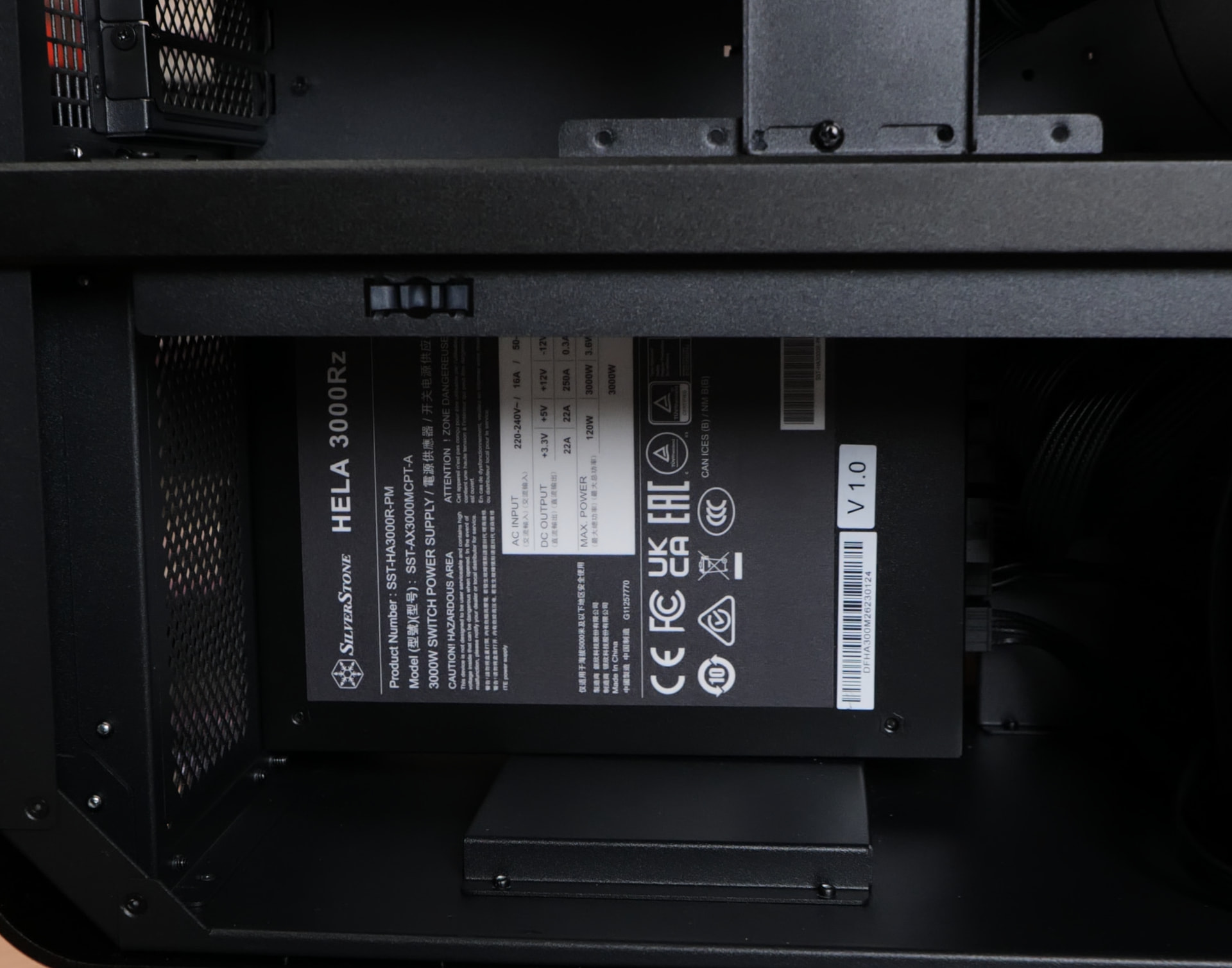
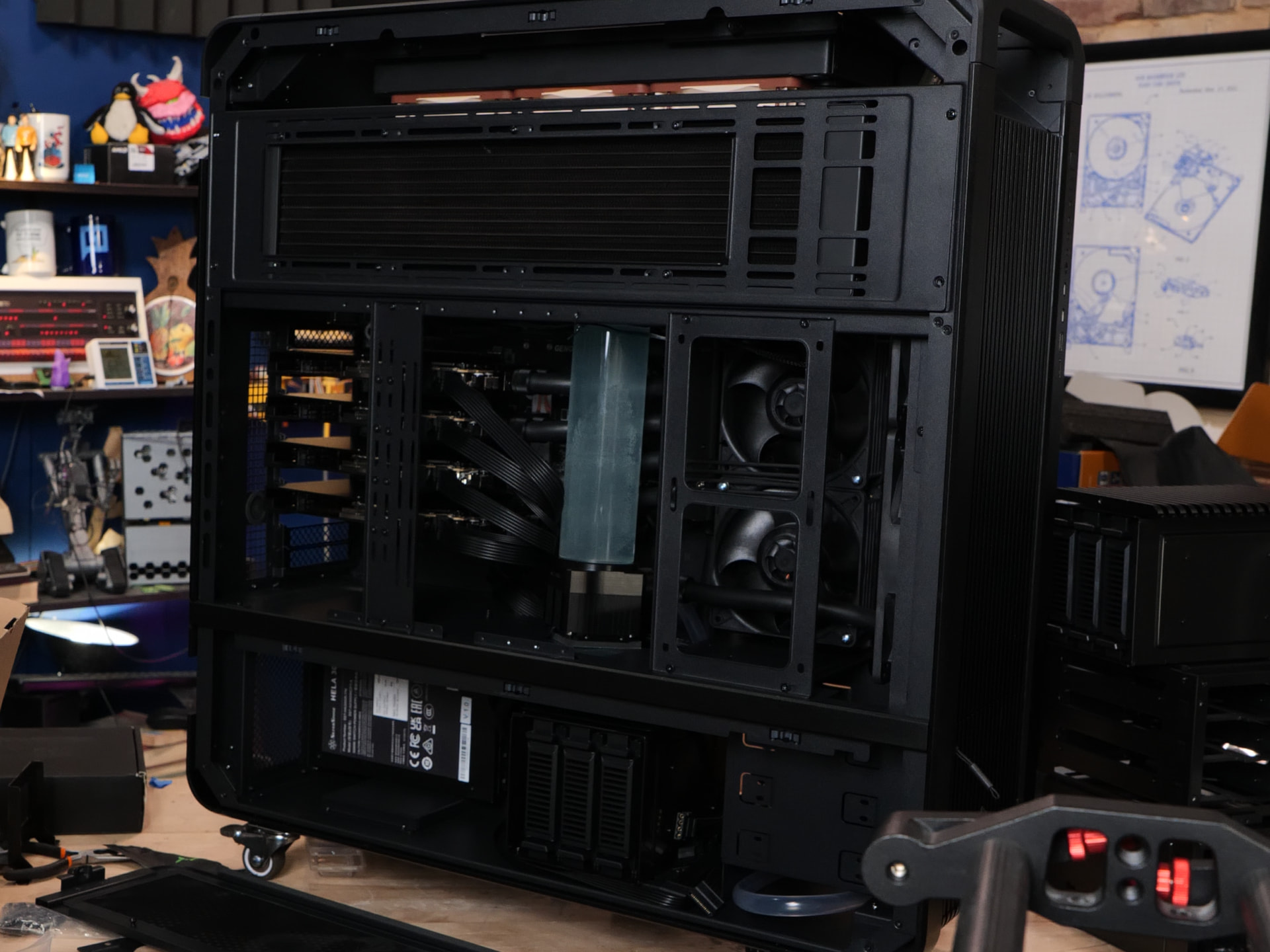
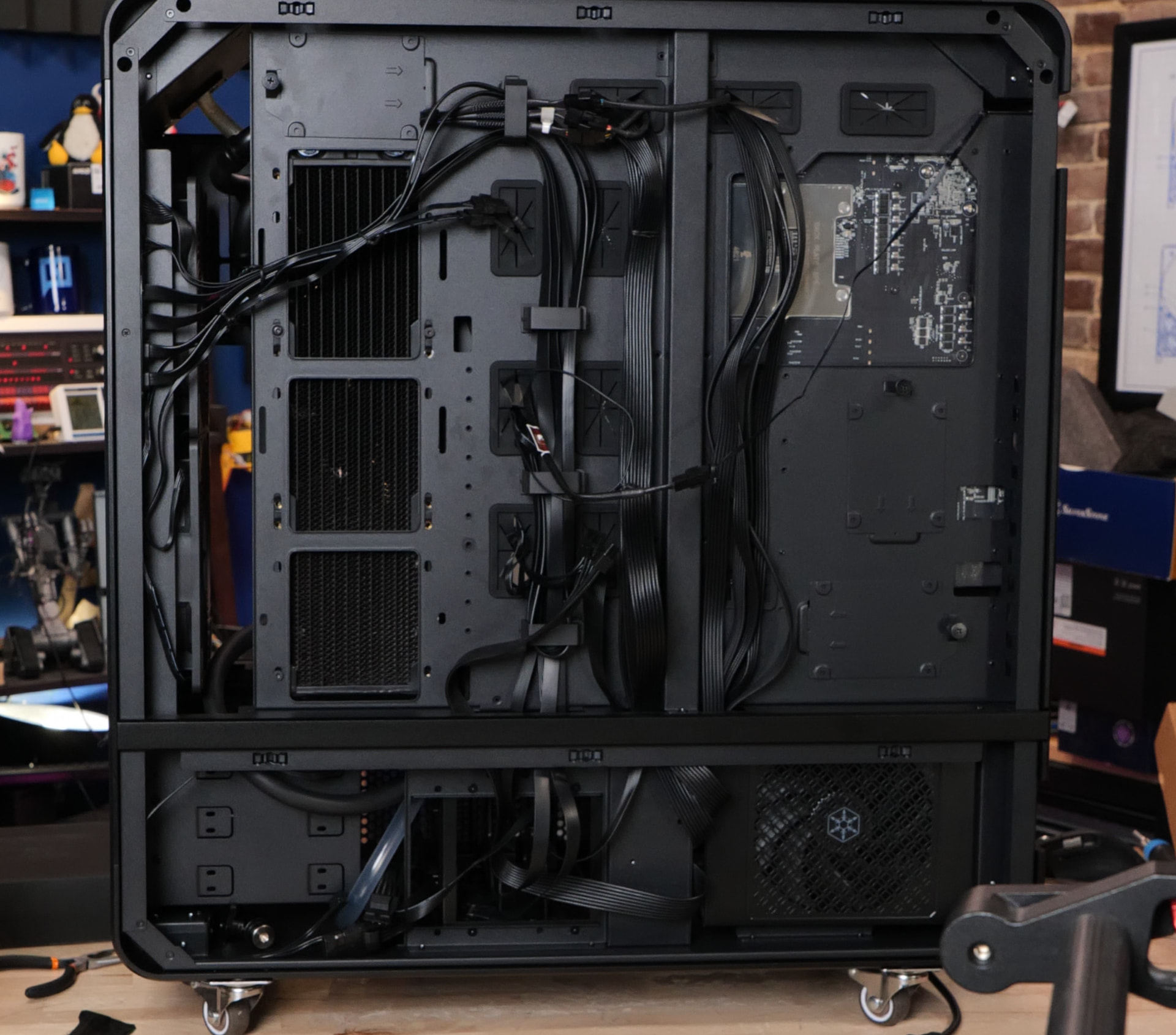
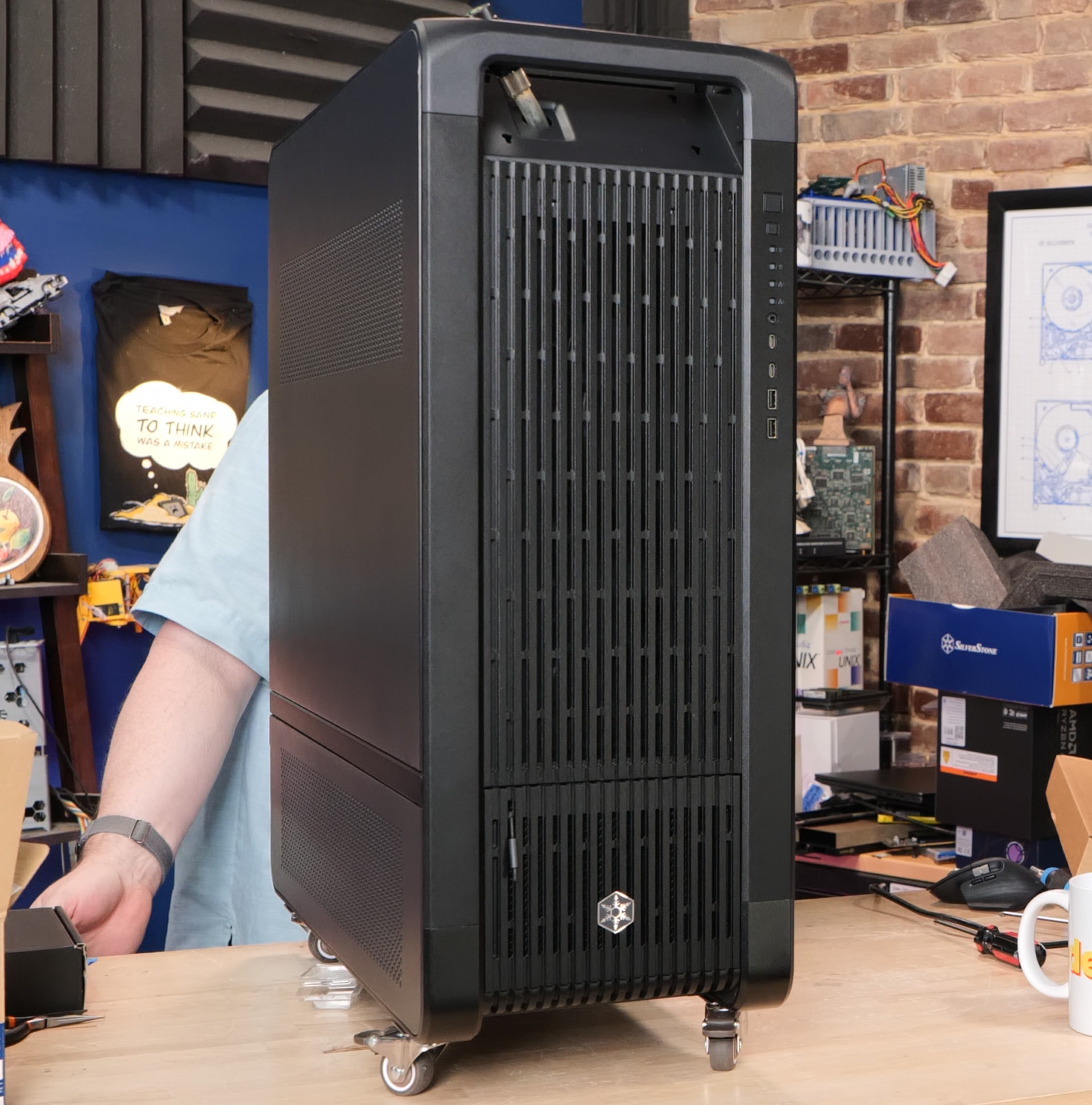
The Parts
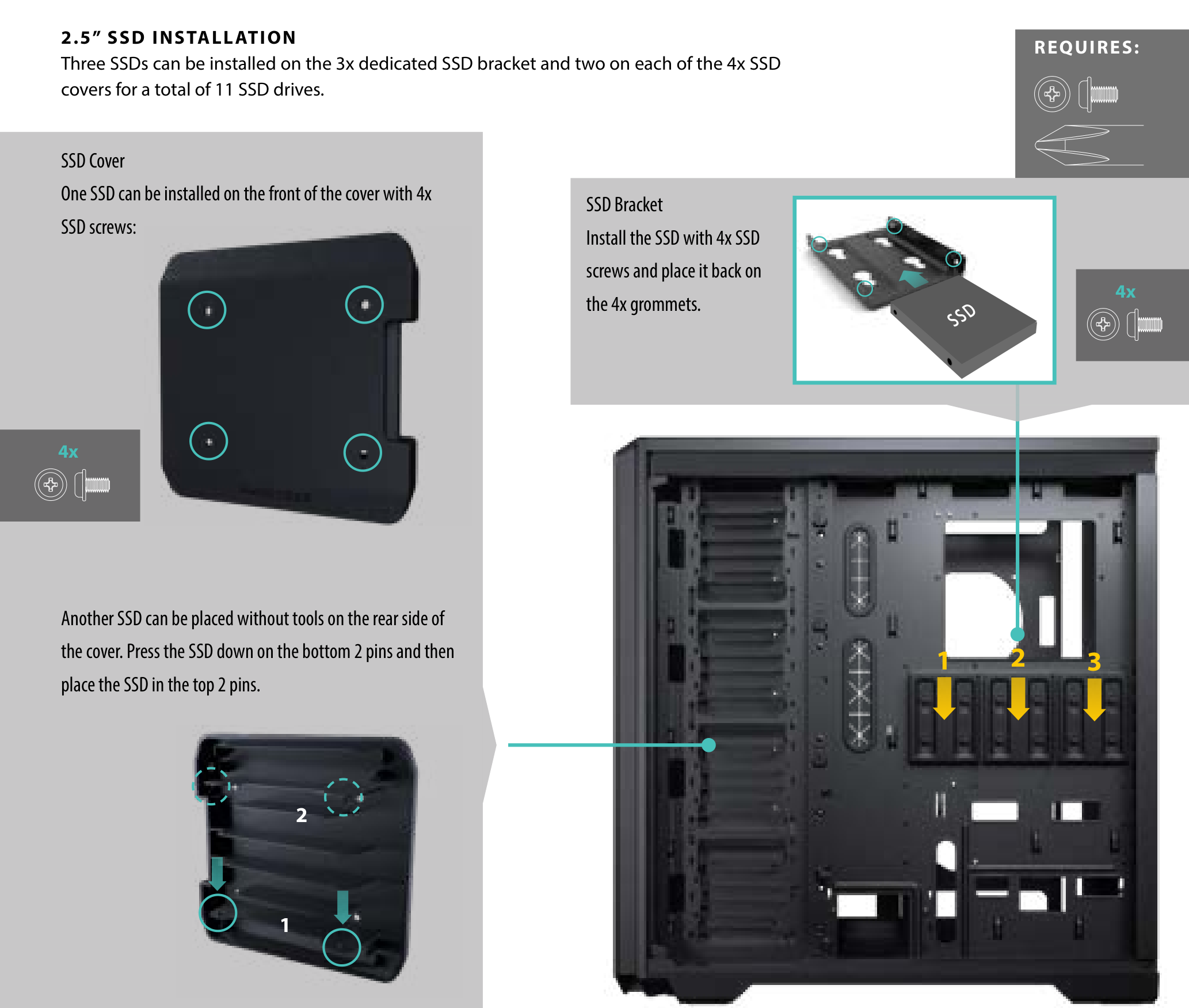
Case: Alta T2 ALTA T2
PSU: Silverstone Hela 3000Rz HELA 3000Rz
GPUs:RTX Pro 6000 https://www.microcenter.com/product/711665/nvidia-rtx-pro-6000-blackwell-workstation-edition-dual-fan-ai-workstation-graphics-card-(oem)
Motherboard: ASRock GenoAD8X-2T/BCM https://newegg.io/nc342f9e8a
CPU: AMD EPYC 9575F https://newegg.io/nc7c49d0d5
Water Cooling:
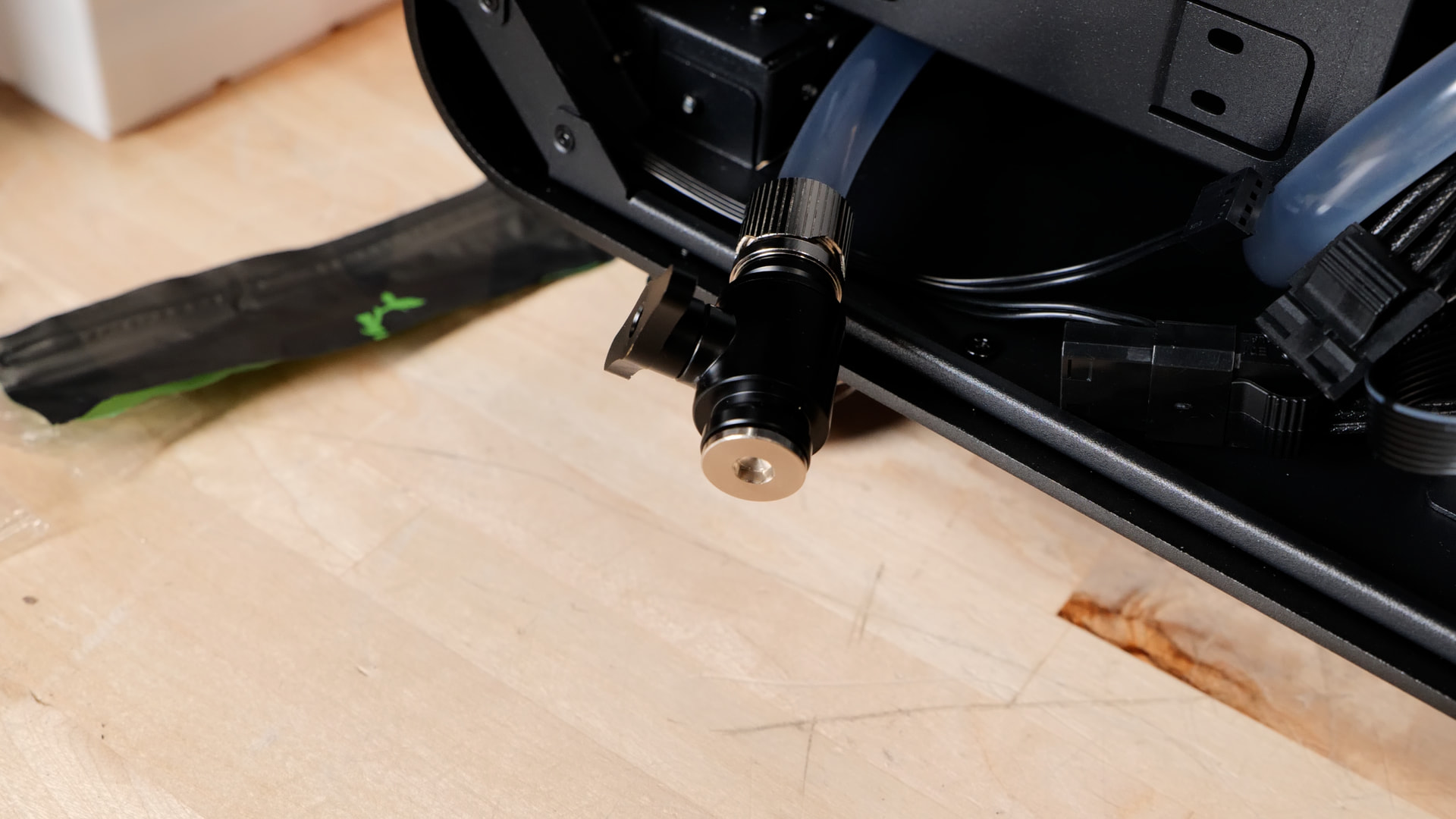
- Thermal Grizzly Delta Mate Soft tube SC16 epdm DeltaMate Soft Tube - ST16 EPDM Black (3m)
- Dracaena fittings: Amazon.com: Dracaena.io 12-Pack G1/4 90° Rotary Fitting, Male to Female, Black | 360° swivel adjustment after installation · G1/4 BSP, 5mm male and 6mm female thread length : Electronics
Amazon.com: Dracaena.io 12-Pack G1/4 Soft Tube Compression Fitting 3/8"ID 1/2"OD Black | Brass fitting with a sleek black finish · Embedded O-ring for a leakproof seal · For computer water cooling systems : Industrial & Scientific - Bykski water blocks: GPU Amazon.com: Bykski Durable Metal GPU Water Block and Backplate for NVIDIA RTX PRO 6000 Blackwell Workstation Edition (N-RTXPRO6000-WS-SR) - Continuous Usage : Industrial & Scientific
CPU Bykski CPU-SP5-SR Durable Metal CPU Water Cooling Block for AMD EPYC ( – BYKSKI.US - Bits Power Radiator top: BPN-RL2422SL
- could also use: Amazon.com: Dracaena.io 360mm Copper Water Cooling Radiator, 29mm, 2 G1/4 Ports, Black | Copper & brass · 14 micro-channels · G1/4 · high-TDP CPU+GPU · fits EK, Alphacool, Barrow, XSPC builds : Electronics
- Alphacool thick vert: Amazon.com: Alphacool NexXxoS Monsta 360mm Radiator (14182) | Full Copper Fins, Channels & Chambers, 3 Fitting Positions Each Side, 1/4" De-Aeration Plug, Flat Chambers : Automotive
- Alphacool side: Amazon.com: Alphacool NexXxoS XT45 Full Copper Radiator (For 3 x 120mm Fans) | 360mm Radiator, Full Copper Construction (Fins, Channels, and Chambers), Three Fitting Positions per Port : Industrial & Scientific
- Multi Port Distribution Block: Amazon.com: Bykski Durable Multi‑Port Parallel Workstation/Server Distribution Block, Available in Four Sizes – Black POM (B-L2-XBM-X-V2) (4 Channels) : Electronics
Fans: Noctua and Artic
-10 120mm - Artic https://www.arctic.de/us/S12038-4K/ACFAN00296A
- Noctua Amazon.com: Noctua NF-A12x25 G2 PWM, High-Performance Quiet Fan 120mm | High Airflow & Static Pressure, Low-Noise 25mm Thick Fan for Coolers/Radiators/Cases, Rich Accessory Kit, 1800rpm 4-Pin PWM : Electronics
Memory: 512GB Gskill F5-6400R3848F64GE8-T5N F5-6400R3848F64GE8-T5N - Overview - G.SKILL International Enterprise Co., Ltd.
The Performance
We want speed AND as much quality as we can get. The public repos for this hardware class
(sybil-solutions’ deepseek-v4.1-flash-4x-rtx-pro-6000, 0xSero’s SGLang recipe) didn’t measure up,
and worse, their headline numbers were mislabeled.
We measured the current config head-to-head against the sybil repo’s README table at matched
cells (2026-10-09, same client methodology as their benchmark):
| Matched cell | Current config | sybil repo |
|---|---|---|
| Prefill, every length 8k-500k | 10.5k-13.9k tok/s | 5.8k-7.4k tok/s (1.4-2x slower) |
| TTFT, every length | lower at every cell | 500k: 85.6 s vs our 63.3 s (and our cell actually prefilled 666k tokens) |
| c=1 decode | ~360-750 tok/s | ~200-232 tok/s, flat at every input length |
| c=8 aggregate | ~980-996 tok/s | 704-748 tok/s |
| Scaling | continues to c16 (~1,241-1,457) and c32 (~1,582-1,611) | stops at 8 slots (max-running-8) |
The mislabeling: their “200+ at c=1, 600+ at higher context” actually means “~200 at c=1,
600+ aggregate at c=4-8”. There is no c=1 number above ~232 in their entire table. The “600+”
is a concurrency number, not a context number.
Their remaining distinctive mechanisms are all downgrades on this box: NVMe row-store Engram
design for a 128 GB host (we have 503 GB, so Engram tables live fully in RAM for free), a
275 W cap (our GPUs already sit at ~243-275 W under decode, so capping changes nothing),
max-running-8, and 2048-token chunked prefill.
2. What it looks like today
One box, two services, both from the same image (Package vllm · GitHub,
vLLM nightly, PyTorch 2.14.0a0, CUDA 13.4.1, NCCL 2.30.7), both 1M context, both fp8 KV cache:
| ds41 | glm53 | |
|---|---|---|
| Model | DeepSeek-V4.1-Flash @ 2cba9e42 (475.3 GiB, fp8 dynamic) | GLM-5.3-Flash-NVFP4 @ 175ae8ce (185.7 GiB, modelopt_mixed MXFP4+MXFP8) |
| GPUs | 0-3 | 4-7 |
| Port | 8000 | 8001 |
| Spec decode | DSpark-7, adaptive verification | MTP-3, marlin-draft |
| Attention/linear/MoE backend | B12X | B12X |
| vLLM | 0.1.dev21986+g4a379ed42 | 0.1.dev22021+g93dabce32 |
Fresh benchmark numbers (2026-10-12)
Prefill (client-observed, unique prompts, c=1, thinking off, temp 0):
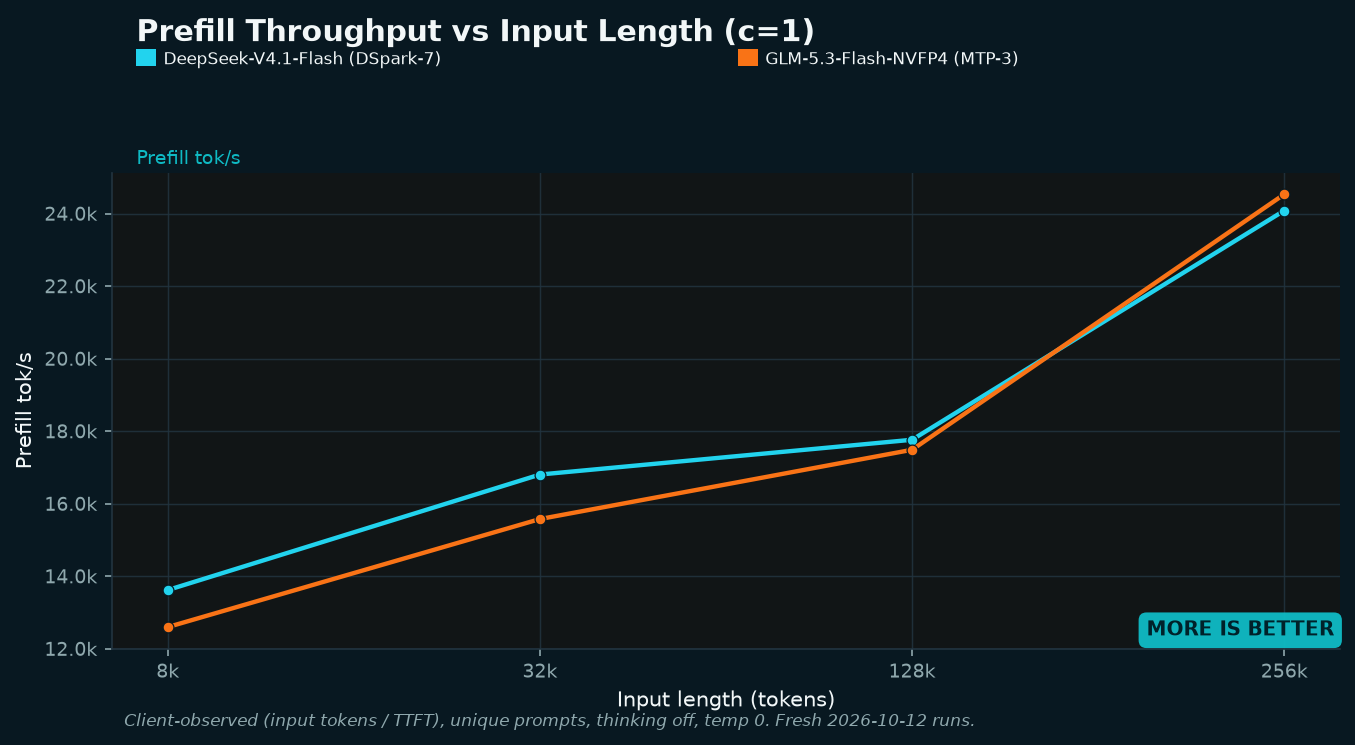
| Input | ds41 prefill tok/s | ds41 TTFT s | glm53 prefill tok/s | glm53 TTFT s |
|---|---|---|---|---|
| 8k | 13,617 | 0.602 | 12,596 | 0.651 |
| 32k | 16,803 | 1.950 | 15,576 | 2.104 |
| 128k | 17,762 | 7.379 | 17,486 | 7.496 |
| 256k | 24,083 | 10.885 | 24,533 | 10.686 |
Decode, c=1 (4096 out, ignore_eos):
| Input | ds41 decode tok/s | glm53 decode tok/s |
|---|---|---|
| short (64) | 548.9 | 354.2 |
| 8k | 590.7 | 344.1 |
| 32k | 386.6 | 333.1 |
| 256k | 350.4 | 338.8 |

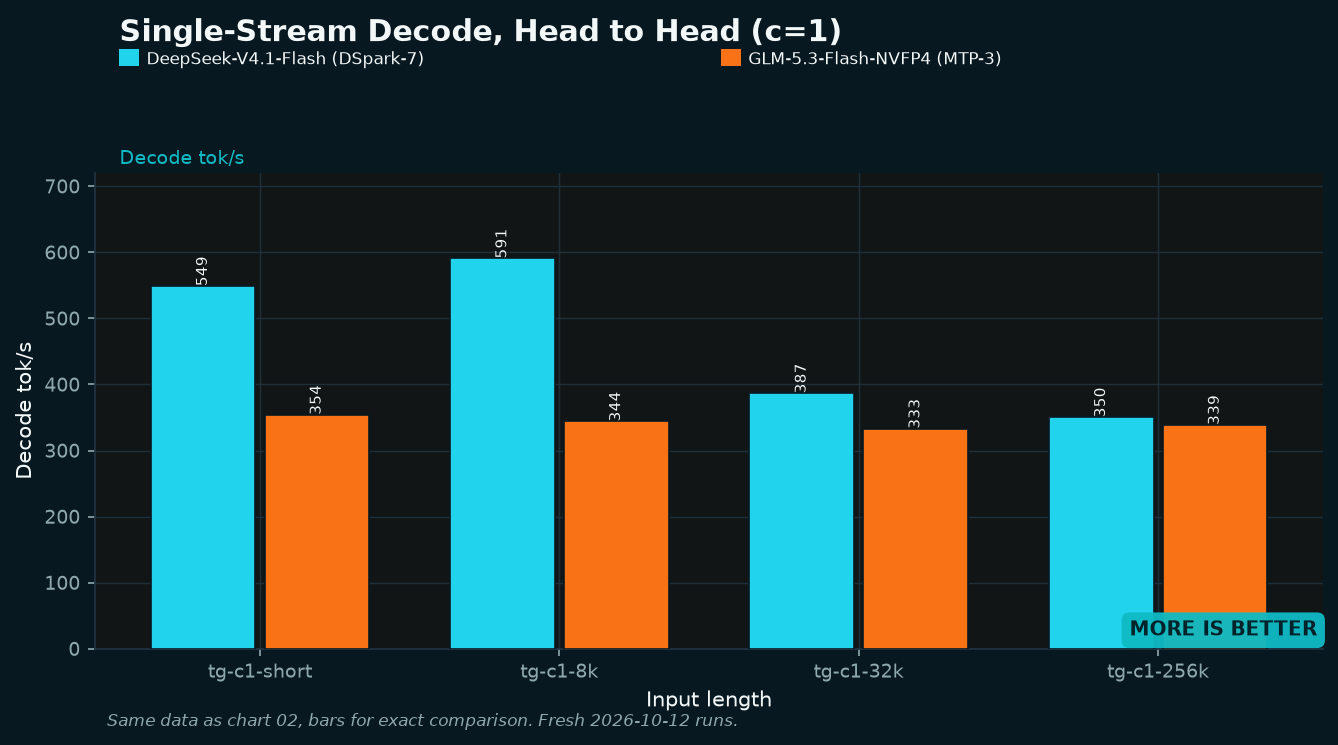
ds41 wins c=1: at short context the DSpark-7 edge is roughly 1.6x (549 vs 354). But ds41’s
decode falls off with context while glm53 stays flat across the whole range (354 down to 339).
Aggregate decode (512 in / 4096 out):
| Concurrency | ds41 agg tok/s | glm53 agg tok/s |
|---|---|---|
| c=8 | 932.3 | 1,237.0 |
| c=16 | 1,301.2 | 1,487.6 |
| c=32 | 1,692.9 | 2,322.7 |
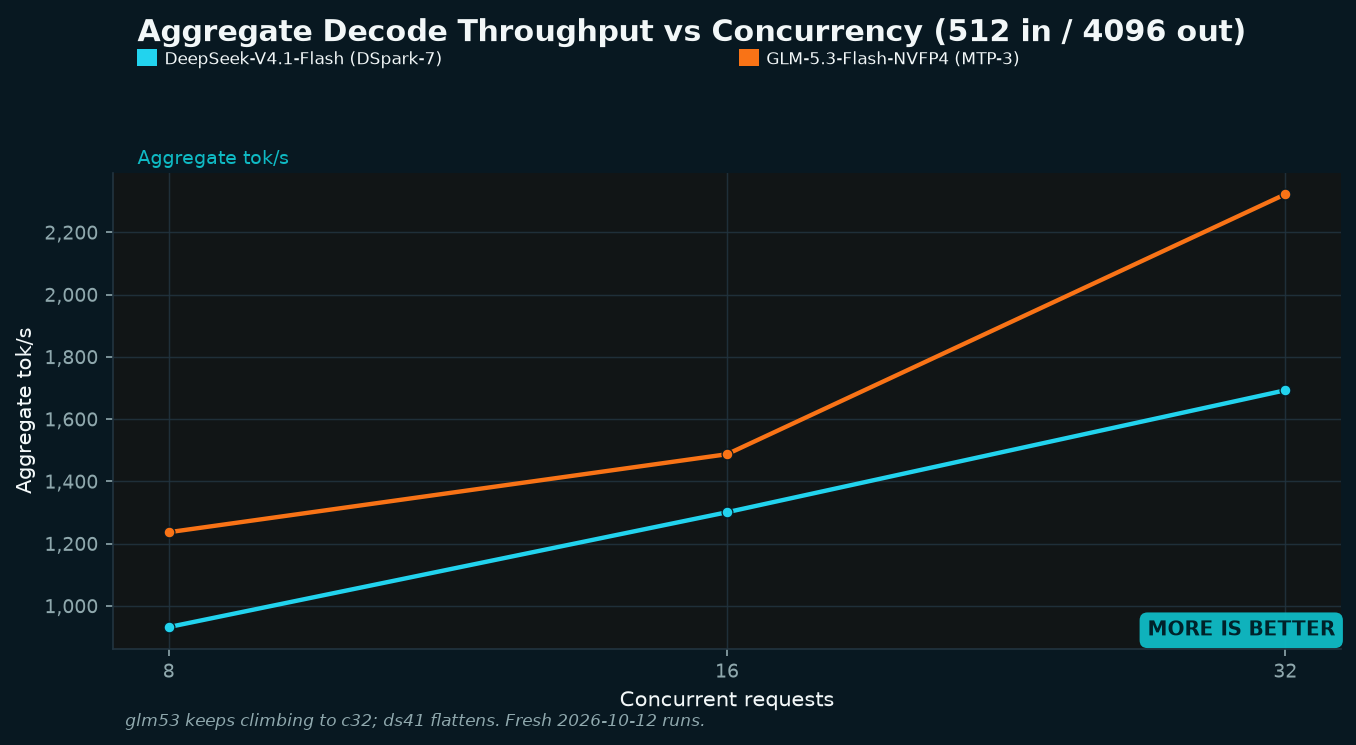
glm53 wins concurrency, and by a lot at c32 (2,323 vs 1,693 tok/s).
Power (avg across the service’s 4 GPUs, nvidia-smi 0.5 s sampling):
| Cell | ds41 W | glm53 W |
|---|---|---|
| pp 8k | 666 | 823 |
| pp 32k | 922 | 1,197 |
| pp 128k | 1,139 | 1,361 |
| pp 256k | 1,218 | 1,378 |
| tg c1 short | 1,046 | 1,029 |
| tg c8 | 1,153 | 1,122 |
| tg c16 | 1,134 | 1,166 |
| tg c32 | 1,109 | 1,190 |
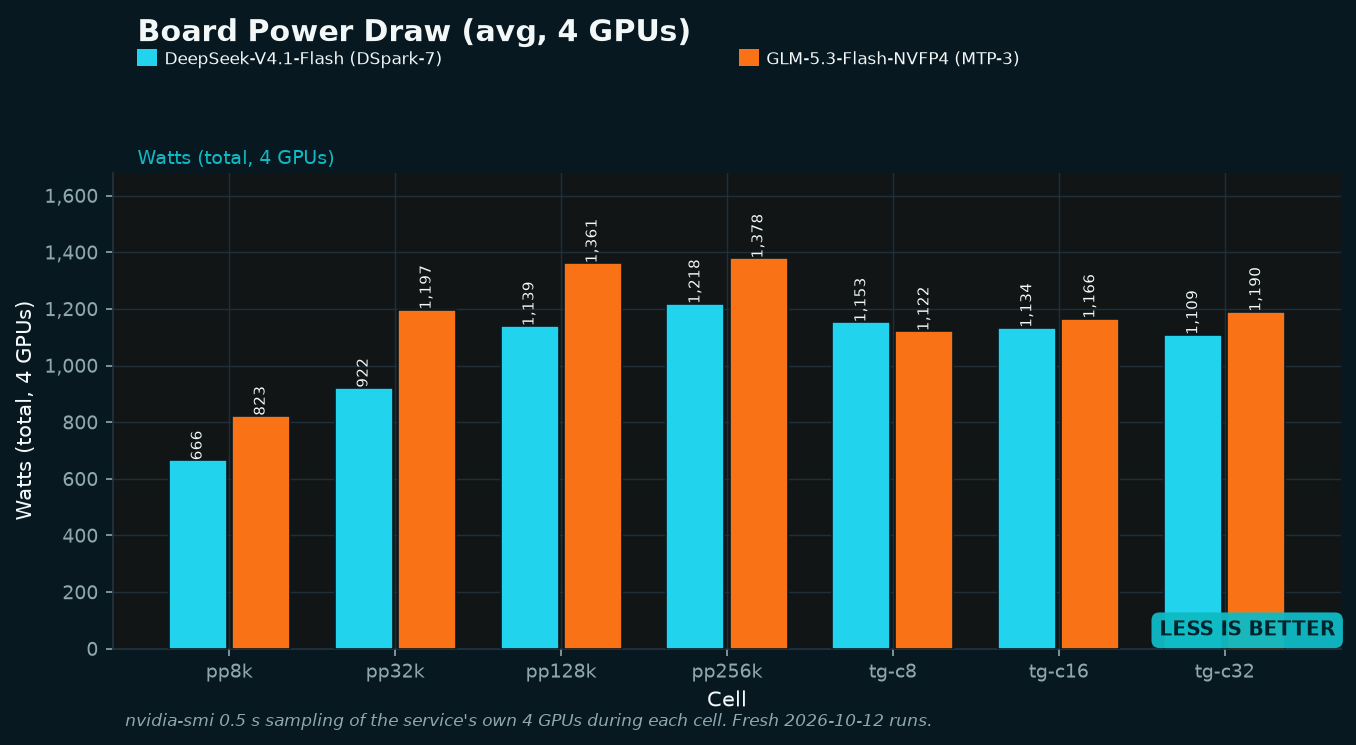
Prefill power scales with length (666 W at 8k up to ~1,378 W at 256k); decode sits around
1,030-1,190 W regardless of concurrency.
Quality spot-checks (same harness, both models):
| Check | ds41 | glm53 |
|---|---|---|
| GSM-style EM (20 problems) | 20/20 | 20/20 |
| Needle retrieval @32k (5 needles) | 5/5 | 5/5 |
| Needle retrieval @128k (5 needles) | 5/5 | 4/5 (one paraphrase miss, no NVFP4 garbage) |
Takeaway: ds41 for single-stream quality-critical work at short-to-mid context; glm53 for serving many users, and it holds its decode speed at any context length.
!NOTE]
glm53 numbers may be slightly understated; GPU-idle and recorded per-cell GPU utilization; cells with util below ~100% may understate throughput we have found… this is an nvidia measuring artifact.
3. SM120: the awkward Blackwell thats not really B200-class Blackwell. Blackwell Lite as I’ve taken to calling it
SM120 (RTX Pro 6000, consumer/workstation Blackwell) is not SM100 (B200/GB300) and not SM90 (H100/H200), and the kernel paths differ on all three. Concretely, in the vLLM source tree:
- FP8 scaled MM has a dedicated SM120 CUTLASS 3.x path (
scaled_mm_c3x_sm120.cu), separate from the SM100 and SM90 files, with its own tile shapes (128x128x128, cluster 1x1x1 – no 2-SM clusters like SM100’s 2x2x1) and no int8 support. - NVFP4 has a separate SM120 kernel file
nvfp4_scaled_mm_sm120_kernels.cu) with its own tile configs, gated behind CUDA 12.8+ and arch 12.0. - CUTLASS MLA decode is SM100-only (
sm100_cutlass_mla_kernel.cu); SM120 gets nothing there. - DeepGEMM support checks
is_device_capability(90) or (100)– SM120 is not in the list, so the MoE paths that depend on it need their own glue. - The NVFP4 MoE path falls back to Marlin W4A16 when CUTLASS FP4 is unavailable (
detect_nvfp4_moe_support), which is exactly the fallback the Qwenception SM120 NVFP4 case measures (see section 4).
On top of upstream, the karmic-kraken image carries the B12X attention/linear/MoE backends (custom kernels for SM120 PCIe), the instanttensor loader, AOT/standalone compile env, and DSpark + MTP speculative decode. The glm53 profile runs a long B12X tuning block
(dynamic split/route compute flags, persistent-grid work source, PCIE oneshot threads/PDL, MHC PDL, GLM53 L2 prefetch / dflash attn / KDA gate side-stream, MTP draft head nvfp4).
Prior art on our side: the sparkQwenTest bundle pinned an SM120 BF16 Triton TP1 reference (Qwen3.6-27B @5d316fa, top-1 fork selectors only – a fidelity anchor, zero throughput data), and the vLLM-Moet sm_120 port work (FlashInfer sparse-MLA SM120 instantiations for the V4.1page geometry, DeepGEMM FP8xFP4 grouped GEMM glue, MXFP8 dense GEMV) is documented in the vLLM-Moet repo docs.
4. NVFP4 non-determinism Is Stil Not Great
NVFP4 introduces more odd non-determinism than you’d expect. Qwenception which we’ve discussed here. (Qwenception is a public interactive replay of Qwen3.6-27B next-token Top-1 positions against an identical recorded prefix) measured, on the SAME SM120 RTX Pro 6000 part, BF16 vs NVFP4 checkpoint
(Marlin W4A16 fallback) thanks to @thr3e :
| Comparison | sp01 (411) | sp03 (2,775) | sp04 (1,535) | sp06 (4,339) |
|---|---|---|---|---|
| BF16 → NVFP4 | 9 (2.19%) | 75 (2.70%) | 34 (2.21%) | 146 (3.36%) |
| BF16 → FP8 weights | 8 (1.95%) | 33 (1.19%) | 13 (0.85%) | 79 (1.82%) |
| BF16 → FP8 KV cache | 4 (0.97%) | 14 (0.50%) | 17 (1.11%) | 24 (0.55%) |
NVFP4 flips roughly 2-3.4% of greedy Top-1 positions vs BF16 – about 2-3x the FP8-weight rate and 4-6x the FP8-KV rate. The flip rate grows with context (sp06 is the longest set and has the most flips). Their stated caveat is worth echoing: “a measured Top-1 disagreement is a fork root, not proof that either winner is objectively correct.”
@thr3e’s Qwenfight work we’ve been using has found the same thing: TP2 repeats are byte-identical, but TP1-vs-TP2 and GH200(sm_90)-vs-GB10(sm_120) divergence is dominated by near-tie flips (margins <= 0.125, tiny KL) – a “divergence floor” whose exact flip positions are NOT hardware invariants. GH200 TP1 was byte-identical across cold repeats on all profiles; the GB10/SM120-class part was not like that.
And it’s not just NVFP4: even at FP16, SM120 can deviate in strange ways (vs H200 or B200) that you can only attribute to “that’s floating point”. Hopper and the Blackwell datacenter parts tend to be more well-behaved – clearly someone put much more work into making FP consistent there. On SM120 you get different reduction orders, different kernel selections per shape, and near-tie argmax positions that flip depending on which kernel got picked.
Not only that, but our quality spot-checks on the live services were clean (20/20 GSM EM both models, needle retrieval fine, the one glm53 miss at 128k was a paraphrase not garbage). This section speaks to bit-level reproducibility, not usability. You can get a lot of usability out of NVFP4 with a good harness, even as the model itself is flipping bits and making mistakes.