Why do people think VMs are flexes, without any wow-factor like, idk, custom init, running LFS, eye-candy / rice, or some crazy config (like hw-passthrough with a bunch of hw)?
I’m not judging people running VMs. VMs are cool and I generally encourage people running things like nixos, freebsd (or other BSDs), alpine or other wild distros. Just that this thread is meant for neoflexes.
If the VM is running on self-hosted firecracker or crosvm, then I’d consider that a flex.
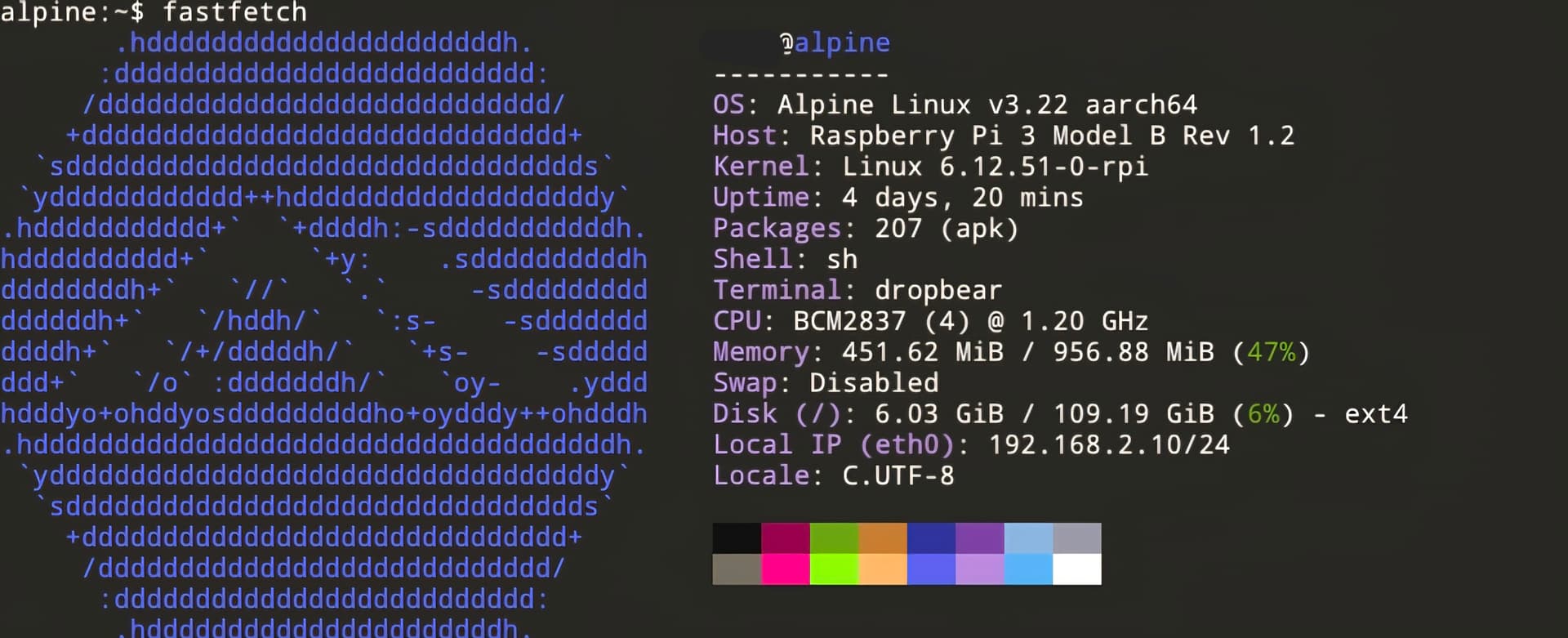
Is alpine wild? I thought it was a better choice than dietpi for my needs, since the dietpi distro is quite opinionated (and who really knows what’s going on with all those custom scripts). I think alpine is nice, very minimalist. Writing openrc scripts takes me back.
VMs are for trying out things quickly, or over time. You can save snapshots, and iteratively improve your setup before moving it to bare metal. For certain use cases, VMs are great for production as well.
But, of course, devs also use VMs for testing, hence you can expect a VM to be one of the smoothest installation targets.
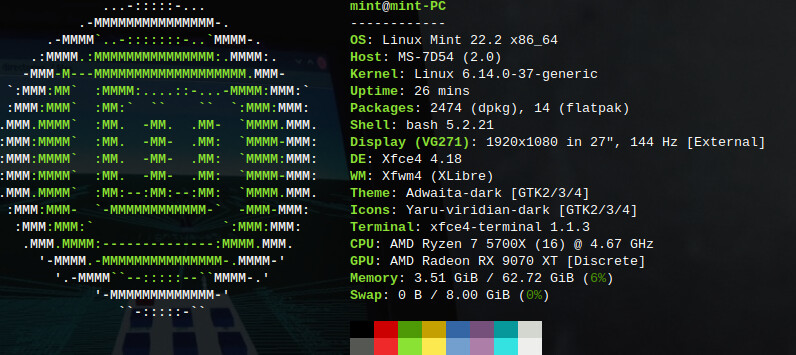
I think you’re overthinking it. If neoflex is just a pretty system summary like neofetch/fastfetch/etc., one from a VM may be a tad boring but is certainly on topic.
Some configurations, yes, like diskless setups (which I use on 2x rpi3s and 1x rpi0w2). I have some even wilder diskless setups in some VMs with PXE Booting and NFS (no local disk). My plan was to launch a wiki-article on the forum for self-hosters to save their sbc’s sd cards from failure (or just skip local storage altogether, if the boards can directly pxe-boot without a pxelinux or ipxe local bootloader). You can get crazy with alpine just because it’s minimalist (sure, you can do diskless gentoo or debian with root-on-nfs, but that’s not as resilient as alpine tmpfs root via lbu when your NFS server temporarily craps its pants - gentoo has a wonderful write-up on diskless installs with a shared read-only rootfs).
I believe everything should be virtualized or containerized. HW-passthrough allows you to get away with a lot of stuff that requires dedicated resource access. Physical boxes should be reserved for severely limited applications (e.g. router + firewall + DNS + DHCP or network-level ad-block or local VPN gateway or small jump-box / thin-client / net-kvm).
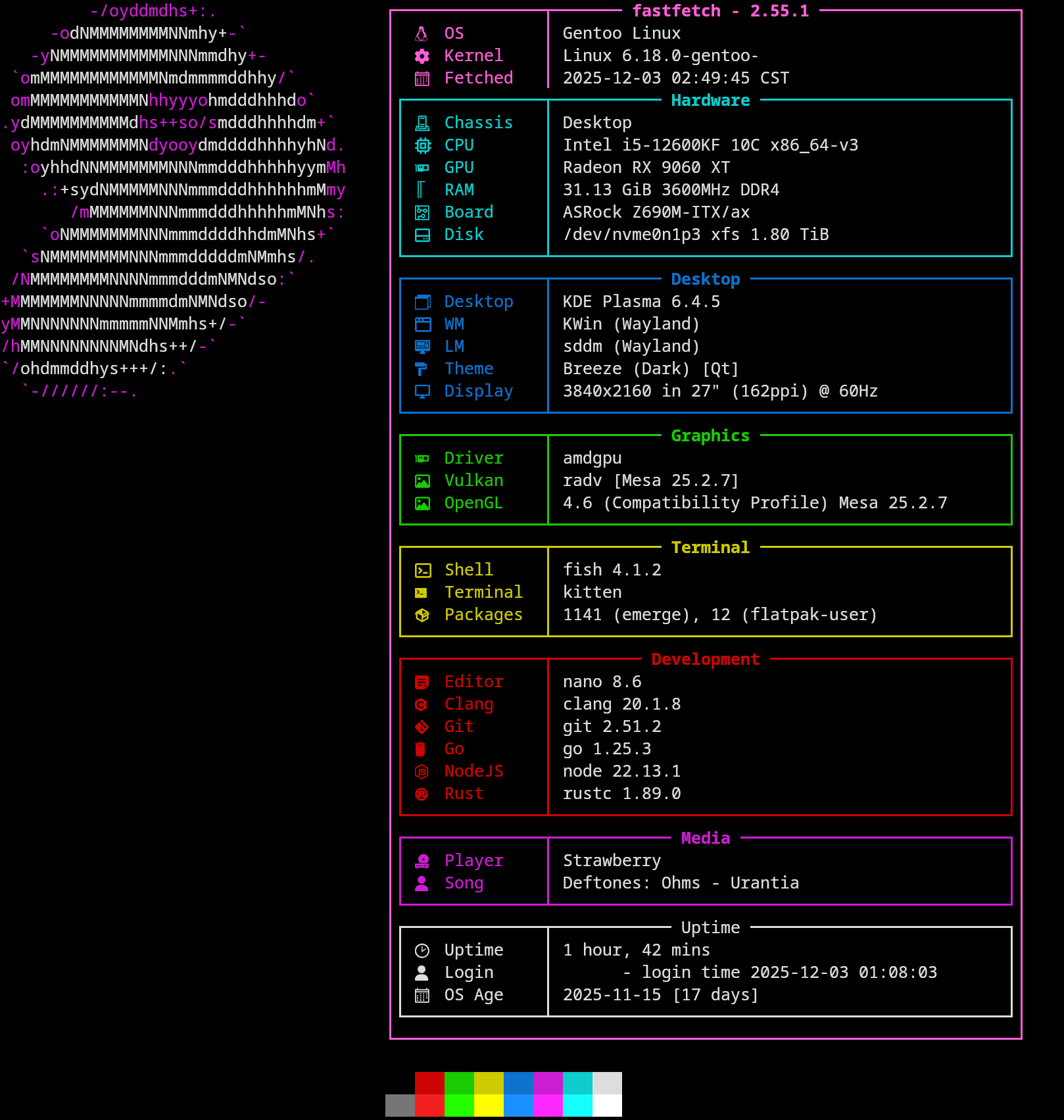
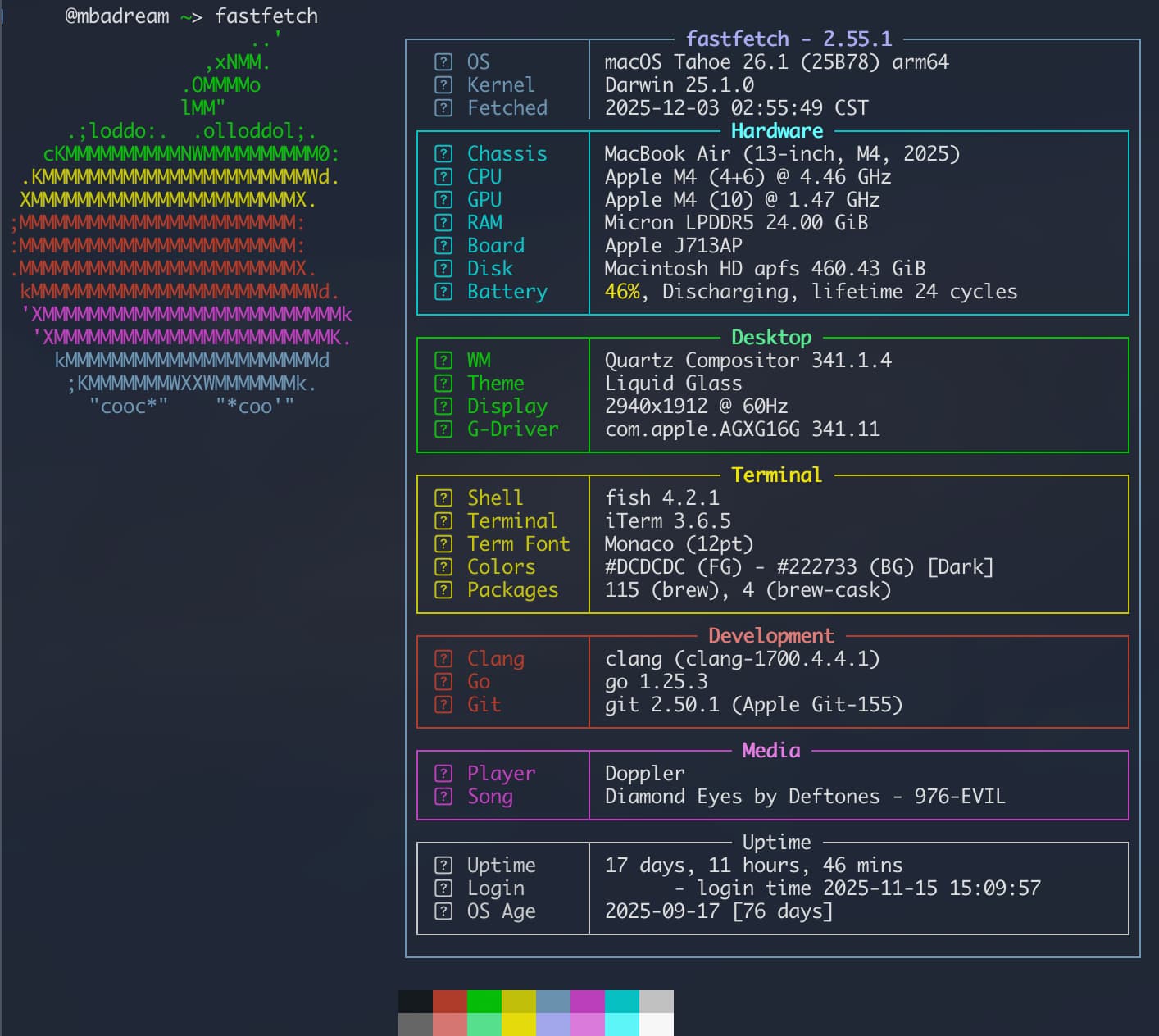
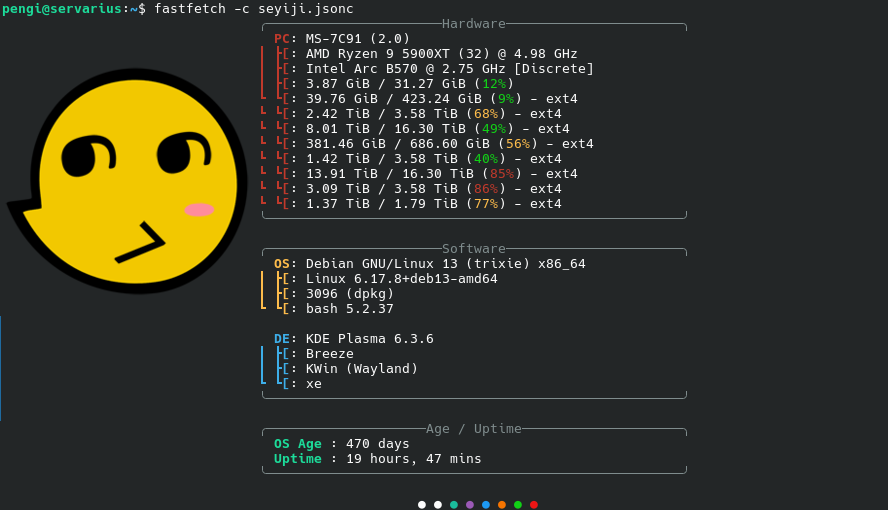
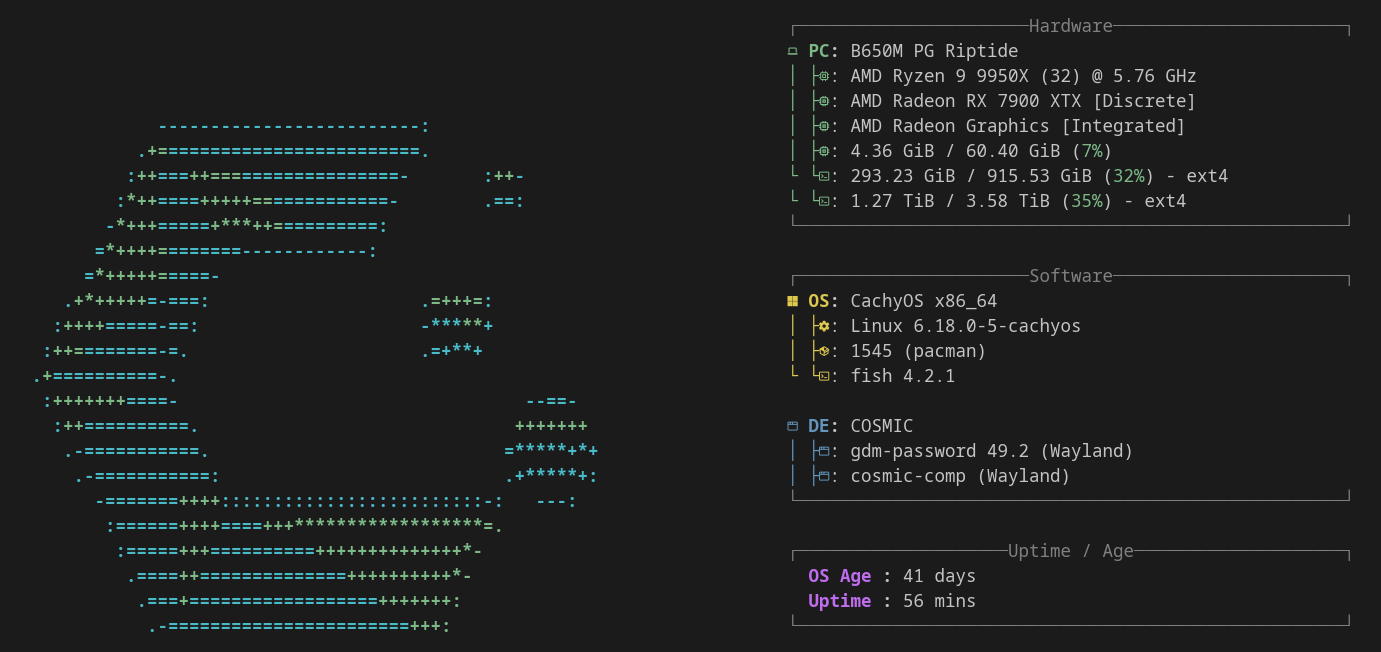
Thankyou! It’s simply a modification of the preset 25 (run fastfetch -c examples/25.jsonc to see what that looks like) to show what I wanted it to. Some stuff is hand-typed on Linux because it doesn’t have access to some memory info and the like without running with sudo.
You don’t need beadm, with root-on-zfs it can be done regardless (btrfs became kinda more popular in the enterprise with sles and oel, but I have a feeling most people use zfs in their home env’s). But beadm helps with the boot loader setup (it’s kinda like zfsbootmenu on linux or nix-generations in nixos). Still pretty cool stuff, I’m not against it at all (I’m just saying snapshots are not inherent to this tool, you have have zfs, btrfs and even lvm snapshots).
Actually the biggest benefit of fbsd is that freebsd-update calls on bectl (not beadm) to create a snapshot of the OS and a boot entry for it before a system upgrade. In linux-land, nixos does this by default with grub (or other bootloaders, like uboot) and nix-generations (which doesn’t use snapshots, but nix-store configs). The only other system I know of that does this is opensuse / sles, via snapper on zypper upgrades (and adds a boot entry to boot to a previous snapshot).
It can be done on physical boxes, but the admin who sets linux up must know what he’s doing (which IMO most don’t, which is a sad state we live in - having worked with many enterprises, I’m literally stuck teaching others some minimum best-practices that they won’t ever be adopting in the slow-moving, always-on, never-changing enterprise environments anyway).
One day I’ll work up the courage and give it a whirl though Right now I have no other place to temp store the files to make a RAID array and copy them back. Which I’m sure breaks all sorts of taboo but I’m a tinkerer on a budget for the most part :3
Understood. I was wondering why the many drives with their own filesystems. Raid is also not a backup, but from experience I can tell you it is good to have a backup.