I forgot that its just a regular lenovo usb 3.0 displaylink dock. I have used it for years on everything from laptops to xeon servers. The new USB C lenovo dock didn’t work either. I had to resort to using the 7950x IGP for my extra monitors for a while until i found a distro that would work with my dock.
Well maybe not, but let’s be real that NVIDIA is currently swimming in money and I guess at least they have no pressure to cut costs to increase margins, a couple dozen (or however many) people they have working on the gaming part and Linux should not need to worry right now.
Also Linux is kinda the standard in datacenters and you never know what kind of driver bugs would affect issues outside of the gaming realm as well.
And just today they announced that G-SYNC Pulsar is coming to Linux.
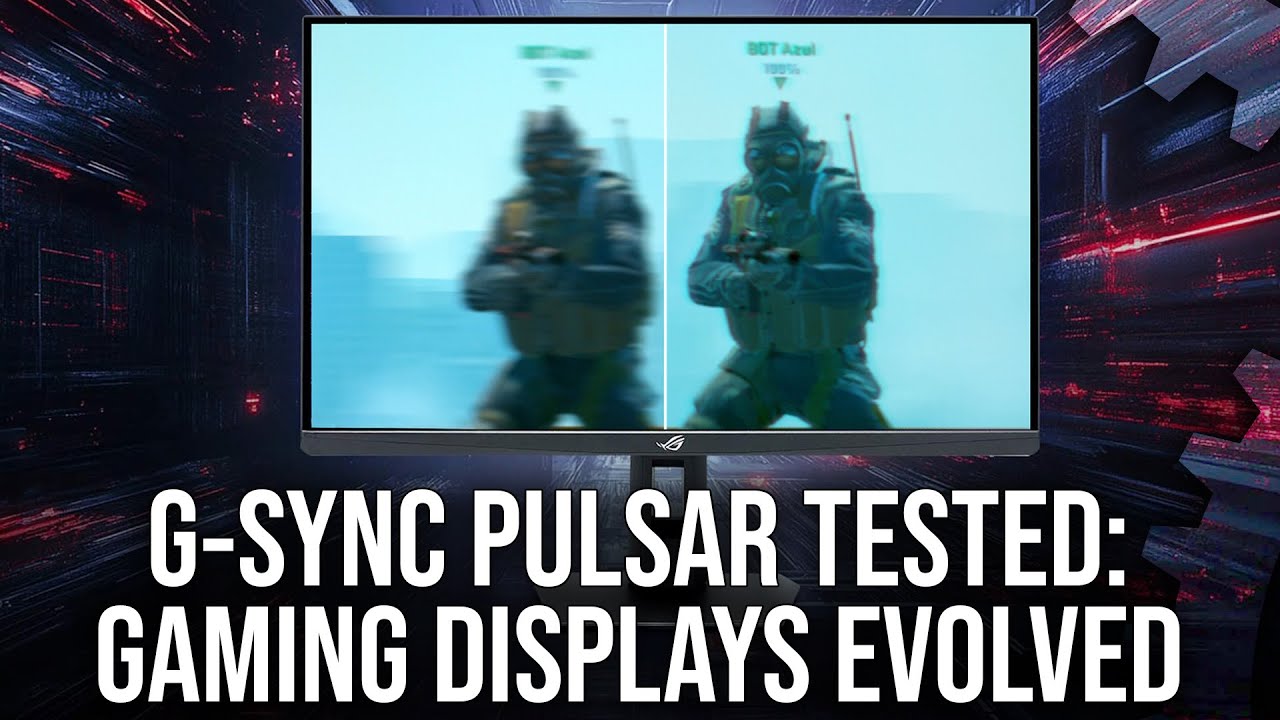
If this works as well on Linux as it does on Windows, I will need to buy a new monitor…
2 Likes
The only graphics adapters that exist to me are those which pass the Debian Test™.
Install Debian fresh from a USB drive. Does the display stack come up and run without any tinkering whatsoever?
That’s a strange benchmark. Debian had to cave to user pressure from Debian 12 onwards and include the nonfree firmware blobs for Intel/AMD/whatever just so people’s GPUs and other assorted peripherals (wifi cards et al) would work out of the box. Debian -- News -- Debian Installer Bookworm Alpha 2 release
Before that time, AMD cards didn’t work out of the box either unless you were using the installer with nonfree firmware included.
1 Like

I have been looking into trading my 3090 for a 7900xtx, raytracing is still pretty much unusable and more and more applications are starting to be able to use AMD GPUs. other than a few cuda applications that I could live without there isn’t much need to have an nvidia card these days so i would rather have the 30% more fps and decent linux support of the 7900xtx.
I have used linux for decades and ave tried to switch over my desktop multiple times but its always been unusable, usually drivers and lack of software but since i installed bazzite a month ago i have been pleasantly surprised. almost everything works other than sleep but i can live without that since its a desktop. all my sound cards work, my cameras work, all the web browsers work, steam works, arduino and visual studio work, discord works, there are lots of decent image, audio and video programs for basic editing. libre office looks more like office now than office 365.
and did I mention the SPEED?? I never realised how bad windows had got with all its random slowdowns where it just pauses for a while, after years you don’t see them It’s just now things are, but now they are glaringly obvious when they happen. An example would be when your mouse accidentally goes over a network drive icon and the whole computer freezes for the next 10 seconds.
Have you tried SSH’ing into the machine after trying to wake it from sleep?
I remember having some issues where the machine did return from sleep, but the GPU had issues bringing the monitor back up, so no display until I rebooted. If that’s also your issue, let me know and I can try to remember what I did to fix this.
Oh, I remember that moving to a different tty and back to the main one fixed this sometimes as well (ctrl+alt+F4 or any other F-key that’s not your running display, then move back to the one running your DE, on bazzite seems like it’s at F2).
New member here, from my understanding nVidia is just want to charge into the PC market with their new arm CPU and for consumers a PC without proper gaming ability can kill the deal.
Are you sure it’s not an automated feature with a ”personality”?
I will say I have noticed a performance increase over the past year or so on my Laptop which is a 3070 max-q. I do think Nvidia has left early chips stuck with the open source drivers which are still quite terrible. That does E-waste a lot of still useful hardware. The modern 3000 series and newer chips do have a mighty good open source video driver vs the novuea drivers of old. I am glad Nvidia is paying attention to Linux finally even if it took the AI boom to motivate them.
Two interesting recent game-related developments:
First, it has been reported that Valve has been growing a team to support NVIDIA GPUs in SteamOS:
In an interview with The Verge, Valve’s Pierre-Loup Griffais said Valve has been “rolling out improvements to [SteamOS] so it’s more compatible with desktop hardware,” including eventual support for Nvidia graphics.
Griffais says Valve has “a growing team” working on Nvidia driver support for SteamOS, adding, “We’re collaborating with Nvidia very closely.” While he mentioned that Nvidia support might not come this year, Griffais emphasized that “it’s certainly something that we’re working on in the background.”
Source: https://www.theverge.com/games/953411/valve-steamos-desktop-nvidia
Very curious what Valve is working on with NVIDIA here.
Second, the recent production driver release notes mention a lot of fixes specific to games. In the past, games fixes were almost never mentioned in driver release notes. And certainly not in this quantity.
Things are looking more promising than ever, I think.
1 Like
Called it  Nvidia working with Valve on this is great news.
So the only reason nvidia is giving a toss is because God Gabe is paying for it. Thank god, i was really worried for a second
A new driver release, with a huge pile of game-related bug fixes (though some are the same ones fixed in the 595 branch earlier.)
3 Likes
The latest feature release doesn’t mention a pile of games with improvements, BUT, there are still some huge improvements for gaming:
The most exciting one to me is the implementation of cgroups-based memory partitioning. This should in theory allow for VRAM over-commit optimizations like what Valve contractor Natalie Vock has built for amdgpu. It’s a very interesting solution, described here:
- Fixing AMDGPU’s VRAM management for low-end GPUs
- VRAM Management Part 2: Beyond the Limits of Physical VRAM
Need to test it and see if it works out of the box or if some integration work is needed…
I wonder if (and hope) this will fix the long-running wake from sleep into a black screen with a blinking cursor problem.
I don’t have any suspend issues with NVIDIA on Fedora for a while now. I vaguely remember it being an issue about a year ago.
I expect because Nvidia wants to compete with AMD in the Linux handheld gaming space. I suspect we will see an Intel CPU with an Nvidia iGPU built into it for such devices in a couple years. Nvidia needs something to sell when they crawl back to gamers after the AI bubble pops.
Nvidia would have to care about gaming and Linux individually before they can care about gaming on linux