I do have a technical question I need some input on.
I tried to get 128GB LRDIMMs to replace my 64GB RDIMMs and while the RDIMMs get to 70°C/160°F under load the LRDIMMs are already 70°C/160°F when idle and go up to an unreasonable and out of spec 95°C/200°F with normal airflow in the case, sometimes depending on the benchmark even above that, I’ve seen them at over 100°C/210°F. Those LRDIMMs would need active cooling to run healthy in a case with reasonable airflow. Is that normal for LRDIMMs or is this something specific to the make and model? I was really surprised by this.
Maybe to add to this the voltage is withing spec at 1.2 volts for both sets of DIMMs.
I am not sure what that refers to, can you please explain to me. But other then that I understand that LRDIMM in that size needs active cooling, and since I am committed to go with 128GB DIMMs I will have to think about adding some kind of cooling. Thank you.
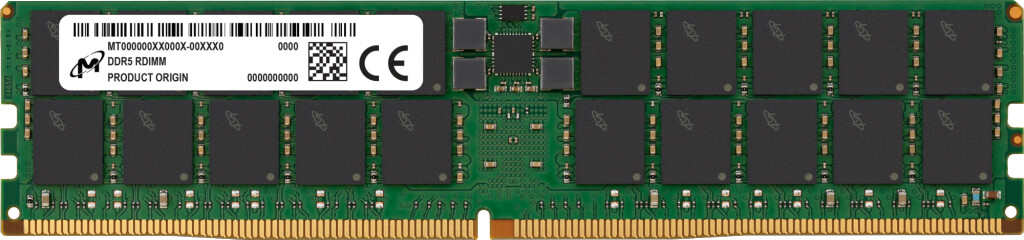
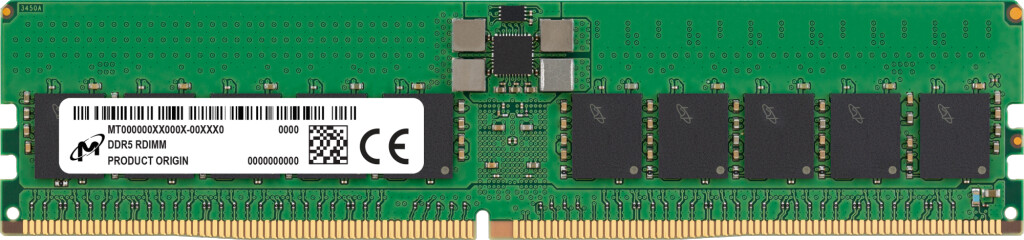
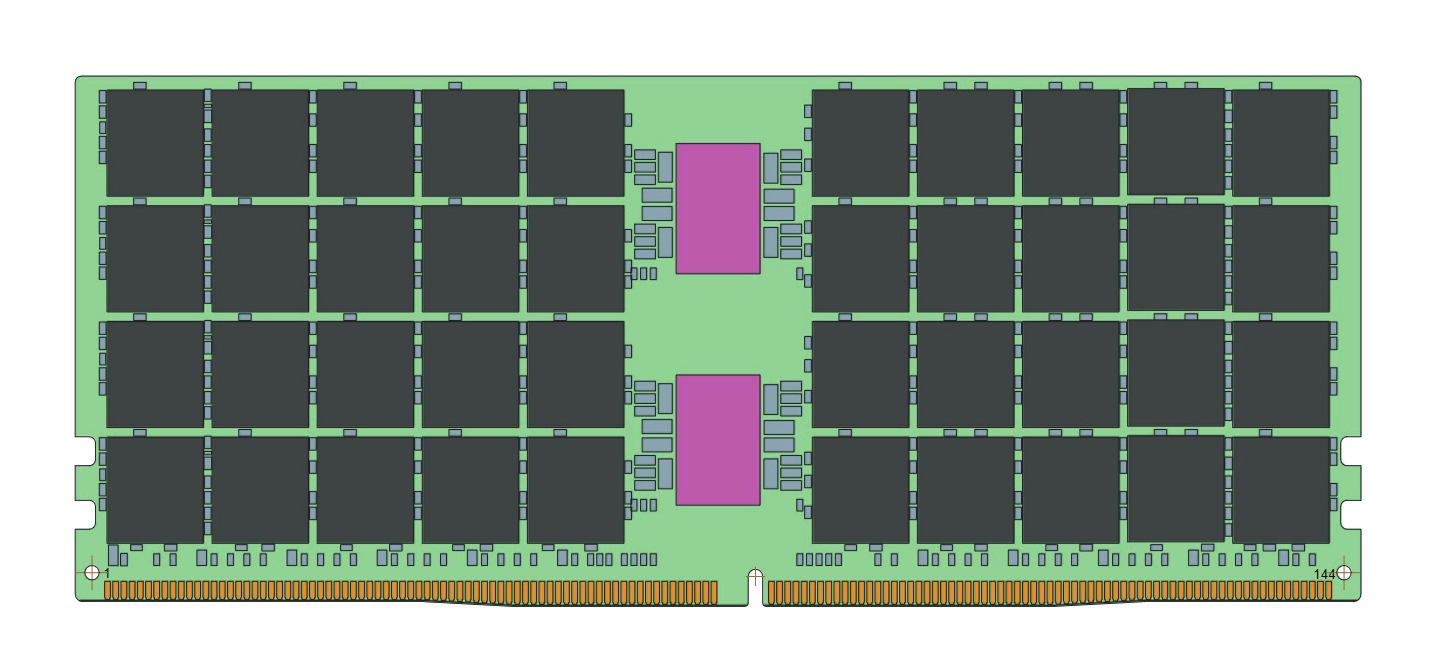
DDR3/4 component counts are a little different because they are all EC4 vs the normal EC8 for DDR5; so a “big” DDR3/4 DIMM that probably needs active cooling would be a 36 component count rather than 40.
EDIT:
MRDIMMs have gotten even crazier than LRDIMMs; there are 80 component count (plus 10 multiplexed rank data buffers making even more heat) MRDIMMs that need two >25 watt PMICs to run:
It appears my DDR4 modules are 36 count DIMMs, counting the DRAM and not the additional little packages also on there. But I figure same goes for them.
Thank you for explaining, I have ordered some memory brackets to be printed for me that I can attach two 40mm fans to each block of 4 DIMMs each for a total of four fans over the 8 DIMMs. Should arrive some time next week then I can swap the memory.
For @twin_savage and everyone else who might run into similar issues I wanted to provide an statement about the things I had learned in the last two weeks.
I learned that some 36 component modules can work fine in a regular case without active cooling but that the higher capacity modules, like the 128GB ones I had my hands on seem to need active cooling across the board. Probably because each component has more stacked layers.
The behavior of the DIMMs is quite different though. The SK Hynix brand modules I had initially when I made that post would become hotter and hotter under load until the point where they would kill themselves because of the heat. Even moderate active cooling provided by consumer 40mm fans was not enough to stop this, these modules need high, server grade, airflow to operate.
Because this was too much trouble for me to handle in a workstation class build I got my hands on a set of Samsung based OEM DIMMs. These modules behave much better for my use cases. First of all they stay cooler, at about 50°C/122°F at idle and when they reach about 75°C/170°F under load they stop getting hotter but start to throttle instead.
This is much more pleasing behavior for me since it means the DIMMs will survive if cooling goes out or is not sufficient and degrade performance instead of failing catastrophically. Also with the moderate cooling described above the new modules perform as expected.
It does not seem to be an issue for my 64GB sized modules, but both kinds (n=2) of those 128GB sized modules needed cooling.
It is also interesting to note that the question which uses more energy, the RDIMMs or the LRDIMMs seems to be a debated issue. I found some forum threads on the matter of people basically stating their personal opinion as facts without backing it up with sources that LRDIMMs use more energy then RDIMMs.
On the other hand I tried to find manufacturers info on the matter and found conflicting sources. SK Hynix had a site for one of their more modern modules stating that this series RDIMMs use about 8.5 watts while the LRDIMMs use up to 12.5 watts each, which was in line with my suspicion and also in line with the general consensus of people’s opinions.
Then however I found a random website for one of Crucials products where they advertised their LRDIMMs to be more energy efficient that their RDIMMs. It was not clear to me if this statement was on a ‘per Gigabyte of capacity’-basis or on a ‘dimm vs dimm’-basis.
My intuition would be that LRDIMMs require more energy for the additional chips on the module but it could very well be that this is a case to case, or rather module series to module series, comparison that needs to be made.
It might depend on what kind of load you subject the 64GB RDIMMs to, if they are idling at 50C I’d expect them to overheat when subjected to a taxing workload that hits the memory especially hard.
Depending on what dram die is used, the knee in the temperature-stability/frequency graph can be as low as 60C (16Gb Hynix A-die).
This a complicated question, and it would depend on which DDR version your talking about because DDR3 LDRIMMs centralized the data buffers in the command register chip while DDR4 LRDIMMs used essentially the same register chip as DDR4 RDIMMs but added dedicated data buffer chips for each rank group. I could see DDR3 LRDIMMs being more efficient than DDR3 RDIMMs if they had the same rank count and the memory buffer was fabbed on a newer process than what the “equivalent” register on the RDIMM was fabbed on.