I had already been doing some research into IA-64 when something suddenly caught my attention:
[5-bit Template][41-bit Slot 0][41-bit Slot 1][41-bit Slot 2]
There is something strangely adorable about this instruction bundle layout, so I started wondering: what would happen if I used it to visualize network traffic?
That thought eventually turned into this little desktop widget, and I wanted to share it with you.
P.S. This only maps network telemetry into an IA-64-inspired bundle format. It does not fully emulate or execute IA-64 instructions.
And. It reads Windows network-interface counters and does not inspect packet contents.
4 Likes
I use two Itanium2 chips(with heatsinks) as book ends. Never got the board for them. Strange to see it popping up twice in a week online.
1 Like
Using them as bookends? Wow, that’s pretty interesting!
I’ve known about IA-64 for a long time, but I only started digging much deeper into it recently. And yeah, there really aren’t many people discussing or exploring it anymore.
I used to collect all kinds of CPUs too, although I stopped after graduating from high school.
1 Like
On a message board I was on in 2000’s, a enterprising computer janitor grabbed a whole pile of chips, sold more keychains of the silicon than whole units. Practically free, but the MB was $1500 THEN. It was also a whole 64bit world unexplored, and windows sucked in 64bit XP.
Yeah, that’s often how it goes with unusual CPUs: you can get the chip itself, but finding even a second-hand motherboard is the difficult part.
The early 2000s were such a transitional period: ADSL becoming widespread, competing visions for the future of 64-bit computing, and PCs becoming much more commonplace over the following years.
Back then, many of us were initially optimistic about 64-bit Windows XP. But despite its Windows Server 2003 foundation, the driver and software ecosystem simply wasn’t ready for it. In practice, 64-bit Windows didn’t feel truly mainstream until well into the Windows 7 era.
A lot changed in a very short time.
only $350 today, not likely to work. The IA chips were vendor specific, 1.3GHz 3MB L3 is not a standard part. But heavy “First 64 bit CPU” bookends is fun too
I get it. Even if somebody gave me one, I wouldn’t have the rest of the system or enough familiarity with the platform to do much with it.
As for using computer parts as bookends, the only things I have that might work are graphics cards. The largest CPU package in my collection is a Slot 1 Pentium III.
1 Like
What do you mean by vendor specific?
A SL6XD is just a socket 611 processor that many OEMs had motherboards for.
HP made the ones I have, it was said then they were HP board specific. Do you have experience with them?
1 Like
Right, They are just heavy so one day they got used to prop the end, then I had the pair so why not?
1 Like
ohhh, I think that some of them had VRM daughter boards that attached to the CPUs (and then into the socket), and your right that those were vendor specific… My memory is alittle fuzzy on them.
Kind of, back in the day I sort of helped out with a project that aimed to virtualize MIPS based operating systems, and it couldn’t be done without an Itanium 2 machine. I’ve still got an HP ZX6000.
EDIT:
The software for the cross platform virtualization was from Transitive, which is what Apple used to make Rosetta work for the OG PPC emulation.
1 Like
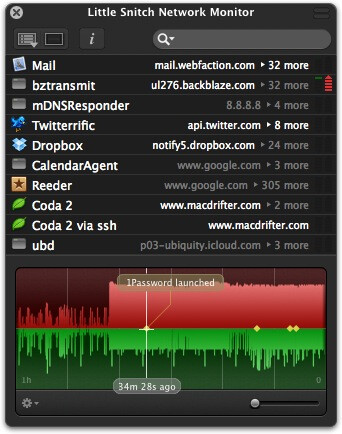
This reminded me of LittleSnitch app for macOS I used to rely on back in the day.
Your desktop widget looks great, kudos to you!