I have been shopping around for a wireless router for a while now cause I am currently using the isp provided one and it sucks cause I can’t alter anything to make that thing preform better in any way shape form. The two devices I am looking at are the GL.iNet MT5000 (Brume 3) it’s their secretly gateway and the GL.iNet GL-BE6500 (Flint 3e) there wifi 7 router. I picked these cause I know I can image them with openwrt if I don’t want to use their firmware and because I don’t trust netgear and tp link at all cause all the sketchy they are doing in the states and cause I can’t afford any of the unifi stuff that I see people getting .
I just want to ask if anyone is using any of these products and how they are preforming and if I should looking into a different series of products for some reason??
I will take recommendations that yall think are better
Note: gl inet firmware security is as good as all of these router manufacturers so decent for like two years and then piss poor afterwards . Unfortunately I can’t find a manufacturer with decent firmware security and support.
Thats why people that need that buys a device supported by openwrt and immediately reflashes the firmware, or a mini pc firewall and install openwrt or pfsense or opnsense or a linux distro
It will always be hard to find consumer grade stuff with proper management of software - I support your target of a device in the supported category for openwrt fully - flash them first day and gain control of your own device :).
GL.iNet routers are already openwrt based - they have their own dummies-friendly skin on top, but the full interface is available to advanced users.
Also, I think Flint 3e is the lite-version, and there is a Flint 3 that is more powerful (and expensive). For custom purposes, you probably want that one.
Yes but often using an older version, for example for the Flint 3 the base is openwrt 23.xx released in 2023 and eol since august 2025 for the openwrt project.
So yeah sure you can install some packages to expand functionality but any security updates rely on the vendor, not on openwrt project.
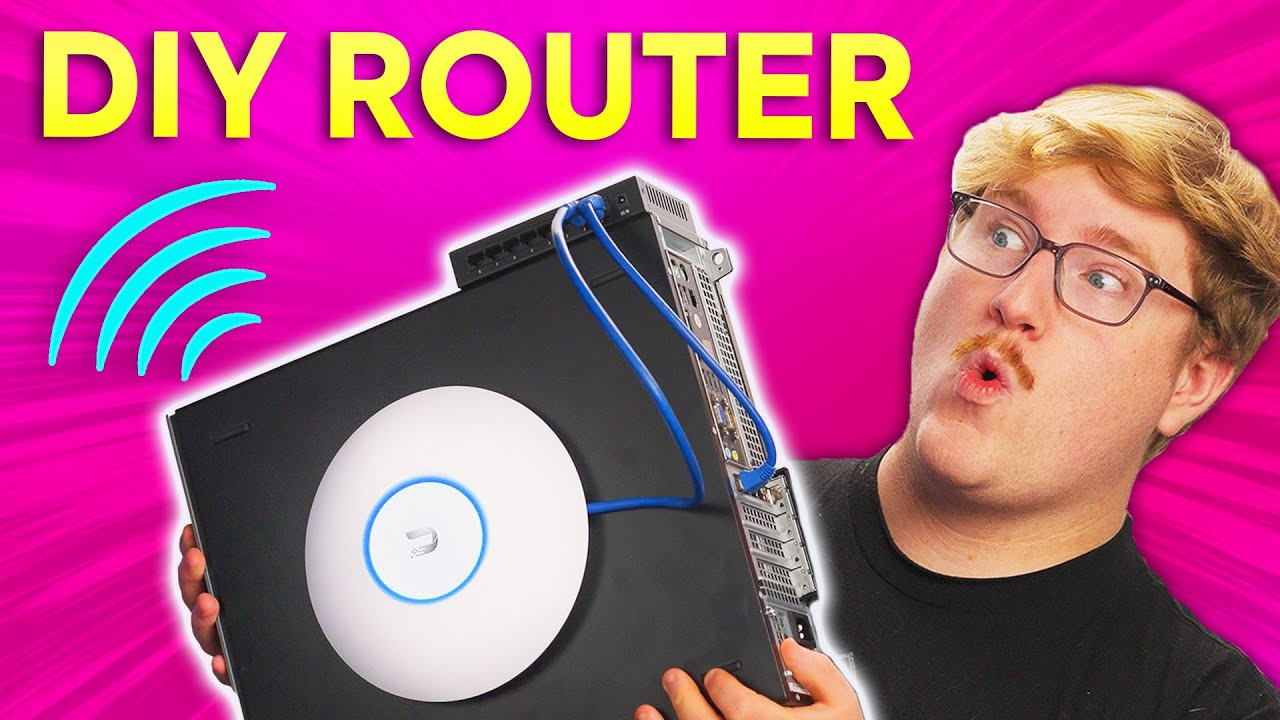
If you’re entertaining the idea looking at other platforms than what you mentioned, I swear by my OPNSense box. Followed this video for initial setup, with some Googling about port forwarding (everybody names their settings differently) so I can have my Jellyfin and such face out for my family. All on an SFF Lenovo with a spare NIC card. That system has since moved over to a mini for better power consumption, and migrating configs was a breeze.
Like Jake mentions in the video you can use your existing APs in bridge mode (if they support it). I ended up grabbing two recycled indoor HP Arubas for either end of the house (maybe $30 for the pair?).
I’m no pro by any means, but this setup has been really solid for me.
Operating system running under Emulation - Better!?!
Look up mini mig…
I’m always astonished that people run toward’s Linux which is an extrapolated copy of an Amiga minus the Emulation. The controversy surrounding RMS doesn’t often get explained well enough, Richard has been promising a re-write of the Amiga Kernel for decades, sucking up MIT and tech grants and sponging off the community he supposedly supports.
Then you get the Banana standards, like 64-Bits when an Amiga is 32-Bits period!
The irony is system’s that utilise ROM (Read Only Memory) are inherently more secure than a system with extrapolation: ie: using RAM (Read Access Memory) hence a Raspberry Pi using BASIC has more security than a Linux Server due to BBC or Baggy Bounds Checking.
Which means it boot’s up runs under emulation and is homogeneous computing not unlike the Amiga OS.
Hope that help’s and I sat through my CISSP exam recently and passed with flying colors.
Check ebay you can find loads of ATOM processors that where heading towards using emulated environments for the Amiga on systems like Lenovo that boot AROS (Amiga Research OS) with no problems. Getting everything else to work (Like sound and graphics) is another story. Then there’s the thermal envelope, how many WATTS does it consume, unnecessarily. A 450 WATT Power Supply to run an OS that needs 0.5w is over-kill and a waste of electricity!
Since no one asked it yet… What is your actual use case?
Home? How many Clients? You got a NAS / home lab? Should the Router handle traffic between multiple VLANs? What kind of internet bandwidth do you have? 50Mbit/s? 1Gbit/s? Do you want a consumer router that handles wifi or a should wifi be handled by a AP? What your budget? Do you plan on using VPNs? Wireguard? OVPN? IPsec? etc.
It’s hard to rate the performance of a product or suggest alternatives if we don’t know your use case / your expectations.
My use case is mostly home use , with around 19 persistent clients meaning they’ll be on the network constantly,current Internet bandwidth would be 2 gigs, preferably a consumer router that handles Wi-Fi because I want it to take a little space possible cause my family will not like a huge beefy PC in the middle of the living room nor a bunch of APs all over the house. My current budget is 500 cad cause I have a fair bit of money saved up and that’s the amount. I’m willing to part with for this stuff. I do plan on using either the router itself or the security gateway as an exit node for my Tailscale. The reason I picked those two because I know they support Tailscale and they don’t take up much space and power.
Flint 3e should handle this mostly fine, it could get vanilla OpenWRT support but no one is working on it, if that’s important to you and you don’t need wifi7 the Flint 2 already has it.
Otherwise someone is working on the Flint3, but this might also take some time.
Running Tailscale on OpenWRT is easy just run apk add tailscale and configure tailscale and create some firewall rules. Flint2 / Flint3e / Flint3 are all be capable enough to run tailscale at decent speed - not the full 2 GBit/s - but ~600 Mbit/s (Flint3/e) / ~800 MBit/s (Flint2). If this is enough for you, you won’t need a 2nd device.
I have the model with 2x10Gbe SFP+, 4GB RAM and WIFI-module BPI-R4-NIC-BE14 in the official metal case. It runs a bit hot but otherwise I don’t have any complaints after one year.