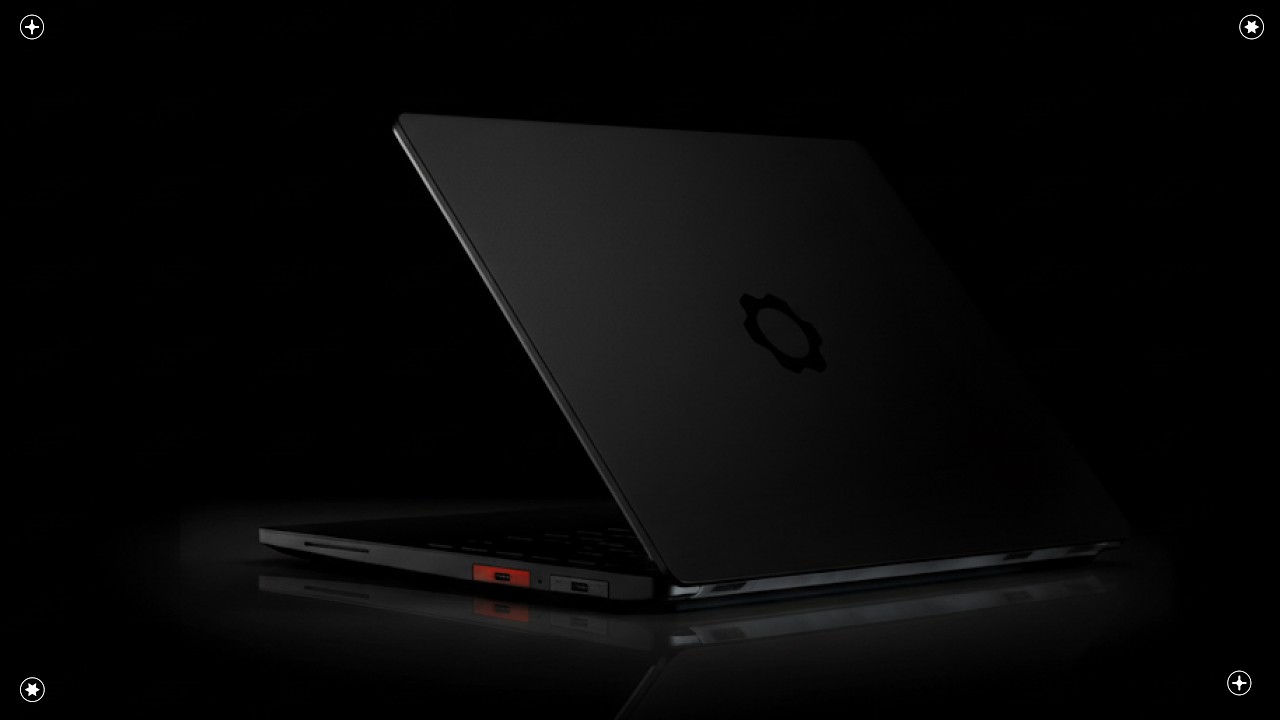
Framework announces the Laptop 13 Pro

Framework dropped the reveal video for the new Laptop 13 Pro this week, and if you haven’t watched it yet, you might want to give it a watch on 1.5x speed. Below are my running thoughts from the announcement, in no particular order.

CPU

Panther Lake. I’ve heard promising things about it, but I haven’t had the chance to get hands-on time with it yet, so I can’t speak to it from personal experience. The ultra-low-power cores are a genuinely compelling feature, and at this point, CPU schedulers have had plenty of time to mature around big/little architectures, so I think this is the strongest option available right now. That said, it comes with an asterisk depending on how you feel about the memory situation (more about this below).

External Improvements

Chassis rigidity and trackpad quality were easily my two biggest gripes with the original 13, so improvements here are very much welcome. The keyboard was serviceable, but compared to the MacBook Pro, it’s nothing to write home about. A stiffer chassis should translate into at least a modest improvement in keyboard feel, so that goes in the win column for sure. The trackpad, though, is where I’m most excited. After spending the last three or four years on MacBooks for work, the trackpad offerings from PC manufacturers have been genuinely disappointing. The Dell XPS 15 came the closest, but even that had its rough edges. Framework never really stood out, even among PC competitors, so here’s hoping they’ve caught up, at least.

The redesigned expansion module lock is also a very welcome change. Swapping modules on the original 13 chassis always felt more fiddly than it should. Replacing a hold-down button with a simple switch is a sensible improvement. Personally, I’ve tended to load all USB-C ports and largely forget the modularity is even there, but it’s clear Framework has listened to user feedback, and the experience is better for it.

Memory Confusion

This is where I think Framework loses the plot. LPCAMM2 memory on the Intel board is a curious choice. I understand the reasoning behind the form factor and architecture, but it feels like a step backward in terms of genuine DIY accessibility. The reveal video was my first encounter with the acronym, and what I found afterward did not inspire confidence. A quick search on Newegg for “LPCAMM2” surfaces a single result: a Crucial 64GB module for $1,000 USD. Crucial? The brand that the AI Memory craze killed off? Yep, that Crucial. That is not a healthy ecosystem.

It is hard to articulate precisely why this bothers me, but it feels like a close cousin to the questionable call Framework made with the desktop last year, where memory was soldered directly to the board. This time, instead of soldering, the memory ICs land on a poorly-supported interposer. The intent is clearly different, but the practical outcome for buyers is similar: a niche, hard-to-source format that adds friction to the ownership experience. Memory is in a rough spot industrywide right now, and I struggle to see how leaning into an obscure module standard serves the consumer-first ethos Framework has built its reputation on.

On the bright side, the AMD side of things is in considerably better shape. Framework is still shipping the Ryzen AI 300 series boards with the Laptop 13 Pro, and I have a strong suspicion those will outsell the Intel configurations by a wide margin, unless LPCAMM2 adoption picks up meaningfully from other manufacturers.

Bespoke Display

The Framework 13 Pro debuts the company’s first fully custom panel, and it’s a strong showing. The signature 3:2 aspect ratio and 2880x1920 resolution carry over, but the headline addition is a 700 nit peak brightness claim, which is genuinely impressive for a laptop LCD. Paired with a matte polarizer (the objectively correct choice), this should be a comfortable panel to work on indoor or outdoor.

The display also supports variable refresh rate across a 30hz to 120hz range, which is a welcome inclusion. VRR at the low end in particular should do real work keeping power consumption in check. On top of all that, it’s a touchscreen. Not my cup of tea, but I’m sure it will tickle the fancy of some.

Storage

The jump to PCIe Gen 5, and the continued support for standard M.2 means you can drop in whatever drive you like and take full advantage. No complaints here.

Audio

A side-firing audio module joins the spec sheet, with Framework claiming improved sound quality. The proof will be in the listening, but there is real room for growth. Framework’s audio has historically fallen well short of what MacBook and Dell XPS users are accustomed to, and at this point those two are the implicit benchmark the company is measured against. They’ve effectively set that bar for themselves.

Battery

The Framework 13 Pro now ships with a 74Wh battery, up 13Wh from before, which works out to roughly a 21% capacity increase. In context, squeezing that kind of gain while maintaining mainboard compatibility and keeping the external dimensions unchanged is a real engineering achievement worth acknowledging. However, the CEO’s claim of 20 hours of Netflix streaming on the Panther Lake configuration is a stretch that deserves some scrutiny. Combine Panther Lake’s efficiency, the new display, LPCAMM2 memory, and the larger battery, and you might land somewhere in the neighborhood of 60% better real-world battery life. Doubling it? I am not convinced.

Final Thoughts

Overall, Framework is doing a lot of things right here. The chassis, display, battery, and trackpad improvements are all meaningful, and I think the trackpad in particular could be the star of the show, assuming the chassis stiffness delivers what they are promising. The LPCAMM2 situation on the Intel board remains a concern, and it does not feel like a decision that plays to Framework’s strengths or mission statement. My hope is that the AMD model sells extremely well, and that the memory market finds its footing soon.

Announcement Video
3 Likes

Isn’t lpcamm2 supposed to be the future of laptop memory as it allegedly provides the low power and high(er) clock rates while also satisfying right to repair by not soldering to the board… however with the market being the way it is, kind of unsurprising that lpcamm2 is rare. I was reading an article about it yesterday, supposedly ADATA and others are on board, and it’s an open standard… maybe manufacturers are just lagging behind?

3 Likes

So one of the reasons I wanted to throw it so much shade is that I really wanted to get dissenting opinions to come out and explain to me why it’s actually good. (seriously, prove me wrong)

I looked into it, and yeah, it does seem like lpcamm2 is supposed to be the future of mobile. It’s surely promising, but I can’t say I’m a huge fan of the market saturation right now. Maybe Framework is taking the position that “by the time people want to upgrade or modules start failing, there will be better supply on the market” but that does seem like a gamble.

So, at the end of the day, yes, manufacturers are lagging behind for sure, but this is another chicken/egg issue. I’m not aware of any large manufacturer using the new modules, so it’s no surprise nobody is making them.

Considering that the power consumption of DDR5 is 1.1-1.5w for SODIMMs, and considering the LPDDR5X memory is only 20-30% lower than that, you’re really talking about ~400mW, which is not nothing, but that power savings can be attained by reducing your screen brightness 10%.

That said, there is a higher performance ceiling, so that’s hard to argue against.

1 Like

This is the article I read in reference the the framework announcement. It’s 2 years old so maybe these projects are dead in the water but key takeaways for me were:

  • “The first iteration, known simply as CAMM, was an in-house project at Dell, with the first DDR5-equipped CAMM modules installed in Dell Precision 7000 series laptops. And thankfully, after doing the initial R&D to make the tech a reality, Dell didn’t gatekeep. Their engineers believed that the project had such a good chance at becoming the next widespread memory standard that instead of keeping it proprietary, they went the other way and opened it up for standardization.“
  • “Micron and Lenovo are first to bring LPCAMM2 to market, with Samsung, ADATA, and others backing it as well.“
  • “Lenovo’s new-for-2026 T-series ThinkPad line features 8533 MT/s LPDDR5X modules, sourced from various suppliers“

So… guess we’ll see? Is Samsung out of the game too or am I imagining that?

1 Like

Yeah, that’s kinda where I’m at here.

I figured Framework wasn’t the first to market with LPCAMM2, but this really needs to catch on soon, or we’ll be in trouble.

The problem is that so many laptop manufacturers have just gotten used to soldered memory modules now, and we’re not likely to see them change that any time soon.

1 Like

This panther lake laptop runs at 4W in browsing at moderate brightness:

https://www.notebookcheck.net/Nearly-20-hours-of-battery-life-with-Panther-Lake-MSI-Prestige-14-Flip-AI-Convertible-review.1243401.0.html

At this point 400mW is significant.

It is a future-looking choice but IMO the correct one. I expect in the future mobile CPUs won’t support SODIMMS. Especially more premium models with strong iGPUs. Look for example at AMD not supporting SODIMMS for Strix Halo. Intel also has minimum memory specs for the bigger iGPUs. With this choice you’ll be able to carry over your RAM to the next board. With SODIMM that’s questionable.

Performance is a factor too. SODIMM tops out at 6400; this is 8533. If you want to compete with apple or have good iGPU performance fast memory is a must. This product is supposed to compete with MacBook pro and premium panther lake laptops. Who is going to spend $2000+ on a laptop with 20% worse battery life and performance than the competition?

The big OEMs are moving to LPCAMM2 as well (at least for premium models). So expect better supply whenever the memory market in general relaxes.

I’m considering getting a 13 pro, but the screen size is a concern for me as my daily work monitor is the dell 43 4k monitor.

Where does the framework 13 pro’s screen size compare to a macbook pro 14, macbook pro 16, and a 15.6 16:9 thinkpad?
I tried plugging in the numbers into screen size calculator, but the calculations didn’t look right/measure with the actual

Dimension Framework 13 pro Macbook Pro 16 Macbook Pro 14 Lenovo E570
Aspect 3:2 16:10 16:10 16:9
Diagonal 13.5 16.2 14.2 15.6
Estimated Width 11.2 13.7 12 13.6
Estimated Height 7.5 8.6 7.5 7.6

in fact, it looks smaller than the 14 inch macbook

Calculation looks correct to me: 11.2^2 + 7.5^2 = 182 and 13.5^2 = 182. Is it not expected for a 13 inch to be slightly smaller than a 14 inch?

2 Likes

Yeah when I tried measuring the estimated values with the actual screens (macbooks), the estimated sizes were much smaller

SODIMMS have had their run. I think its very possible that by the time most people want to upgrade, lpcamm2 will be more available. If and when production lines finally clear up, why not use the next gen memory?

As for the framework desktop, PCs have been going sbc at a steady rate for a long time. Strix halo was the logical next step. I’m not sad about this. Esp if lpcamm2 takes off. The creativity around raspberry pi is where pcs are going on a bigger scale.

Is that surprising for a 13 inch screen? I’m confused

Probably due to the notch? I think it’s 14.2 including the notch, but the aspect ratio 16:10 is excluding the notch.

That’s possible, as the measured the width didn’t line up

Not surprising, but I already find that the 14 inch macbook screen too small for me, so the framework being even smaller seems like a deal breaker for me.

Framework said the 3:2 screen is good for productivity, but going off of the estimated sizes and comparing the size to what I already have I wanted to double check.