I just bought a “new” Lexar Professional 32GB 1066x Compact Flash (CF) memory card from eBay and I believe its fake. I’m wondering if it could have had any viruses or malware on it.
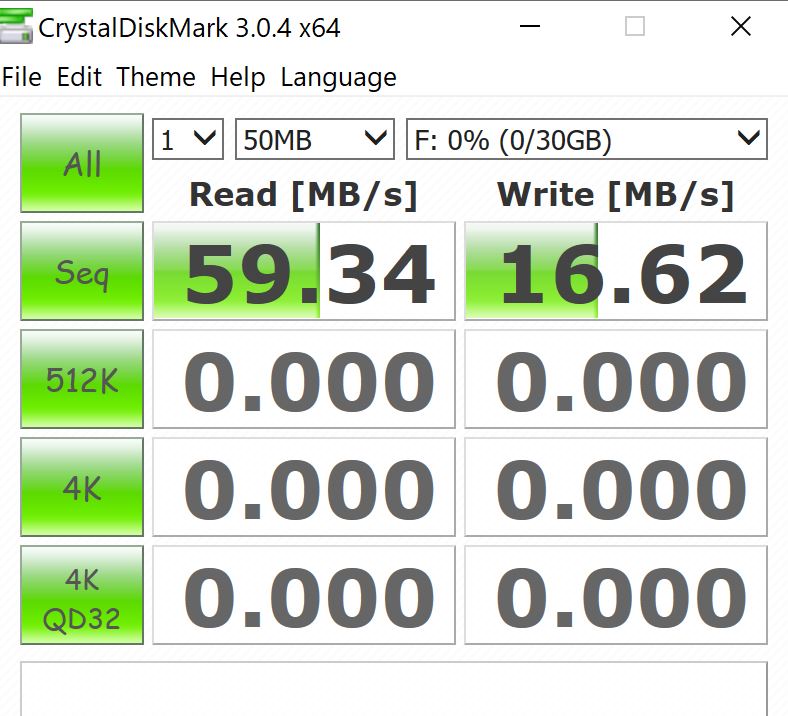
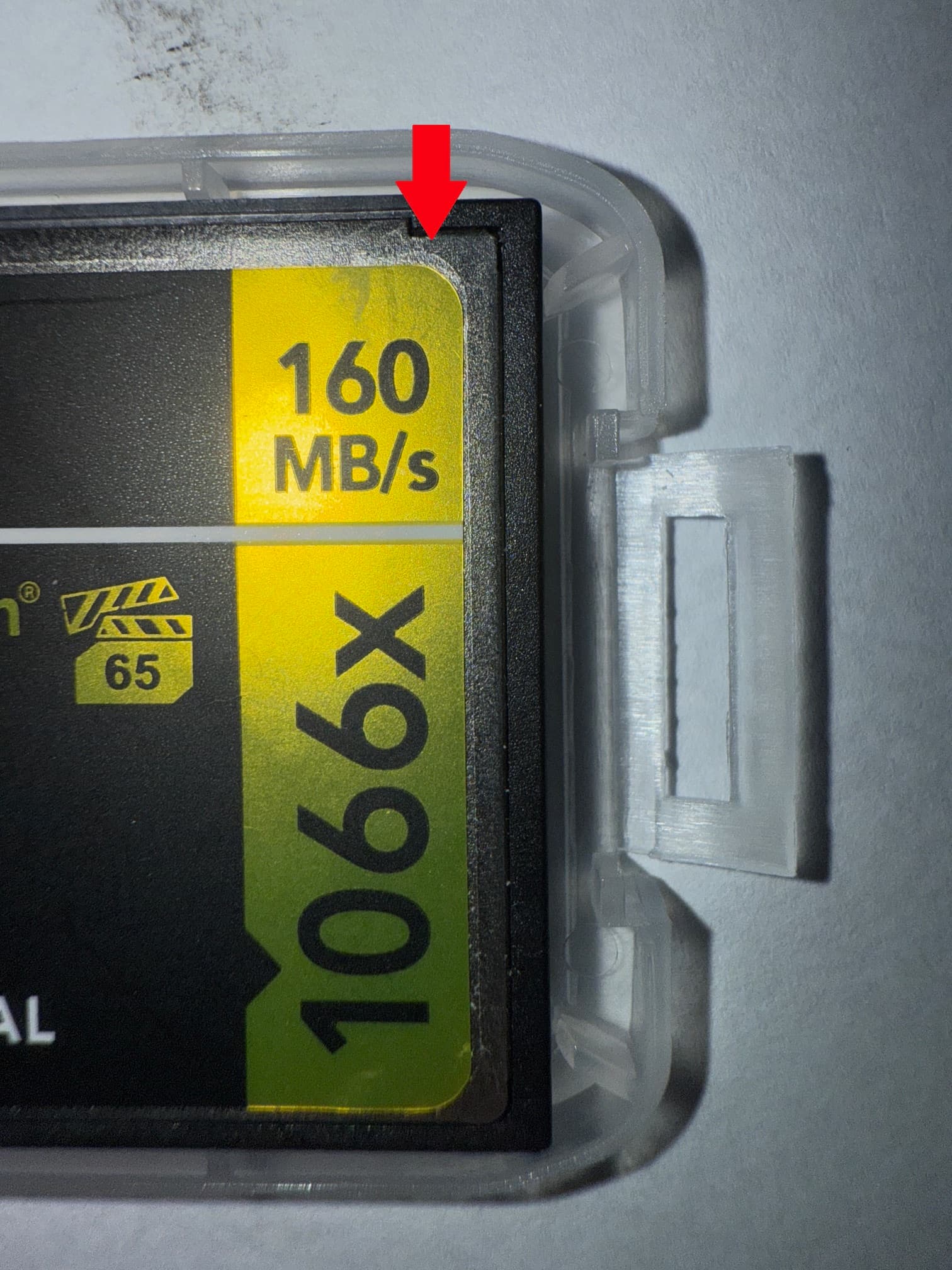
It came in the clear plastic shell and the label looks real. When I plugged it into my computer (Windows 10) and did a speed test its very slow. I did a h2testw_1.4 test and it passed without any errors. Its rated for a max of 160MB/s read and minimum of 65MB/s write but the real speeds are way off. After looking close at the label it looks like there is adhesive from a previous label on the card. The slow speed and label makes me think its a fake CF card.
I messaged the eBay seller that it might be fake and they provided me with a full refund without having to return the item.
I’m wondering if the card may have had any potential viruses or malware hidden on the memory card?
They know they’re selling counterfeit goods. By refunding you immediately they hope you don’t report them to ebay to take their scheme down. Just report them anyway and let them explain to ebay why they’re (still) selling fake stuff.
As for malware and other nasty stuff, update your scanners and get thorough deep-scans of your system.
Anything is possible… but I believe the risk of catching malware from a CF card is rather low: on the one hand, autostart from removable media is generally turned off these days, and on the other hand, you don’t willy-nilly launch executables found on it, do you?
Lastly, check whether a benchmarking tool can write and read the whole drive’s capacity. If it can, it’s not fake but the specs might be exaggerated, which is also a reason for returning it.
Use a software such as the SD Card Formatter to format the card for maximum performance.
There were no executables on the drive, just wanted to make sure nothing was hidden or invisible on the drive.
I used to h2testw_1.4 test to check the capacity, i’m not sure if it checks the full drive or not. It goes through all the available formatted capacity, measures speed and for bad sectors/areas.
I did a manual full Windows defender scan on my drives and nothing was found.
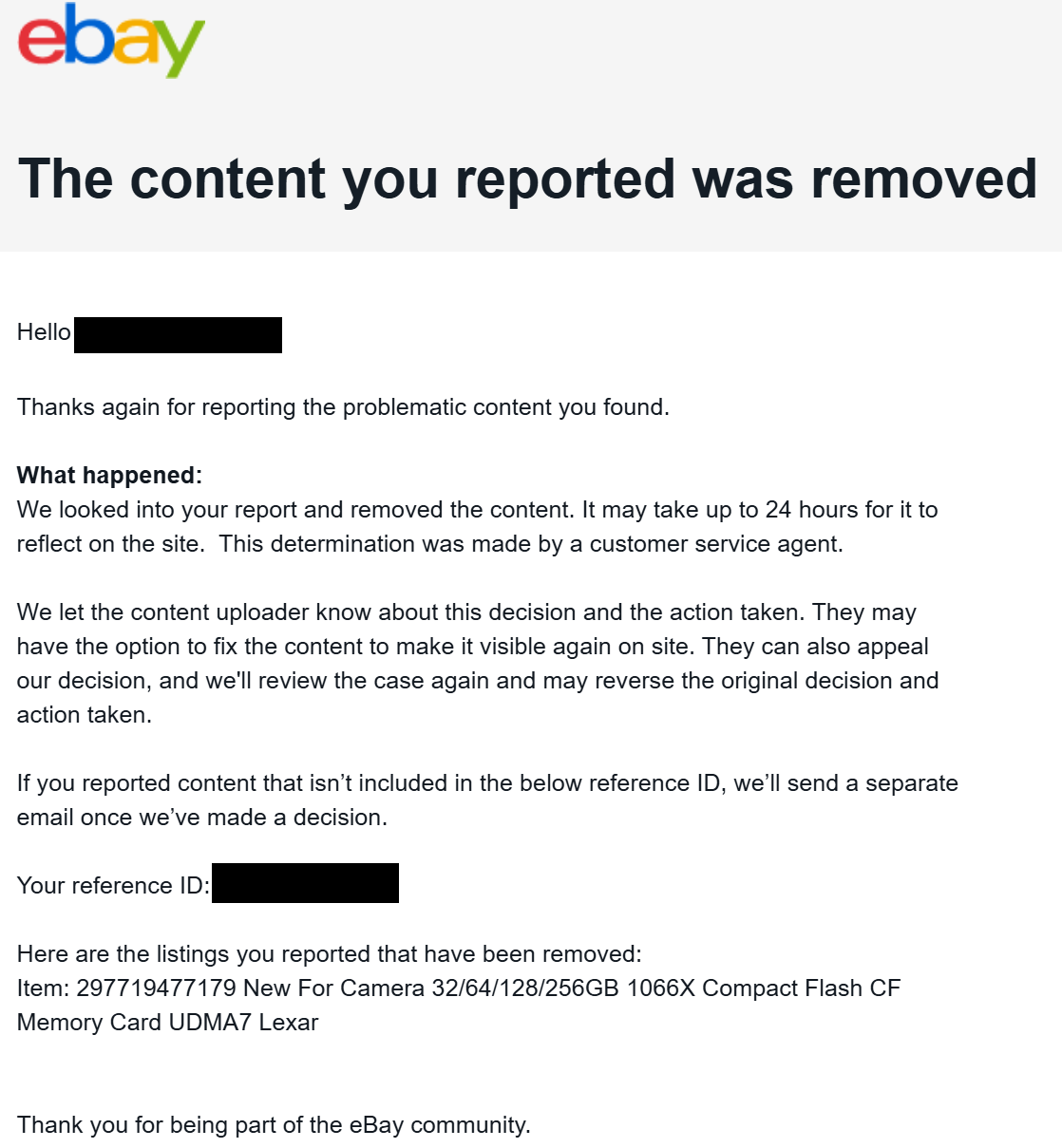
I reached out to eBay about the possible fake CF card and they took down the listing. I’m wondering if eBay punishes the seller by banning them or deleting their accounts. It would be concerning if eBay just gives people a slap on the wrist if they are caught selling fake goods.
Isn’t it possible to rewrite the firmware on these things? Theoretically. I guess the return on investment of such an attack would probably be very low
Yep, and there a few different ways they could deploy a payload to the system once it’s inserted. Usually only worth it for nation state v nation state or corporate espionage type situations.
Could see it as a way for them to attempt to deploy a botnet of some kind. Probably would focus attacks on IoT or Camera type devices though.