Hi all, this is what my plans would be for the AMD R9700 giveaway. This is going to be a long one so strap in.
I am in my final year of my masters in Automotive Engineering, with a final research project on electric motor design, validation and prototyping. I also hope to continue this project as a PhD, depending how this stage of work goes. The primary simulation software I use during research is Siemens Star-CCM+, which can use GPU acceleration on Windows (Nvidia only) or Linux (AMD + Nvidia). Below is a CAD screenshot of the very basic and early motor layout that is being designed and studied, it is a Multi-Stator Multi-Rotor (MSMR) axial flux design. Lots of components are hidden at the moment due to the current stage of design, but this is the housings, along with rotor and output shaft visible.
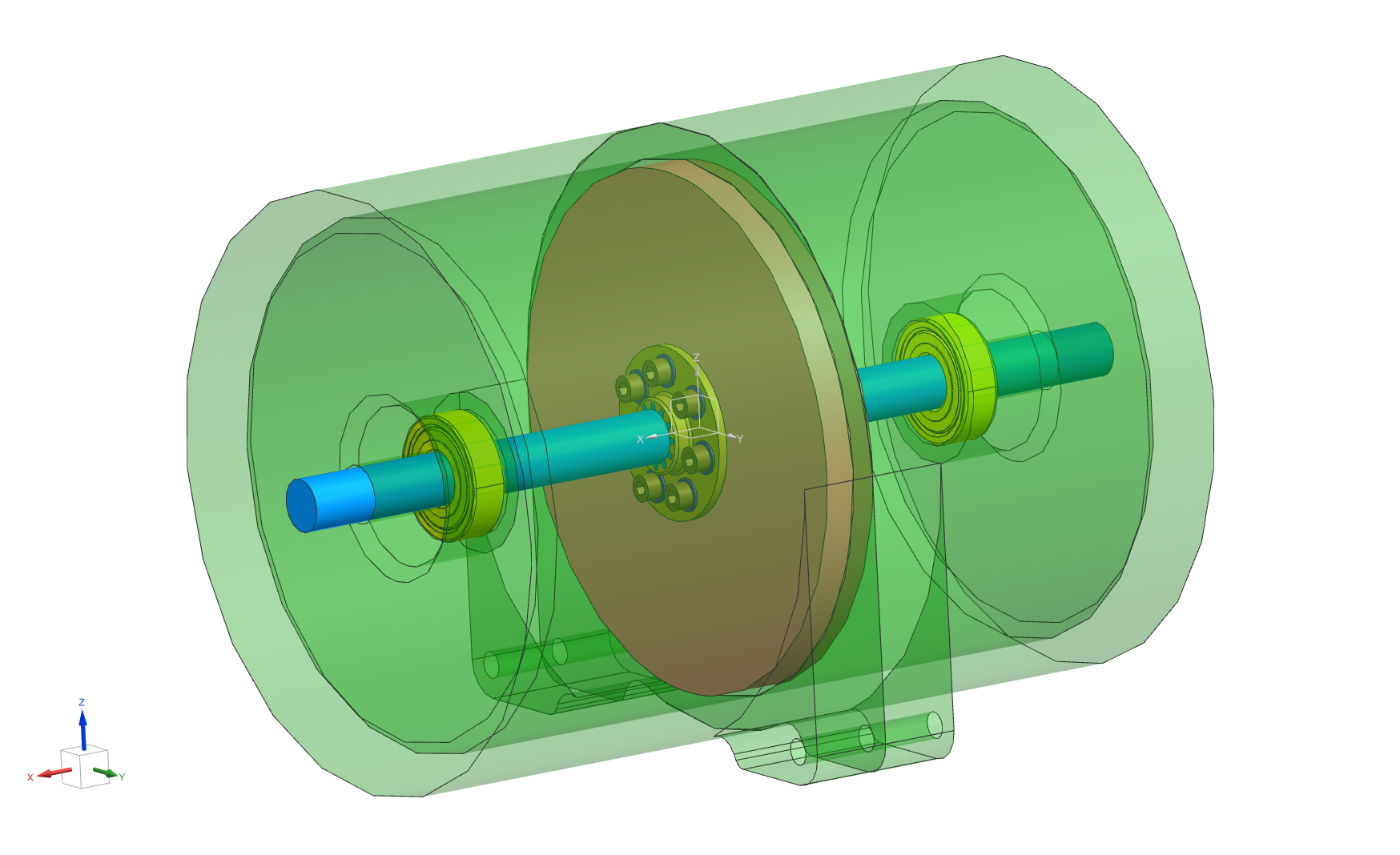
Being able to run simulations on GPUs for this work can run at twice the speed of using CPUs, with the given examples from Siemens being 64-core Epycs. I currently have a Ryzen 5900X which is reasonable for small simulations and a W5500 GPU which can do display output, but being an RDNA 1 GPU with only 8GB VRAM, it is unable to do any GPGPU simulation due to software support being lacking.
I am also doing a group research project researching multiphase materials and additives for heat transfer optimisation within battery packs. For this project I am also focussing on simulation within Star-CCM+, and there are areas of work that are sped up with GPGPU computation. The video is an early simulation of Multiphysics melting from Star-CCM+ for this project, prior to mapping the correct materials that will be physically tested and correlated to the simulations. This was just for validating the models and solvers being used, and the material is water that has been modified to melt faster for this stage of simulation.
The R9700 would be very useful as the highest performance PC’s available to me normally at university for work have RTX A4000 Ada GPUs, although these are normally used for teaching and have limited access time. The performance of these PC’s isn’t bad, but the 20GB VRAM and low memory bandwidth is a large bottleneck for both larger simulations and sims that use solvers that require more memory (a good example of this would be comparing ‘normal’ fluid flow CFD and heat transfer simulations with multiple contact interfaces). The HPC service that we can request access to is currently offline (due to an overdue upgrade) so for the foreseeable future there is a long queue for any research work that would need a lot of computing power. Being able to have a dedicated PC that can run simulations from multiple people working on one project would make a big difference, that is currently not achievable with the hardware we are working with.
To put some numbers to compute speedups that would be seen using an R9700 over an A4000 are taken from the Phoronix review of the two cards. As the version of Star-CCM+ that I have access to is the FP64 version, I will be using the double precision numbers for the OpenCL test, which are +92% over A4000. For memory testing: Read +92.4%, Write +87.7%, Copy +98.6%, again over the A4000. The memory bandwidth difference is the biggest difference and will have the biggest effect on any jobs run, as CFD and Multiphysics are known for being memory-bound. The bonus of the R9700 being a workstation card is the addition of ECC memory when using Linux, which I want for simulations that aren’t too heavy on either memory capacity or outright compute performance, but that last a long time and would be more likely to cause memory errors. Some of the battery simulations I am looking to run have a physical time in the hours, to get whole test cycles in. For these, ECC is a must.
One final bonus for both Wendell and L1Ts is that I would include them in any research paper at the end of the projects as contributors, and I would happily send copies of the reports if they are wanted.