Democratizing computing: Should AMD & Intel offer more I/O in lower end?

Most consumer boards from both AMD only has the most basic I/O: 2 memory channels & PCIE 5.0 lanes for the GPU. Why? To upsell to their worstation & server lines, which much higher prices.
The gullible think its nice AM5 support the socket so long, (and it is), but at the same time it also prevents them from making consumer boards with say 4 memory channels & 45+ PCIE lanes. Now we only have PCIE 5 for the GPU & perhaps 4 for an 5. M.2 SSD.

Intel is not offering that, but still limit the I/O inthe consumer end to about the same as AMD, pocketing the difference, and resulting in higher cost of Intels platform.

This is part of the price premium we pay for x86, and with the newer gens of CPUs, they will be more constrained. Arm has not been much of a succes in this segment, but here are some boards, and also RiscV, so both are hopefully comming in a few years, and can provide more competition in the low end, if AMD and Intel both refuse to do it.

For most ppl, a Threripper or non-AM5 Epyc or equavivalent Intel parts, is just too expensive and not needed for home and low end servers or low end workstation. I my eyes, AMD should use that Zen 6 seems to be belayed to 27, and offer it with increased I/O. To democratize computing more than it is & expand what we get in the low end. Else China and also EU is writing the demise of x86 down the road.

What do you think? Is it time for more memory & I/O in the consumer end? These does not have to be populated, but, just so the chipsets & CPUs support them, and certian models.

And this is also what Wendell has been saying in all the AM5 motherboard vids, but none of them have an PCIE slots like he has mentioned, because of segmentation.

Yawn :yawning_face: :roll_eyes: You have a lot to learn about business, particularly very large ones. They don’t care, period. Gaming is a niche market, the money is in businesses and data centers and so that’s where the big bois focus their attention on. Petty little peasant you, who can’t afford their big money systems, they genuinely don’t give a fsck about :money_with_wings:

Welcome to business-land :nerd_face:

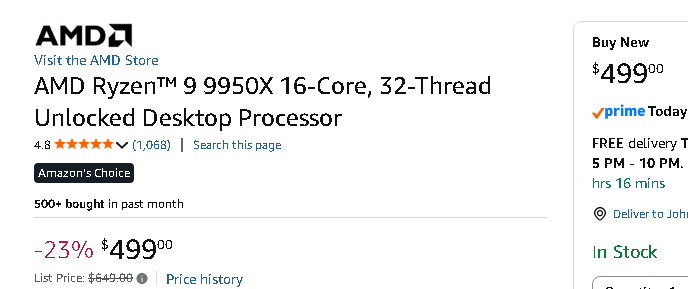
Well, i price checked a 9950x for you:

500 bucks for an am5 chip with 16 cores, 2 channels, and 24 lanes of pcie.

now compare that with 8 cores of zen5 with 128 lanes of pcie gen5 and 12 channels of ddr5 for under 550 bucks a pop? whats to complain about.

I think the real question is, why aren’t you buying epycs instead of expecting tiny am5 dies to have all the IO in the world?

These things are more powerful, cheaper, better connected than any of the stuff i see people dropping into their homelab builds with desktop pc parts. literally everything about them is great.

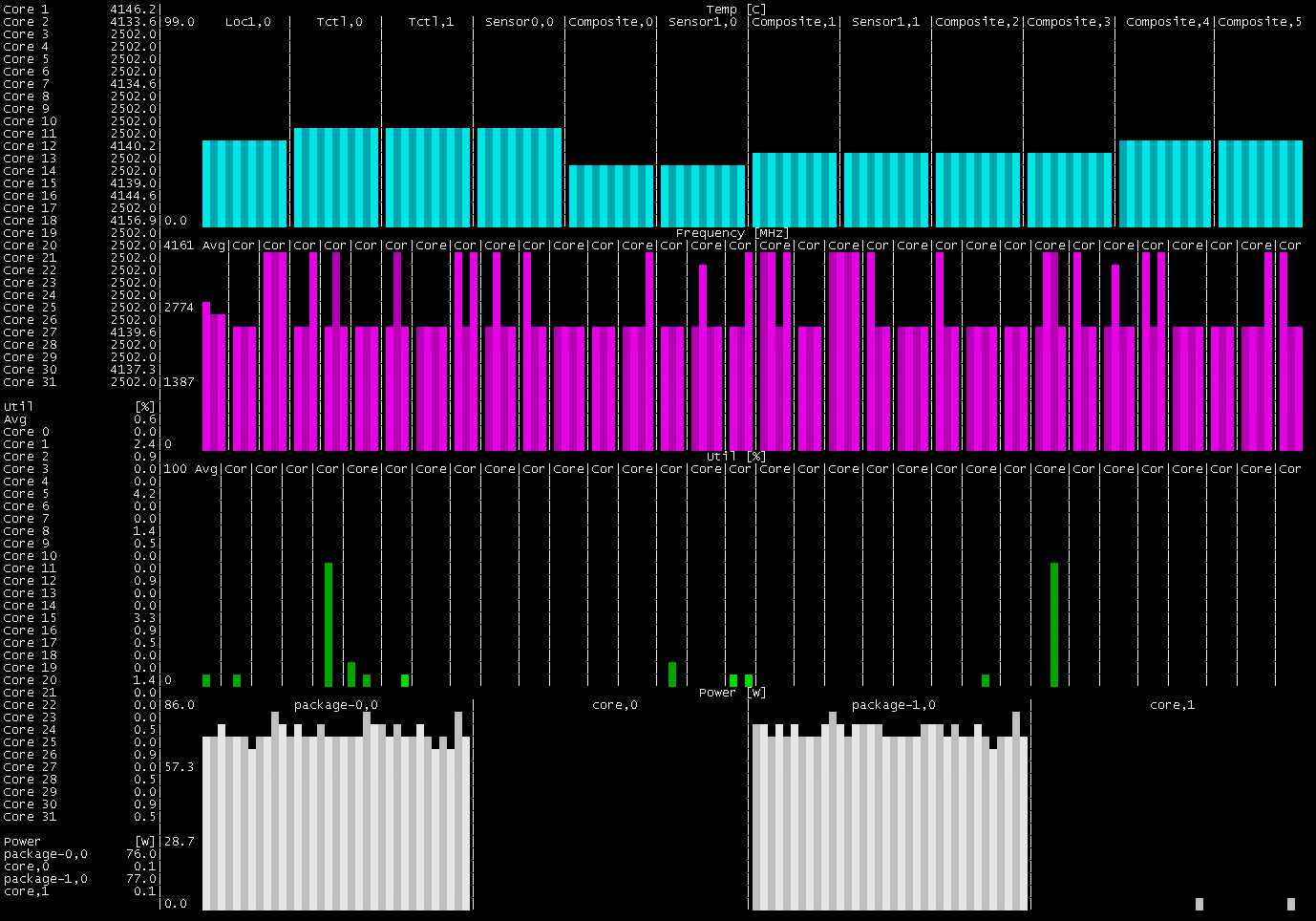
Even when they are busy they are only pulling 70 or 80 watts. just as low power and silent cooling than whatever latest monstrousity that raidowl guy is making :stuck_out_tongue:

And if all that is still too much? I guess buy a nice ARM chip? there is a reason why arm is taking over huge cloud datacenters lol

1 Like

I know, but this only happens as long as they have a duoply and low competition in the segment. Higer prices attracts competition. Arm and Windows has not been a succes, but many who run Linux, as more and more do, esp outside the US.

Its still 50% more, and higher idle and everything. With the current high prices on energy & hardware, that a no. Also most, if they do run AI at home, can get by with consumer CPUs.
With Arm and Windows, it has not been so much yet, but many who run Linux and BSD, an outside US fast growing group, makes arm systems more attractive. There is the mono 10g router.

dude its literally 50$ more for an epyc. you dont want a solution, you just want to complain. move on.

5 Likes

I don’t think he noticed that the order is referring to two processors instead of one so the cost looks doubled, when is in fact not.

1 Like

For the lower end, if motherboard vendors support more models of bifurcating the 16X PEG slot to two 8x electrical (16x mechanical) slots on the motherboard, the usability is immensely increased.

Additionally, bring back an updated version of AMD Crossfire or equilvanent will be an extra bonus.

Such a combination should bring a stop-gap and cover a good deal of local AI deployments of substantial benefits until a revolutionary architecture is put in place.

Though I really won’t hold my breath and have hope in the neoliberal capitalism. Perhaps until players in China step up for some reasons or demands.

1 Like

Honestly? Im still waiting for x86 to die, already. Cant even believe how long its taken, so far. It has had its time long long time ago and its just adding to the expenses. Its time for arm or something else to take over

Less I/O but faster I/O and no sata ports. All PCIe slots should have bification including M.2.

I would 100% be able to live with the current io allocation if the tech overlords allowed bifurcation down to x2 and x1 lanes. At pcie 5 or even 4 it is a lot of bandwith.

As it is, i dont need ultra mega speed outside of gpu and even that can probably just live fine at x8,i need physical ports to plug x1 to x4 cards in.

Considering the situation in SBCs and consumer arm in general, I am not so eager to throw x86 out.

Having to make device specific images and possibly include blob drivers for basic functionality is not my idea of freedom in computing.

Sadly on arm or riscv its the far west of embedded hardware, no standardizaton whatsoever and quirks for days

2 Likes

Montage Technology, Silicon Innovation, Jingxin Microelectronics, Shudu Technology.

These are Chinese fabless design houses working on PCIe 4/5/6 retimers and switches. PCIe 4/5/6 retimers already in mass production. PCIe 5 switches are in mass production.

They’re targeting AI servers for data centers at the moment. Should be a walk in the park for applying to consumer/client platforms.

So something cheaper and in abundance is on their way for bifurcations. Only if the client platforms are heading in that direction in the coming years.

You know what irks me most? The fact that even though AM5 has a PCI-e 5.0 x4 link to the chipset, the Promontory 21 chipset only uses a PCI-e 4.0 link to connect to the CPU, meaning that there is an artificial bottleneck.

For AM6 I’d love to see a x8 link between the CPU and the chipset and to have some chipset differentiation without an undue driving up of costs for the non homelab / HEDT crowd. I know four more lanes is already adding to the expense, as every extra lane does this, but having double the lanes to the chipset and making use of that at full capacity would be so helpful already.

2 Likes

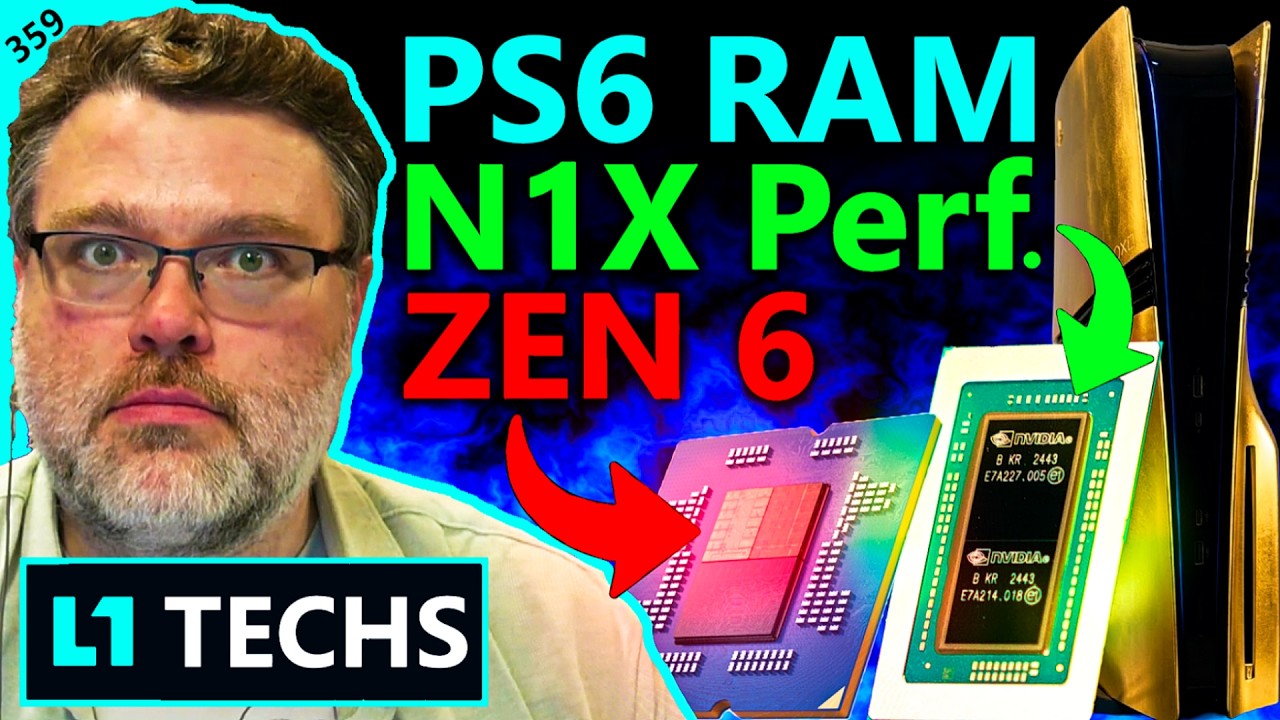
Wendell kind of said the same in this podcast with MLID, for the Zen 6 & AM5 server. And agree, faster memeory controller & I/O die, plus say PCIE 5/16 or 2 5/8, and 1 PCIE 4.0 x8 and 2 x4 on a server motherboard, not gamer HALO, would go a long way with the AM5 Epyc.

2 Likes

I don’t need or want a Threadripper, a 9800X3D is more than enough for me.

But even if we are screwed in the number of lines provided by the CPU it is the motherboard manufacturers who are screwing us the most in my opinion.

Having to study the block diagram just to know if mounting a second SSD on the motherboard will disable something is simply disgusting.

There are too many motherboards that can’t barely be told appart but there is not a single one that exposes all the available PCIe lines as 7 x16 physical with whatever is electrically possible providing a range from 5.0x16 to 3.0x1.

Just make the m.2 slots PCIe slots and all physically x16 and whatever electrically.

With such a board -and proper segmentation in UEFI- I could do anything, maybe at limited speeds but flexibility would be incredible.

No wasted lines on m.2 slots never populated, no SATA ports never used, no wondering what SSD will be disabled if I plug a NIC…

Yes the tradeoff would be needing m.2 PCIe adapters and SATA addin cards, but just one such motherboard from a couple manufacturers, is that asking too much?

1 Like

I see a lot of complaining but frankly not a lot of realism :roll_eyes: And that includes Wendell’s video, regrettably :heart_hands:

Manufacturers simply have no incentive to change the current status quo. Why would they, at significant cost, improve connectivity for their cheap “gamers“ boards when exactly that will eat in the profit margin for their expensive workstation and other upmarket boards :roll_eyes: :money_with_wings:

1 Like

ASRock Rack x470D4U/x570D4U/B650D4U were/are popular boards. It would be great to have a board like that with just one or more extra x4 or x8 slots. There is a market for this kind of hardware.

Yes there is. But these boards are not the “cheap gamer“ boards targeted here. My X470D4U was €500 several years ago and very difficult to obtain as home-labber.

It is my understanding that for the motherboard manufacturer there is no difference between selling, an AM5 motherboard or a TR one beyond price and margin, so obviously they won’t give you awesome connectivity on $200 boards. But the problem is they are asking $1k for some AM5 motherboards that are basically the same crap that their $300 motherbords.

From a consumer stand point I don’t care about price as much as I care about value, and I don’t see they giving me any real value while asking increasingly higher prices.

1 Like