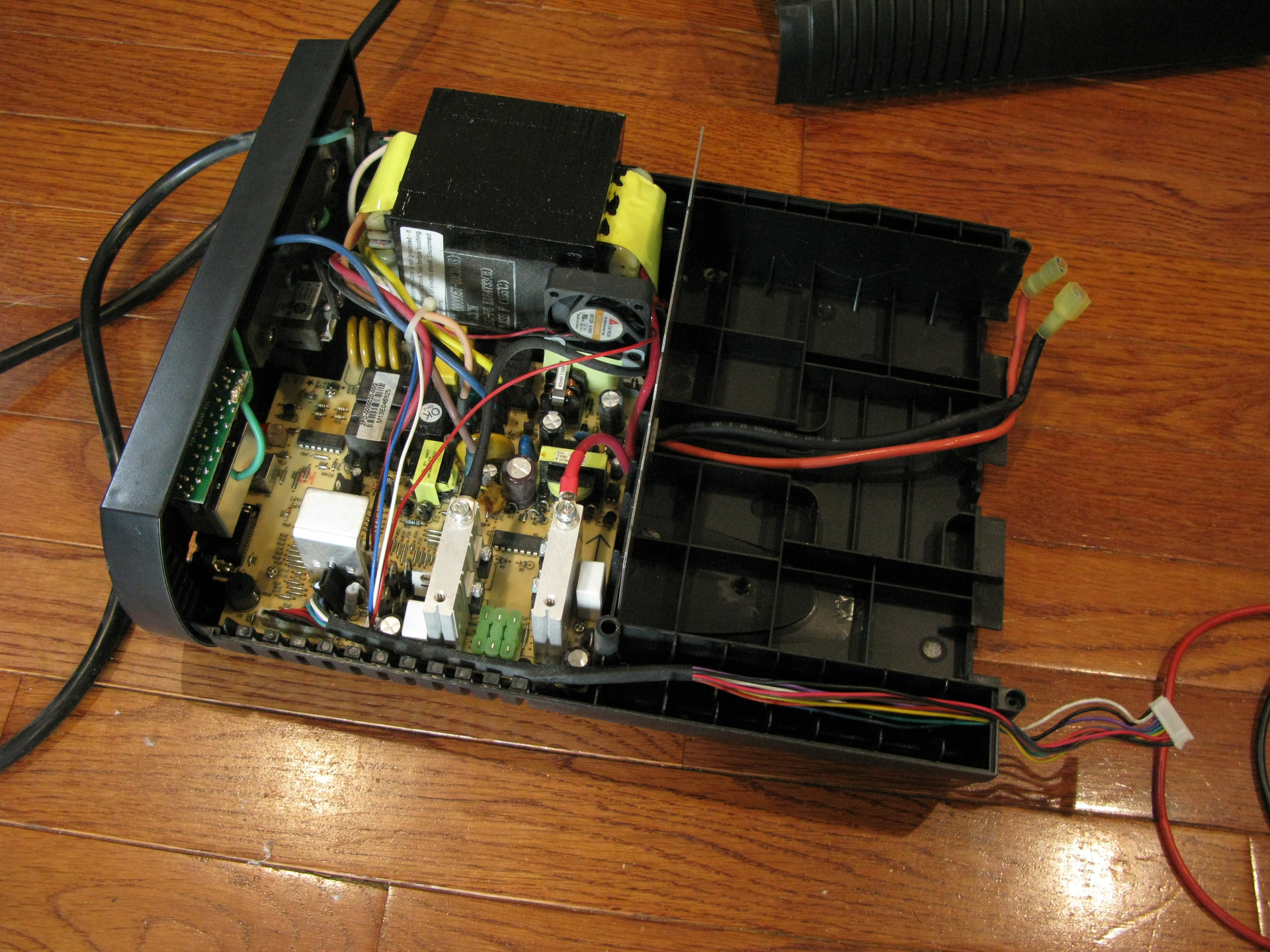
A couple of issues to consider with Lead Acid batteries. After Y2K a large number of smart APC UPS systems were auctioned off and I bought six at ~$20 - $25 for the house.
PCs, network, TVs and even an audio amplifier had their own UPS. These UPS have been slowly dying over the last 5 years and only 3 of the 6 still survive. Over the years they have had multiple battery changes.
I’m also running a variety of CyberPower UPS. A couple of OLS3000E, a 1U rack plus some BRICs LCD. The first CyberPower UPS I bought was a Smart App Office OR1500ERM1U in May 2023. Therefore none have been in service long enough to require battery replacement but real soon now …
Bottom line is feed your UPS with batteries when a battery self test fails.
In the same form factor (i.e. dimensions) you maybe offered different AmpHour (AHr) ratings from different manufactrurers. At one stage I was offered batteries with a higher AHr rating at a cheaper price. Looked like a win-win. Catch was they had traded higher AHr capacity for a shorter life. May be they had more lead and less liquid, or some design/manufacturing compromise or issue. At the time we had moved to the suburbs and the AHr capacity was irrelevant for mains transient outages. I can assure you that a longer battery service life is desirable. Therefore the highest AHr rating may not always be the best solution.
Regarding manufacturer’s specifications:-
Yuasa Battery Brochure
In a UPS the batteries spend most of their time in Float Mode so the Float Service Life is of interest. It may be worthwhile to spend more for a battery that will provide extended Float Service Life.
The reported AHr will vary with the discharge rate. Hopefully all manufacturers wiil use the 20 Hour discharge rate.
Different ranges of batteries are optimised for different applications. For example:-
Auxilary Equipment and Mobility Range
These applications rate service life purely on discharge cycles. If you compare 50% DoD cycles the REC series are rated over 600 cycles while the NP range just over 400 cycles but the specifications don’t provide the float life of the REC series. So ensure you retailer knows you are looking for batteries for a UPS i.e. float service.
Notice the NP series, 100% Depth of Discharge (DoD) plot on Typical Cyclic Service Life in Relation to Depth of Discharge. This may be significant in a very small number of cases. If you expect frequent, long mains outages that will exhaust the batteries then this can shorten typical service life. We used to live in a rural location in the foothills and suffered multiple outages per season from trees, bushfires, and weather. Even then there were probably not enough outages over the years to kill the batteries.
The other issues is the battery terminal design as different manufacturers will vary these. I don’t know CyberPower internals to know how much clearance is available.