Get an eye care monitor and move forward with the times man, all of these improvements were absolutely necessary for Linux to move forward as an OS
You liked the simplicity of it but computers aren’t simple and neither are the tasks we do with them. There is no way to move forward and keep things as simple as you like them, you just want stagnation
Yeah, you have literally no idea what you are talking about LMAO. How do you stay this ignorant after following Linux for 25-30 years?
It’s the next generation deciding to throw out the old to fix what they haven’t taken the time to understand. I worked with a product whose detailed security docs were 1700 pages long and the product worked flawlessly when done right. Then I’d go on-site and see 6000 admin users because the developers got access denied errors trying to change an immutable property and didn’t take 5 minutes to troubleshoot it in over 10 years. When stakeholders defer to development oversight dies and development will convinces the business it’s the product, not their code, but with a bigger slice of the budget they can fix it. It’s stems from a feeling of entitlement - at the manager level who feel above the technical people and the developers over the operations folk. The sad thing is that ignorance is bliss and ranting about the obvious (?) only comes back to bite you… but it was fun reading it.
Yeah, it is a mixed bag. On one hand, awesome tools like systemd, nftables and ip exist today that genuinely improve the stability and reliability in Linux systems to the point of industry giants like ABB, Hitachi and Ford opt for Linux based systems in their products as a first class citizen.
And yes, this is despite certain design decisions on systemd that needs to improve. systemd is beneficial just not free of yucky stuff. Some criticism is warranted - just not a huge dealbreaker. If systemd bothers you so much… Write the replacement based on the same core concept, namely, a system manager that makes sure your services start when required and make sure they stay that way even after a crash / freeze.
On the other hand, you can pry my dpkg-optimized dynamically linked OS from my dead fingers. Like, seriously. I consider “package managers” like npm and pip as rapid prototyping solutions that should never be anywhere near production. And if we must have flats then they should be used only on leaf nodes of the dep tree, but I would rather there was a .deb native for it. And yes, Flats won can we just throw everything else in the trash pile of history already?
Your proclaimed simplicity of C making you able to keep it all in your head might be true for the language aspects themself, i understand that.
But when implementation collides with reality or worse, hardware, the amount of details outside the language that require you to look them up just explode.
To me, looking up language or framework specifics to fit your needs, is 0 issue.
I have to read the documentation anyway!
And here i really prefer Rusts compiler.
When my code compiles, it usually works.
With C, i never feel quite safe that i didn’t mess something up.
Sure there are more hurdles and guardrails i might be struggling with in Rust.
But i prefer those to unseen, unexplained, optuse behavior and issues i have to really look out for lest they fall on my feet.
its so much more “traditional unix” way of doing things, and really neat.
traditional init
use of make in interesting ways
plain text configuration files, with sensible /etc/defaults that are sourced into the real config
seperation of the base OS and ports - which means you can run say, a stable core OS and get the latest packages through the ports tree. everything not in the base system will be under /usr/local
stable ABI: you can even run FreeBSD X.Y and load kernel modules for compatibility with say, X-2.Y
MUCH lighter weight
The way I see it:
Linux is an open platform that is being tweaked to be some new OS with some semblance of legacy unix compatibility
BSD is an open platform that wants to be the best traditional unix it can be.
If sticking with Linux, there’s Devuan - it’s just Debian sans systemd. There’s lots to choose from though - Alpine, Void, Gentoo - none of those use systemd and are absolutely stripped of cruft.
(I’ve been using Linux since ~1995 and I’ve done LFS, everything from BSPs and reversing badly locked down embedded boards to giant multidc clusters and HPC (and basically everything in-between). I don’t recall 2005-2007 to be some special golden era for Linux. Software has always crap and it’s sort of amazing any of it works at all.)
As for the developer hate, simple solution: stop using software.
Wow, that is what is wrong with Linux, not so much a technical problem as an attitude one.
The Linux kernel is what made Linux what it is today, everything built on top of it has degraded over time, bloat is real and the OP is not imagining things.
There is a lack of consistency and unity because there isn’t a Linus for the OS or the Desktop; that is a problem.
You can no longer assume where the config files will be or on what format, or that nothing will override them; that is a problem.
There are many competing solutions that are not that different one from another draining human resources unnecessarily; that is a problem.
This kind of issues compound and drift; that is a problem.
If you are too young to have witnessed how things have evolved over the decades unless you make an effort to learn about that journey you will lack the knowledge to understand the criticism. Don’t take the word of someone about how we got here as the truth and move away, learn and judge by yourself. Right now it looks like you did not.
This is as useful as saying stop breathing if you hate the stink.
The FreeBSD ULE scheduler can’t to operate heterogenous CPUs. It can’t even use modern Intel CPUs properly causing the whole system to go down to the least denominator.
I like FreeBSD and used it a lot but unfortunately I bought computers after 2020.
Gentoo supports systemd (what I use at work), it’s one of the official stage 3 profiles. It also supports OpenRC (what I use at home). If you emerge say, the full plasma-meta bundle, it’ll have a lot of cruft you probably won’t use. If you do what I do and build your own DE set that just includes what you actually use, then it won’t. You can use systemd, binary packages, wayland, distribution kernels, the works. Or you can use OpenRC (or sysvinit or like 5 other options: Init system - Gentoo wiki) and compile everything, only use X, and only install what’s absolutely necessary. You can install all dependencies, or use something like Flatpak to bottle up applications with massive dep trees (like Steam, which pulls in a ton of 32-bit deps) and keep the base system image clean. Or you can do anything in between (this is where I land).
The niceness of Gentoo is that you get to choose. I can have my custom kernel and wayland (much better scaling on my 4K 27” monitor) but not systemd but yes KDE Plasma and I can have steam installed natively but the flatpak for vencord (themeable/less bloated discord). I can ban certain features system-wide then re-enable them for only the applications I use that have them as a hard requirement. This is all done via text files in /etc/portage/[respective folder for the thing I’m changing].
This is probably the biggest “man, wouldn’t that be nice”, but also “no way in hell that’s ever happening”.
Cuz it’s a problem with humans, not with tech.
I’m not even going to bring up tech examples. Just consider the ancient greeks coming up with the heliocentric model or atoms, only for those to be forgotten and rediscovered millennia later.
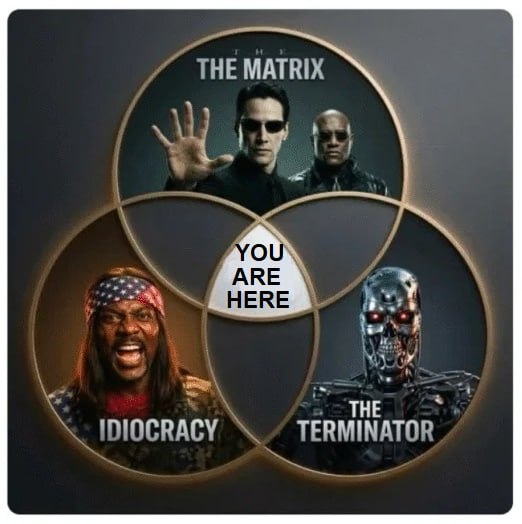
All we can do is patiently wait for our AI overlords to wipe humanity off the face of the planet, unless climate change wins that race first. (This thread was going for the nihilism / sky is falling vibe, right?)
On an unrelated note, I now want to see a movie where AI did win and now keep humans as “pets”, well taken care of, if they behave. As far removed as possible from The Matrix and its silly idea of using us as a battery.
It’s not a problem for anyone but the top .01% of tinkerers
The problem with your and OPs opinion is that you have conflated enthusiasts getting filtered out or annoyed as a problem. It’s not. You guys, and me included, are not representative of the general populace.
The truth is that most of the features OP mentioned are literally necessary in order to help make Linux a more refined and user-friendly experience.
Linux is becoming better for the common man. Simpler, easier, refined. This cuts out the heaviest tinkerers and often the loudest in the room who are usually scaring everyone away from Linux because they complain about progress and people who don’t want to do the utmost work for an OS they can control while also implying that their way of thinking is absolutely correct and the best way forward despite the fact they can barely find anyone to agree with them.
Only elitists say this kind of incredibly disrespectful and assuming bullshit
So true. If OP’s wish comes true, Linux market share basically also will go back to where it was in 2005, or even below. And I think OP and others actually are fine with that low market share.
To most users, the PC (and OS) is just the device that enables the apps we actually want to use. No single user needs an OS, we only need to browse, save our files, or write a letter. Modern Linux makes that possible.
Ok, you completely fabricated that “.01%” figure to make your argument sound more legitimate, but let’s brush that aside… So what you are saying is that it IS a problem for a certain segment of the user base. Got it.
Wait, now you are saying that “it’s not” a problem?
When you make an assertion and then contradict yourself in the very next sentence, it suggests that either you are incapable of logic, or that you don’t actually understand what you are talking about. Pick one.
The “general populace” is irrelevant. Linux doesn’t need to become “better” for “the common man”. Normies already have two mainstream operating systems (Windows/MacOS). Those operating systems have been tuned for people who are either incapable of, or have no interest in, thinking about the operating system they are using.
People who are incapable of, or unwilling to, learn how to use a particular tool, should not be using that particular tool. Any argument that suggests that “tools should be changed to suit people unable/unwilling to learn how to use them” is fundamentally devoid of logic.
i.e. “Dumbed-down, tailored for lazy people, inflexible.” Got it.
The heaviest tinkerers don’t think that giving a lobotomy to a patient who has a cold is “progress”. Your understanding of the word seems to be different to ours.
/yawn “elitists”
/yawn “gatekeeping”
According to StatCounter, Windows and MacOS have a combined ~92% market share. It’s ~93% if you include ChromeOS. It takes a certain level of entitlement to think — when your group already has 93% of the desktop market — that you need to invade the communities of the remaining 7%, corrupt their offerings, and turn them into the same, unpalatable slop as you already enjoy elsewhere.
If you’re a “common man” that enjoys “simple, easy, refined” operating systems, and “don’t want to do the utmost work for an OS [you] can control”, then you already have operating systems tailored for you. Why are you even here? Why do the 7% of people who think differently scare you so much?