We have a business requirement to retain certain employee records for 40 years.
We are a business with a small IT team and 2 geographically separate sites (with server rooms). Although it is not possible to say that both sites will be around in 40 years time!
Assume we are not going to use a 3rd party to avoid taking responsibility ourselves , or transfer the records to microfiche or equivalent.
There is no electronic solution that lets you record data and leave it in cold storage for even five years where you can feel secure that you will be able to retreive it when/if you need it. None. Not tape, not HDDs, not M-DISC, certainly not SSDs. I see two options:
Transfer your data to archival paper (you can fit about 3 MB of compressible data on a sheet of paper, including some redundancy), hole-punched mylar tape, or the like. Obviously make mutliple copies and store them at different locations.
Keep your data online using something like ZFS and 3-2-1 backups, and continuously monitor it and update the storage solution as needed.
Honestly…modern media is useful for a couple of years, maybe 10. You can juggle and move from one medium to another and with digital data, you can often just copy stuff. But then there are files requiring certain software which requires special hardware to run…we like to think of having open standards with jpg or pdf…but digging 40 year old stuff from some floppy disk even IF you chose a long-lasting medium…can be difficult to run at all. Things in the last 40 years changed a lot. And the software or hardware you used it with is hopefully preserved in some way, because there won’t be an emulator for your special medical machinery which is the only hardware that can decipher that archive of medical data from 30 years ago.
Otherwise you just have some meticulously well-preserved and uncorrupted blob of data from the past, with binary gibberish no present software can decipher.
That’s why the consensus is long-lasting medium (e.g. microfiche) and old-school print stuff on it. Because you can easily digitalize it again or use humans to transcribe everything into modern formats.
Paper rots and tape rots, HDDs data degrades over time (if you have the means to actually plug it into a machine in 40 yrs.I remember HDDs from 40 years ago…they don’t run off SATA or USB I can tell you that much). SSDs and CD/DVD optical stuff is even more fleeting in nature.
. Our ancestors used to carve things into stone…but that doesn’t work anymore with GB or TB of data ( Although the Egyptians invented early form of normalized databases and indexes)
And then there are special storage conditions like humidity and temperature. And your basement or attic isn’t the best of places most of the time.
I guess migrating the data every decade to the present standard will work as conversion is rather easy, but requires continous effort over decades. And no one really wants to do this or pay for it.
TLDR: Kicking the can down the road for data works. But the ability to actually read and use the data requires some work or isn’t possible at all depending on the data format.
Thanks for your reply. My concerns with this suggestion would be:
How do we know that the discs last as long as advertised?
How do we guarantee that we still have the technology to read them in forty years?
I expect that the amount of data is very small, say 10GB.
“40 years sounds like you need a plan to update how you store it every 5-10 years tbh”
I agree that if we were buying & maintaining the hardware ourselves this would be the way to go.
So having considered the responses so far and thought about this further I think:
(I should have mentioned that It is likely that the volume of data will be very small, lets say 10GB.)
The IT team need to separate the day-to-day protection of the data (i.e. preventing somebody deleting a single file incorrectly) from the problem of long term retention.
Therefore the business requirement should be redefined to storing an annual copy of the data indefinitely.
I am thinking that we could just rent the necessary amount of space from 3 major cloud platforms and put 1 copy of the (yearly) data in each. Then if one of them shutdown we choose a replacement.
The procedure for adding the new yearly copy could include checking the hashes of the existing copies.
I don’t see the problem, it’s not like formats disappear over night.
For example ATA was designed in 1986, superseded by SATA in 2003 and they co-existed for many years. And you can read PATA drives just fine today using a 5$ adapter - almost 40 years later.
I follow a guy that tried to recover these old data tapes from the 60’s, it was so slow and full of so many errors (as well as the tape rolls themselves had stretched from age making it 300% slower) he just gave up.
Maybe it matters how you preserve them. Bummer that they’re not a realiable media to hold data for 40 years.
I got DVDs burned over 20 years ago and still work totally fine so maybe they’re the right choice.
Anything in a database, .doc(x), xls(x), etc. will deprecate and be rendered incompatible. Currently the oldest thing most anything can read is ASCII text documents and .jpg (easily corruptable).
Your best bet is to have copies of each form (likely already in pdf format) in each long term medium. (.txt, .jpg, .png, tiff, .bmp, .pdf, .csv)
.tiff is the defacto standard for archival image formatting
You can have transcripts of the images in csv format for indexing.
Then throw it on your prod and backup server in a secure enclave and add to it each year.
No-Tech Solution: Paper lasts shockingly long time spans. I have some punch cards for a long defunct IBM-system with clearly legible text on them (60+ years old).
This. The only way to keep information “alive” is to update it religiously, on many different types of media.
Out of curiosity I pulled out a few DVDs that I burnt and haven’t touched in somewhere between 10 to 18 years. They all still read at full speed with zero errors. I imagine M-Disc is one of the better options. They’ve only been around since 2009 though so it’s not like they have a 40+ year track record behind them.
Yes, but they’re on track for that goal. Especially if just plain old DVDs were when that tech was the only way into cheap, offline bulk storage.
This discussion is making me curious to get a bunch of those and a blueray burner. I have a stock of family photos backed up everywhere, one more backup is not gonna hurt.
Yeah exactly. The track record they have so far seems solid and when it comes to media focused on cold storage longevity there not much else out there.
 , or transfer the records to microfiche or equivalent.
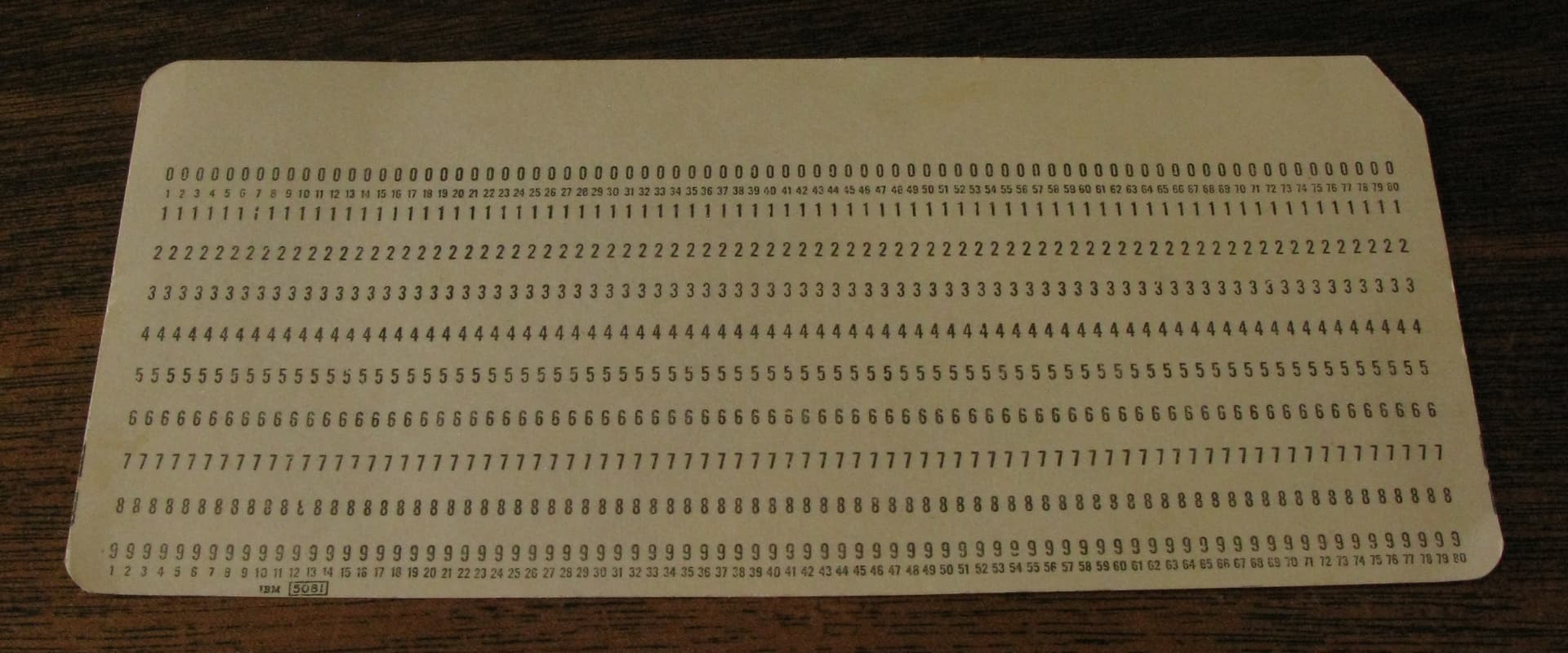
 Paper is surprisingly resilient, as long as you keep it in a climate-controlled space.