Gas v electric town v country my favorite thing against your favorite thing... ROUND ONE!

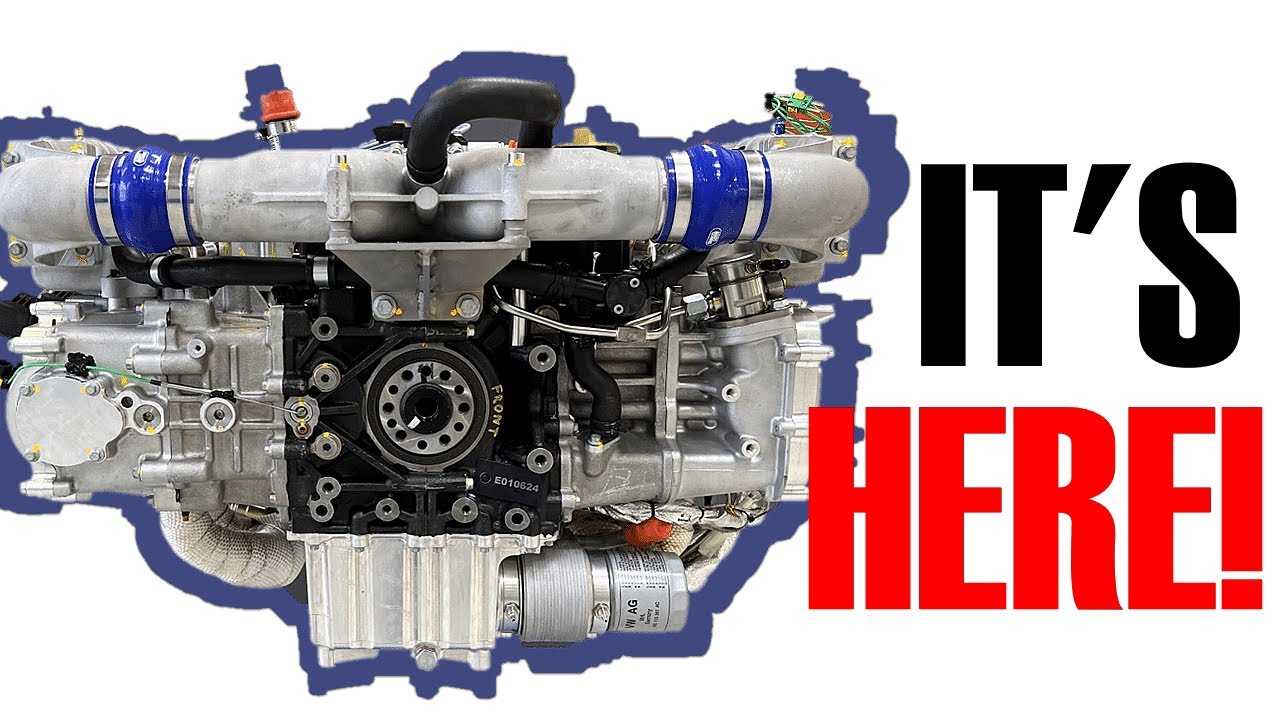
Ford did some tests in one of their vehicles to determine E85’s usefulness and tried to see if they could make it better than regular gasoline. I cant remember what vehicle they used, but they did modify the engine specifically for E85 in the test. Since E85 is basically much higher octane, Ford found they could significantly increase the compression ratio of the standard engine when used with E85. By doing this Ford actually got better MPG with the E85 fuel than the regular gasoline model of the vehicle as well as more horsepower.

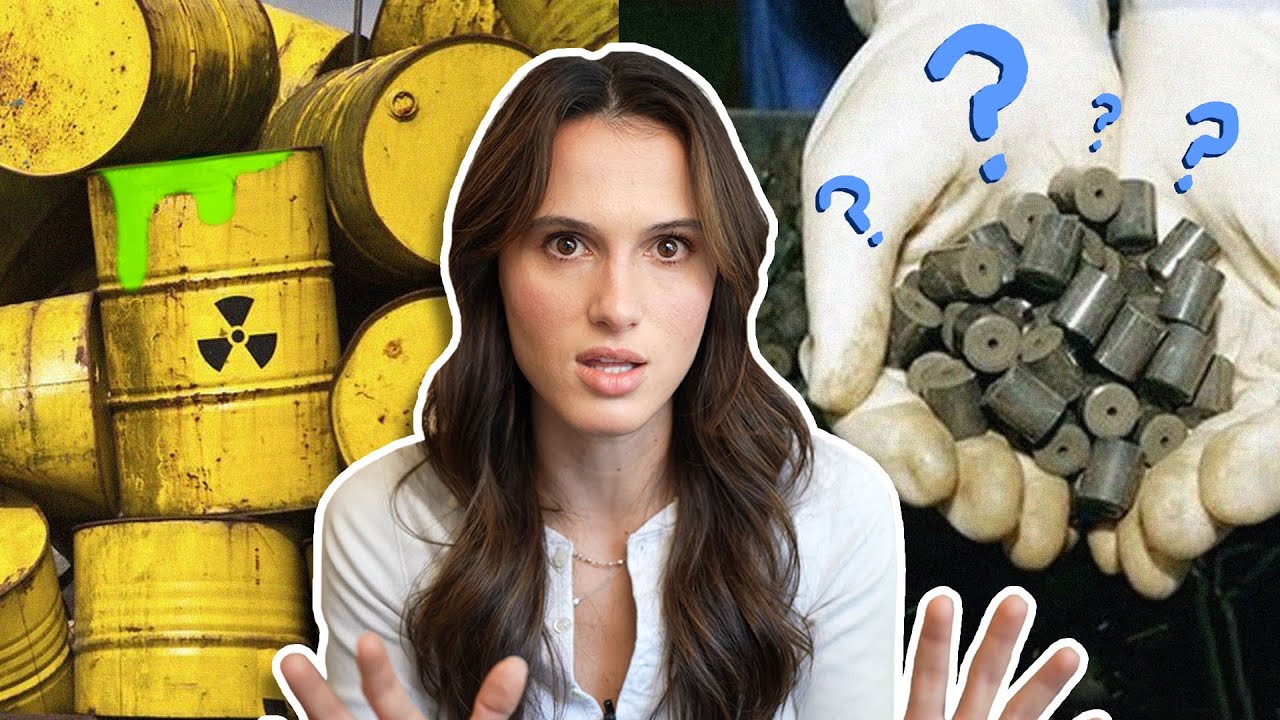
Nuclear waste was solved decades ago, we just haven’t pursued it because of various reasons that are mostly political.

Nuclear is expensive compared to other forms of power plants, but that is mostly due to how few there actually are as well as how much regulations now surround them. If nuclear became more common then the price would drop.

2 Likes

Yeah it’s the same branding issue as radiation. People are afraid of radiation but don’t realize their phones and microwaves emit radiation

1 Like

Precisely. Instead of living in fear of something, learn something. My dad worked in the industry for 40+ years, from his telling, it’s more difficult to keep the plants RUNNING than worrying about safety because a single sensor malfunction can SCRAM the plant.

2 Likes

The point I made in green vs renewable is even if there is several radioactive fuels available, they are still all finite resources, hence why we cannot consider nuclear as renewable, only as green as in it doesn’t emits GES.

And with new technologies surely nuclear is becoming cheaper, but I think it’s still somewhat more expensive than hydro, solar and wind.

Honestly what turns me off the most about the discussion of evs is the amount of blatant ignorant fanboyism. In most comment sections people will not acknowledge the benefits/drawbacks + use cases for both ev/ice.

It’s like the people who believe amd and nvidia would never screw the gpu consumer.

One of the massive turn offs I have about EVs is how automanufacturers want to use the paridigm shift to force anti consumer practices drm features, serialized parts, and etc. I am also aware of the aptera PLL has posted about it repeatedly.

I could see a EV being practical for a dense urban/suburban environment, but the range losses in winter especially in northern states and downtime charging for roadtrips. Honestly if we can pack the energy density of a current ev battery to the size of a car battery, it’d be much more convincing. Imagine a world where instead of charging our battery, we would stop at a recharge station and replace our battery.

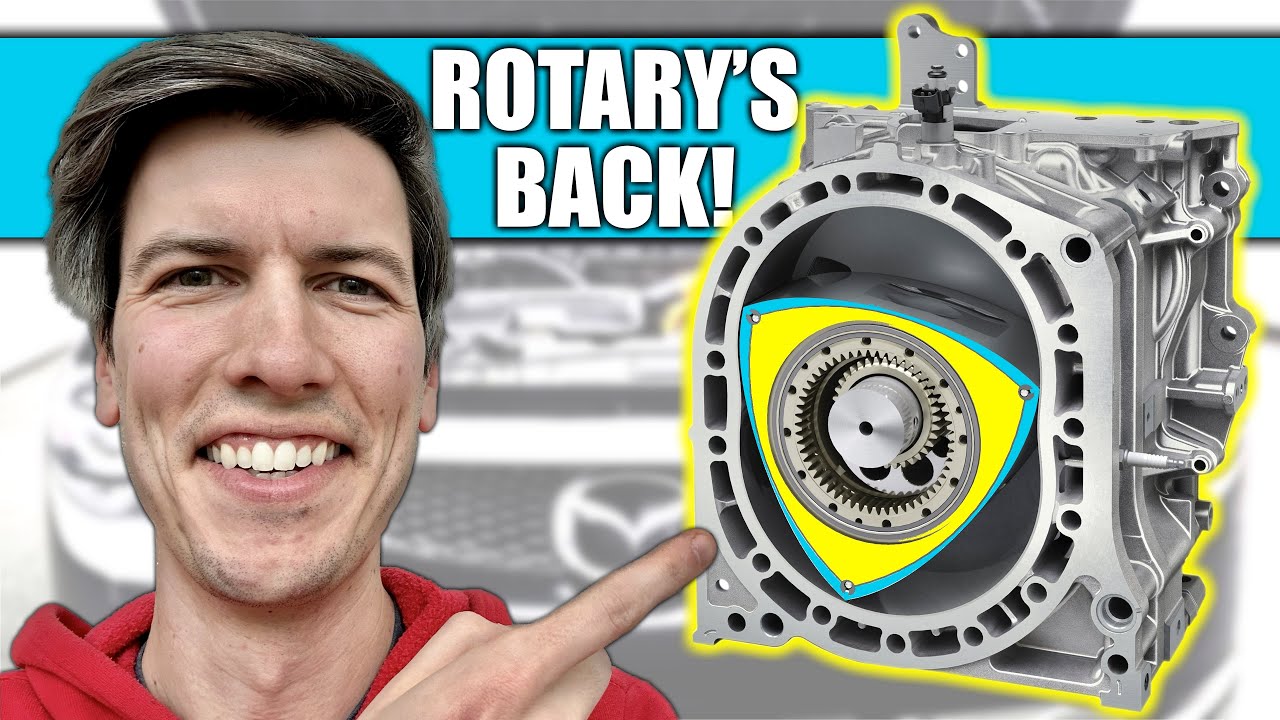
The more practical solution is a hybrid such as a scotch yoke or a rotary engine that only comes on to recharge a battery

The other thing that kills ICE efficiency is weight and emissions standards.
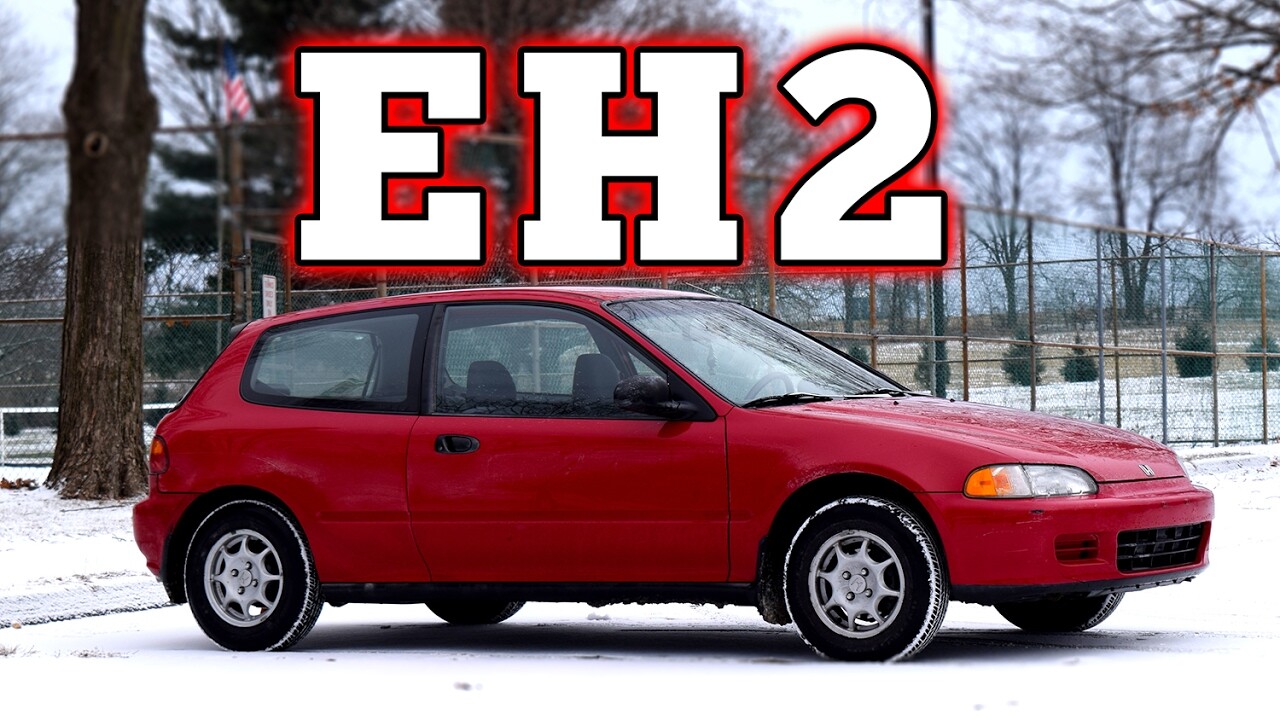
Look at this old 98hp EH honda it gets 48 mpg city 55 mpg highway all with a manual. It gets away with it because it’s light, has no AC nor power steering

The issue with safety is that it’s a prisoner’s dilema. People feel safer with a heavier car, so when one person gets a heavier car, it’s less suddenly safe to have a ligher car. Everyone gets a heavier car in respnse and suddenly everyone’s cars are heavy with poor gas mileage.

3 Likes

well said SIR! Speaketh the truth.

1 Like

regarding yard tools

I wish there was a single battery standard. It sucks that you have to buy into a ecosystem just be able to use your drill battery on your grass trimmer. The replacement batterys are expensive and lose their charge pretty quickly.

I was talking to my dad and he told me the electronic trimmer is lighter and cheaper than gas, but the limited charge makes it such he needs to split his mowing to 2 sessions instead of getting yard work done at once. I think once yard tools can hold a longer charge it’ll be easier for homeowners to switch

regarding roof solar

From my limited reseach it seems that there’s a optimal angle for max eletricity generation also since the panels cannot move, it’s only operating max efficiency. If there are only a limited set of resources, solar farms in deserts or uninhabited places seem to make the most sense. Though I do like the idea of converting a roof to some useful work rather than absorb heat, I think some materials science research needs to find a cheaper more practical solar panel

I learned about it from EEVBlog’s videos on the solar roads

That actually reminds me of this comment


On a solar roadways from eevblog

I get about 20% worse fuel economy, but more power, and E85 is about 30% cheaper than regular gas. So it’s still cheaper to run E85 even with the worse fuel economy.

But there are also E85 tunes which might help fuel economy while keeping the power bonus. Then you’d really be saving a lot compared to regular gas. But I live in Commiefornia so I’m really weary about doing anything aftermarket like that.

Has it though?
Because like I said, Germanys solution from decades ago has a water ingress issue.
And like I said, no clue how well the French system works.

There may be some other process aside from Pu-extraction and throwing it in a hole that I have not heard off. Links to papers are appreciated (“trust me bro”-youtube videos are a bit iffy to me).

Ok, so let us discuss the downsides of the coming storm for a moment.

First, the cold, hard facts. BEVs are going to outcompete all other forms of car drivetrains, this is about as inevitable as the move from horse and carriage to the T-Ford, or the transition from single core chips to multi core chips. BEVs are simply a better technology overall. Of course it is not a perfect tech, all tech has downsides, but it is still better than all the other drivetrains when looking at the two metrics that matter (costs and convenience). Fuel cells and ICE are just too expensive to fuel and maintain, and when BEVs reach price parity and you can get an electric Toyota Corolla clone for the same price, why would any sane person choose the car that costs significantly more to fuel and maintain? BEVs can do it just as well if not better in everything that matters, with a few reasonable tradeoffs.

Now, can anyone drive one today, no, still need some infrastructure. At the countryside, infrastructure is solved since everyone has a driveway and can install a charger for a fraction extra of what the car costs. Apartment dwellers can’t do that though, so charging becomes limited to whatever parking space has a plug. This will be resolved as more and more people get EVs, but we are merely heading that way; we are not there yet.

ICE cars are on the way out. But they are not gone yet and will not be gone for another 15 years, at the very least. Owning and operating an ICE vehicle will become more and more expensive from this point out though. And they will be more inconvenient to own, by 2030 they will be a bit more inconvenient and cost a bit more compared to BEVs, and by 2035 they will be a lot more invonvenient. This is what will trigger people to switch.

What does this mean though? Well, for one thing, GM and Stellantis will go bankrupt by 2025 or so, right after the Japanese brands. Imagine a chip maker saying “Nah we are sticking to single core even though it’s cheaper to go multi core” - that is most of legacy auto today.

This is one of the darkest sides of the transition and will lead to millions of job losses. A lot of new ones created as well, of course, and by 2040 everyone will be better off - but that doesn’t change the fact that a lot of people will be unemployed in the rust belt the coming years, and there is nothing that can be done to prevent this. Worse, a large fraction of them will possess skills no longer relevant for the new age of manufacturing. Who will need expertise in combustion engines, transmissions and gearboxes when those are no longer required?

This does not mean GM and Stellantis will completely kick the bucket - GM in particular could be bailed out - but the ICE parts are about as done as Clinton. And it will be ugly for a while. I see GM and Stellantis falling as inevitable, but Ford might still make it by the skin of their teeth.

Europe does not fare any better of course. As ICE goes down, BEVs will go in more and more demand. EU is already at 40% BEV/PHEV and will hit something like 70% before 2024, and 80% BEV by 2026. German and French auto is largely screwed here, but some brands will be bought up, consolidated and salvaged.

As for China, they are right now doing a race to the bottom steel bath to kill off any weak competition, which is one of the reasons for Tesla lowering prices right now. Of course Tesla has the highest margins in the business, I think the model 3 cost something like $25k to make and they sell it for $35k. So Tesla can still lower their margins. The same cannot be said for other competitors like Nio and XPeng, both in dire straits and facing the very real threat of bankruptcy.

How long will this last, I think we will have the worst behind us in 2026-2027 sometime. But the next few years… Not pretty, and if you live in the Rust belt you should prepare for the coming storm. It is not the end of the world, just a butt ugly shitstorm that will blow over eventually. Brace yourselves.

Can this be avoided? No, the Chinese and Europeans will make sure of it.
Making a lot of assumptions and absolutes here

Sure, but econo and used cars are still cheaper atm. I don’t doubt that there will be new innovations but I think 8-10 years is a bit optimistic

Countryside? As in rural america where they are reliant on star link for a stable internet connection and will suffer from rolling blackouts?

You’ll still need a mechanic to replace your brakes, tires, and battery. Also assuming mechanics will still be able to perform repairs given the antirepair trend

The EU is not exactly like the US.

Side note, how does your future account for the dwindling supplies of lithium/cobalt as well as rare earth metals such as Neodymium?

Also are we assuming governments will ban ice and that energy generation will all be renewables?

1 Like

yeah I live in the rural USA, and my main transportation, is an electric bicycle, which is in the shop at the moment, because I had to drive it in the rain, and it got wet, and shorted out. (an ICE vehicle doesn’t do that.) And I cannot drive to the grocery store on pedal assist 3 and back to my house, a distance of approximately 6 miles, due to hilly terrain, and my own fat ass. Once again, an ICE vehicle doesn’t do any of that. And third, it would cost me roughly $1000 dollars in batteries to get to the next town, where there is work. And then I’d have to charge all day, and swap out multiple batteries in order to have enough charge to get back to my house at the end of a work day. Oh and I forgot to mention at said grocery store my main concern is with weight, as I have to be careful not to overload the bike. Also, this doesn’t touch at all on safety, and that namely, it isn’t safe, not in the least, to ride on roads that are poorly maintained, and have to share the road with logging trucks, and 18 wheelers of all kinds, busses, idiots that drive giant trucks and cars that don’t know how to not go 90 mph in a 55 mile an hour backroad. Most of which have no shoulder, welcome to the USA. Electric might “be the future” in urbanized Germany, or wherever you live in Europe, but not everywhere has the density needed for EV infrastructure.

1 Like

It has already happened in China where new BEVs are consistently cheaper than ICE and ICE is simply collapsing, we are talking 40-50% YoY decline. Used petrol cars are cheaper and will be for a while, yes. But early adopters will include those who burn through vehicles quickly like rental car fleets, taxi fleets and delivery vehicle fleets. By 2030 you cannot buy a new ICE car anywhere in the US, and as the BEV market matures used BEVs will be part of that market too. If you can buy a used BEV for, say, $10k, and by doing so save $200 a month on fuel costs, would you replace your current petrol car? At some point the equation will make sense, especially if you now need to go 15 miles to refuel instead of 3 miles.

This is assuming self driving cars do not fill our cities by 2030 - if that happens, only the countryside will require car ownership and BEVs will by then be more than enough to fill the countryside. The city will dump them completely as you save around $5k a year by not owning a vehicle. If self driving cars become a reality, taking a robottaxi for $5 an hour to do all your car needs will be hard to say no to.

Here is how Australia dealt with their rolling blackouts:

https://cosmosmagazine.com/news/battery-farms/

I have no doubt the US can implement the same tech. As I said, take a look at California that are a leader in this space.

Sure, you will require some mechanics / maintenance, but the drive train will be much more reliable going forward. I was talking manufacturing though, big auto is keeping hundreds of thousands of people employed and a lot of that will go away as GM et all fold. Not all, not everything, but a lot.

Battery replacement happens about as often as ICE engine replacement.

By using batteries that use neither Lithium nor Cobalt, at least for the cheaper segments:

https://insideevs.com/news/628303/ev-battery-lfp-share-september2022/

Neodymium is part of the engine, there is research going on there too to replace it, but it is a much smaller problem. The builk of most EVs will have Sodium or LFP batteries in them, with the top segment still using Litium-Ion.

This is assuming government is NOT banning ICE (before 2030 anyway, like Norway did), and that renewable energy generation will outcompete everything else. Heck, it’s cheaper today to install solar panels and wind plants than it is burning coal, and batteries are killing natural gas peakers. The rest is too small scale and expensive to worry about.

This will take time, you do not shift your foot instantly, you need time to do it. Even transistors need some time to let the power flow through it. But the switch has been flipped, the poison to kill ICE is already in the system, it’s now just a matter of how long it will take before it burns the entire body.

1 Like

Ok, this is what I wanted to see, @wertigon actual info to back up what you were saying, that one post really annoyed me, cause I actually want to learn more, and you were basically like “BEV good, ICE bad” but without extra research to say why.

Oh, you want waterproof? Try doing that in an ICE :wink:

Sorry to hear your E-Bike isn’t waterproof though, you might want to check out something like GOTRAX G4 Electric Scooter for Adults - GOTRAX.com instead. I follow the Now Let’s Review channel that tries to review all electric mobility, I can recommend them. Here is the video for that particular scooter:

Understand if this is not what you want, just throwing it out there if you want to find a better solution :slight_smile:

1 Like

the better solution for me right now is an ICE vehicle. there isn’t any infrastructure for EVs at all here, much less provision for anything other than full size automobiles. Like I said, it’s dangerous to ride on any kind of bike around here. I have been run over multiple times in my life. But I will check out the channel you linked. Thanks. yeah I looked that scooter up, it’s WAY too weak, and also it’s a scooter! I’d get people honking at me to get off the road riding a toy.

If you (or your family) own your home and that house is connected to an electricity source (grid or otherwise), then yes there is infrastructure for EVs. If you get an EV with 125 miles of range, you can easily drive anywhere you want from your home within that radius. If you have no fast chargers within that radius, then yes, you are limited. On the other hand, perhaps you do have an old ICE vehicle for those trips and everything else can be electric, as a first step?

Installing an EV charger does cost between $0.5k - $2k, and a used BEV is around $6k-$10k. This is more costly than an ICE car, is it worth it? This is up to you. I’m just saying, at some point BEVs will be cheap enough to make sense and when that happens, people will choose BEV over ICE.

by the time the truly rural parts of the country get to that point, cars will just run off of pure H20. there are places here where you can drive 2 solid hours and not see a GAS STATION. Dirt roads are COMMON inside of towns, and you somehow think EV infrastructure will be in place to handle that soon? people drive 2 hours to get groceries. 1 hour just to go to work.

look i have a TON of electric and battery tools. even things that people said would never replace air tools. but the fact remains, out here, a snails pace is light speed.

Electric cars in rural America - Farm and Dairy.

there are a million reports on the grid, estimated growth, etc.

i know a lot of people in a lot of industry out here, they all say the same thing.

2 Likes

Not to mention a 3rd tier city in China makes the poorest parts of MS look like paradise. I know, I’ve lived in one. I like the IDEA of electrical vehicles, but it’s just not a ‘one size fits all’ type of situation.

1 Like