Thanks for running all the tests. One question I have is I’ve seen a lot of benchmarks for the 9000 but I rarely see the Pro and non-Pro on the same chart. Given how little the difference is in cost between them, usually less than a CPU model jump, it would be very useful to have both on the same chart.
I wonder if a bigger cooler like the thermaltake aw420 would net a higher boost. I haven’t seen any reviews of the aw420. But being a bit larger might have some benefits. However finding a case that will take a 420 would be a bit challenging.
I have a bit of a niche request regarding RAM performance on the new platform. Specifically, I’m curious about the impact of RAM speed and timings in the context of large capacity DDR5 kits (64GB DIMMs). I’m personally interested in these:
I’m fully aware that buying thus many expensive kits would be ridiculous. Thats why I’m thinking about emulating their characteristics by throttling a faster kit. Of course seeing the impact of other (faster/slower) configurations would be even better.
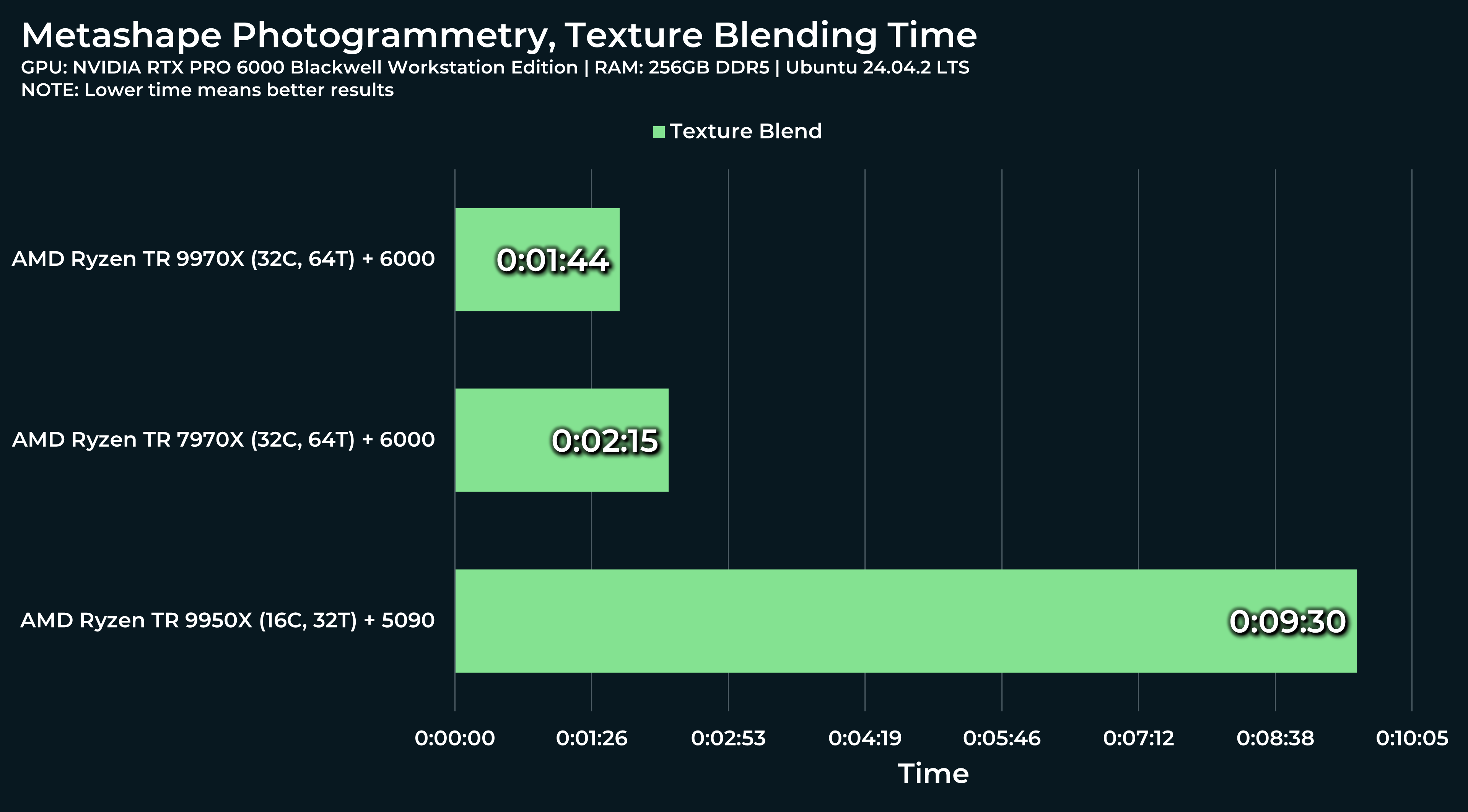
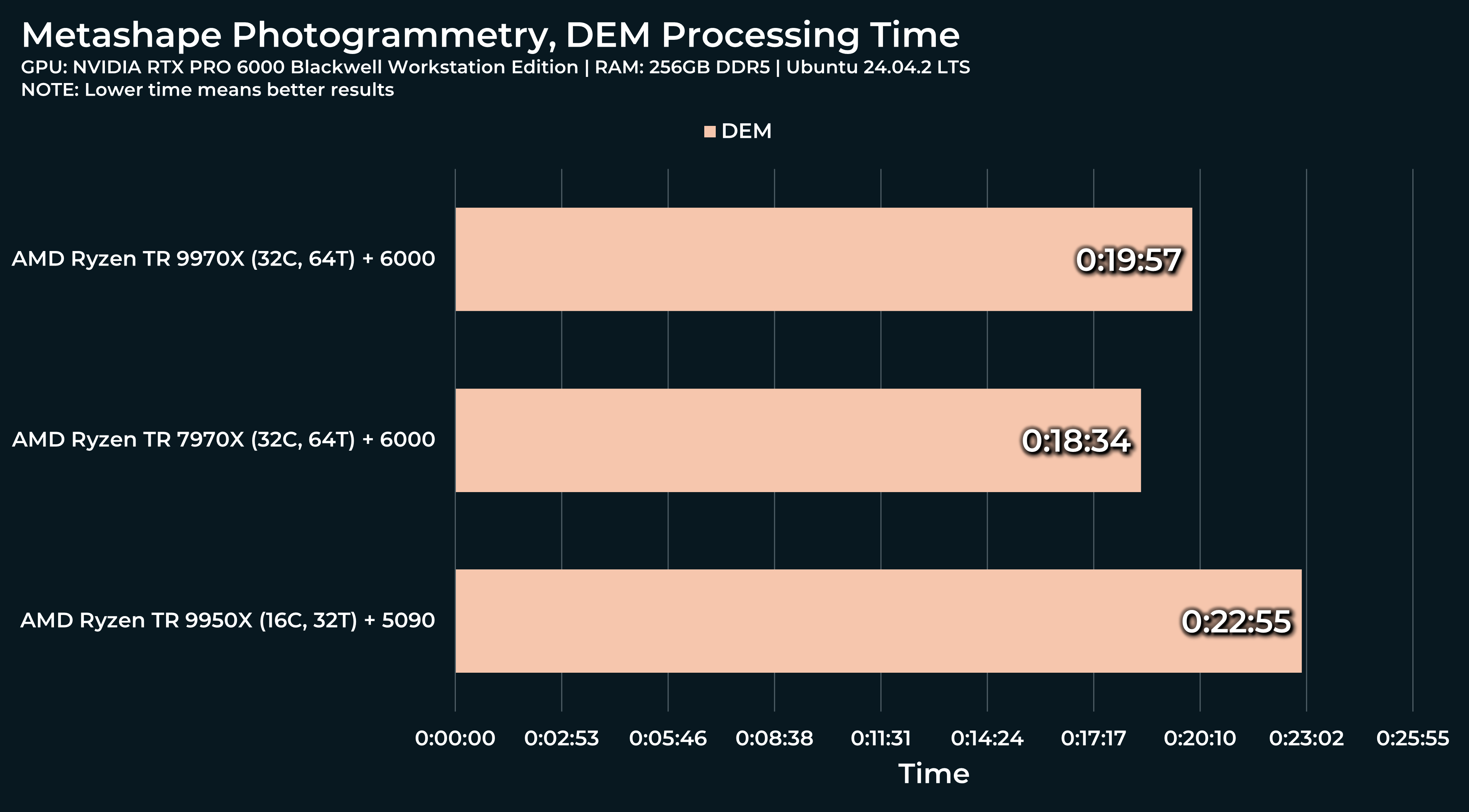
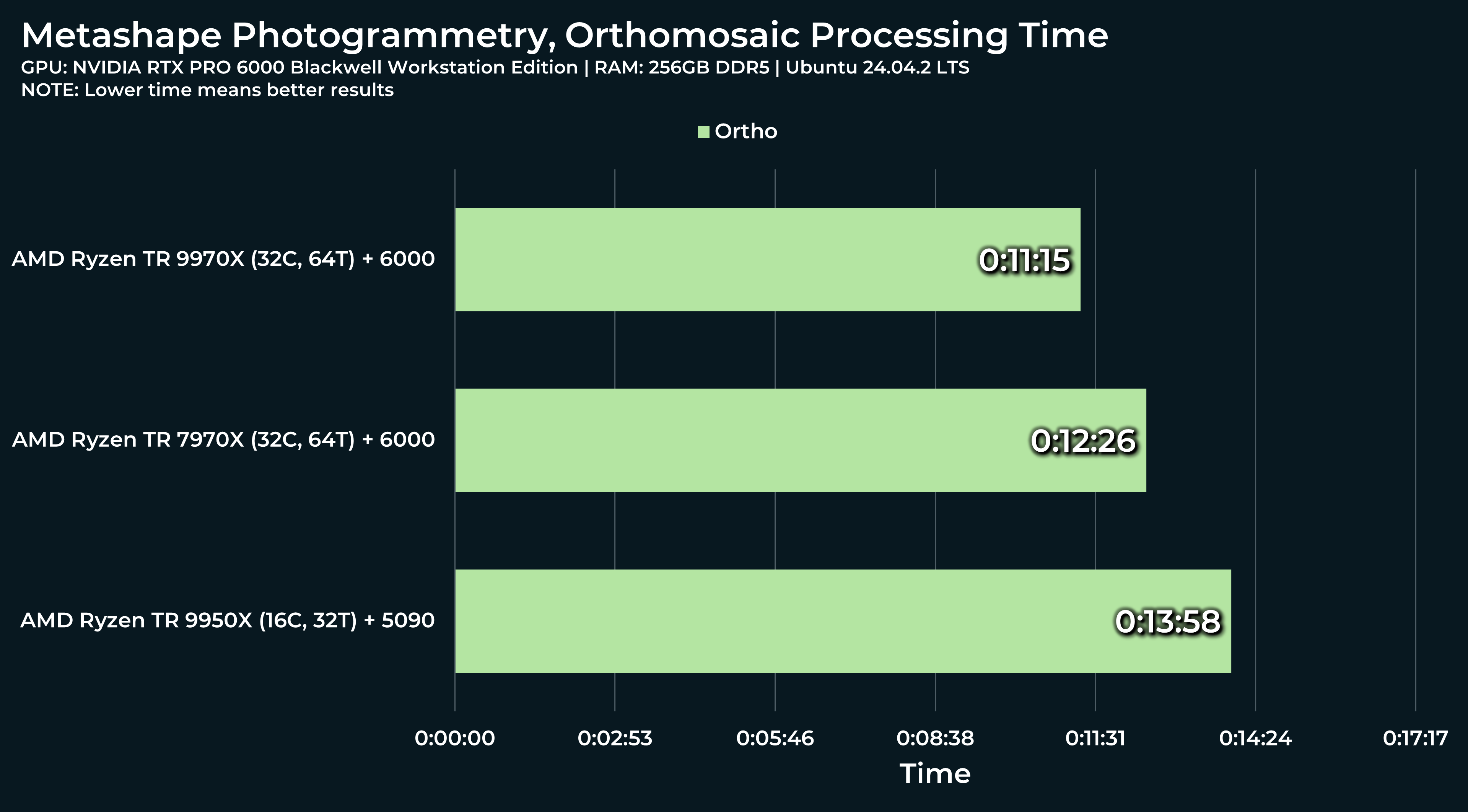
I would love to understand the real-world impact of high bandwidth vs tighter latency but I have no idea how to actually test this properly. Maybe something like LLM inferencing on CPU for latency? OpenFOAM, or photogrammetry workloads might be more sensitive to throughput. Even with a good test, I’m aware the differences might be subtle or lost in noise.
I totally understand this is a deep rabbit hole and not a mainstream concern, so no pressure if it’s too far off-scope. But if you do end up testing anything like this, I’d be very interested in the results!
I would be really interested if some benchmarks for EPYC Turin CPUs like 9575F could be thrown in with the 9000WX reviews. They seem very competitive, but it’s hard to say for sure since it’s rare to see the WS/desktop and server parts compared directly in the same tests.
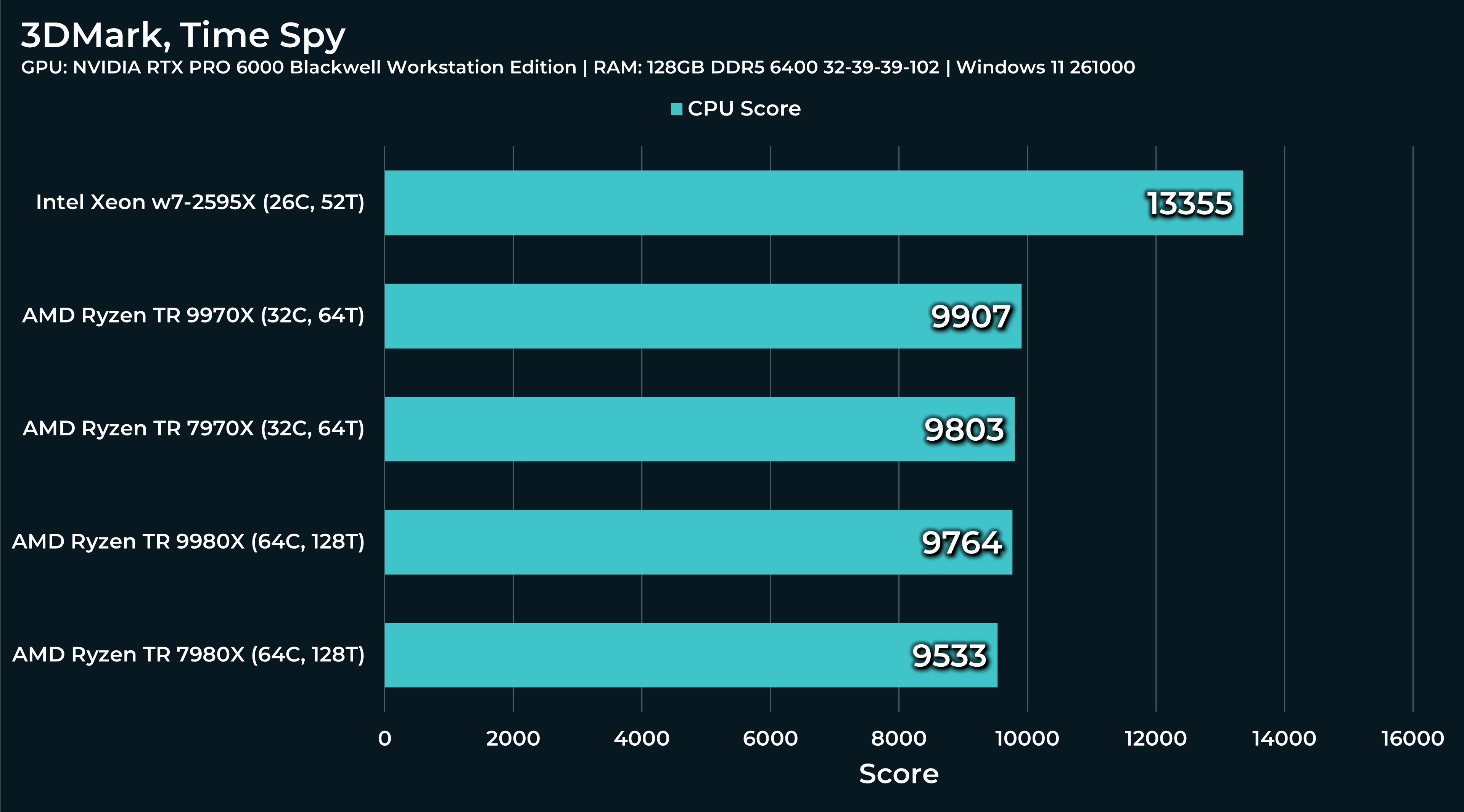
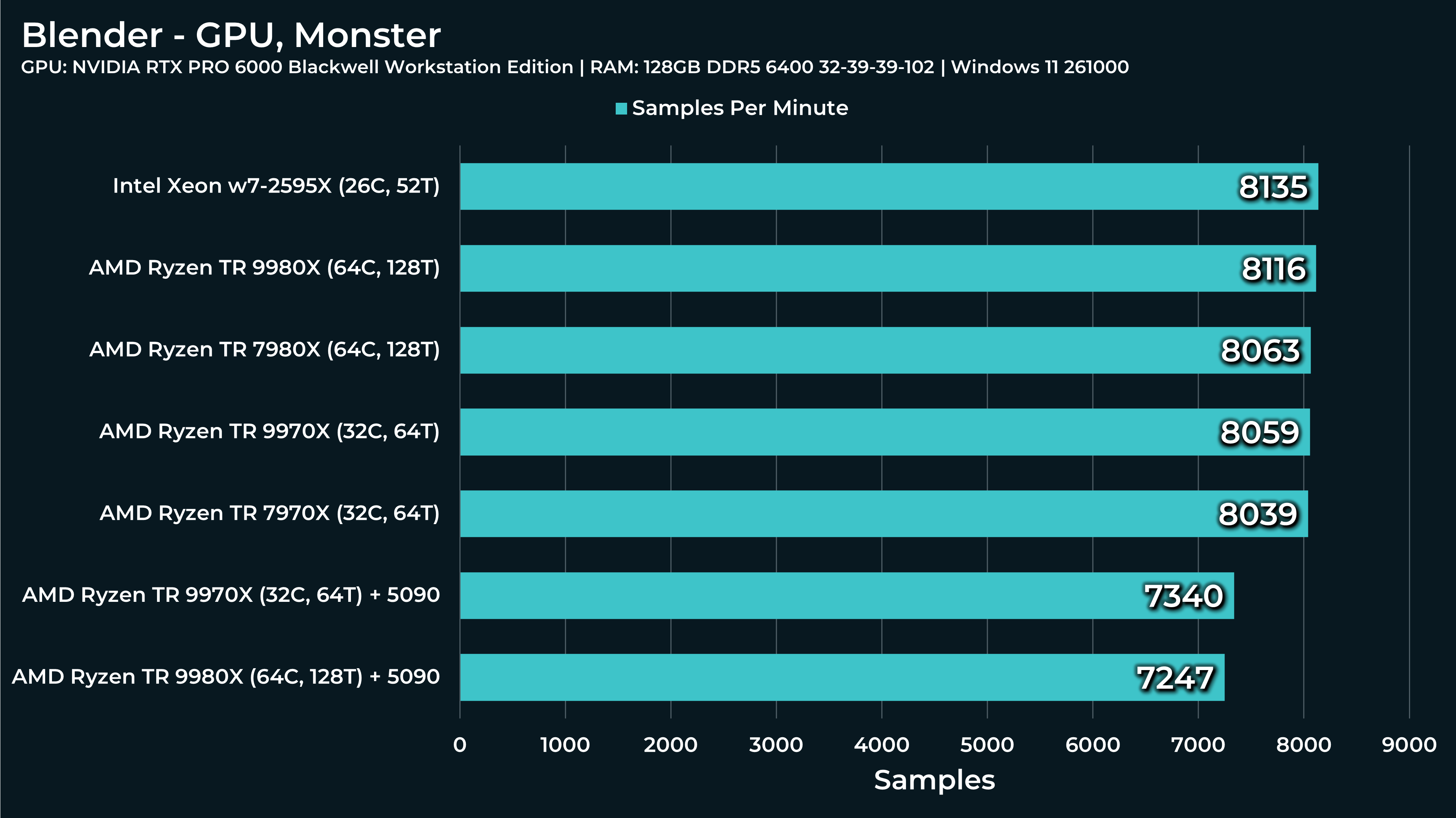
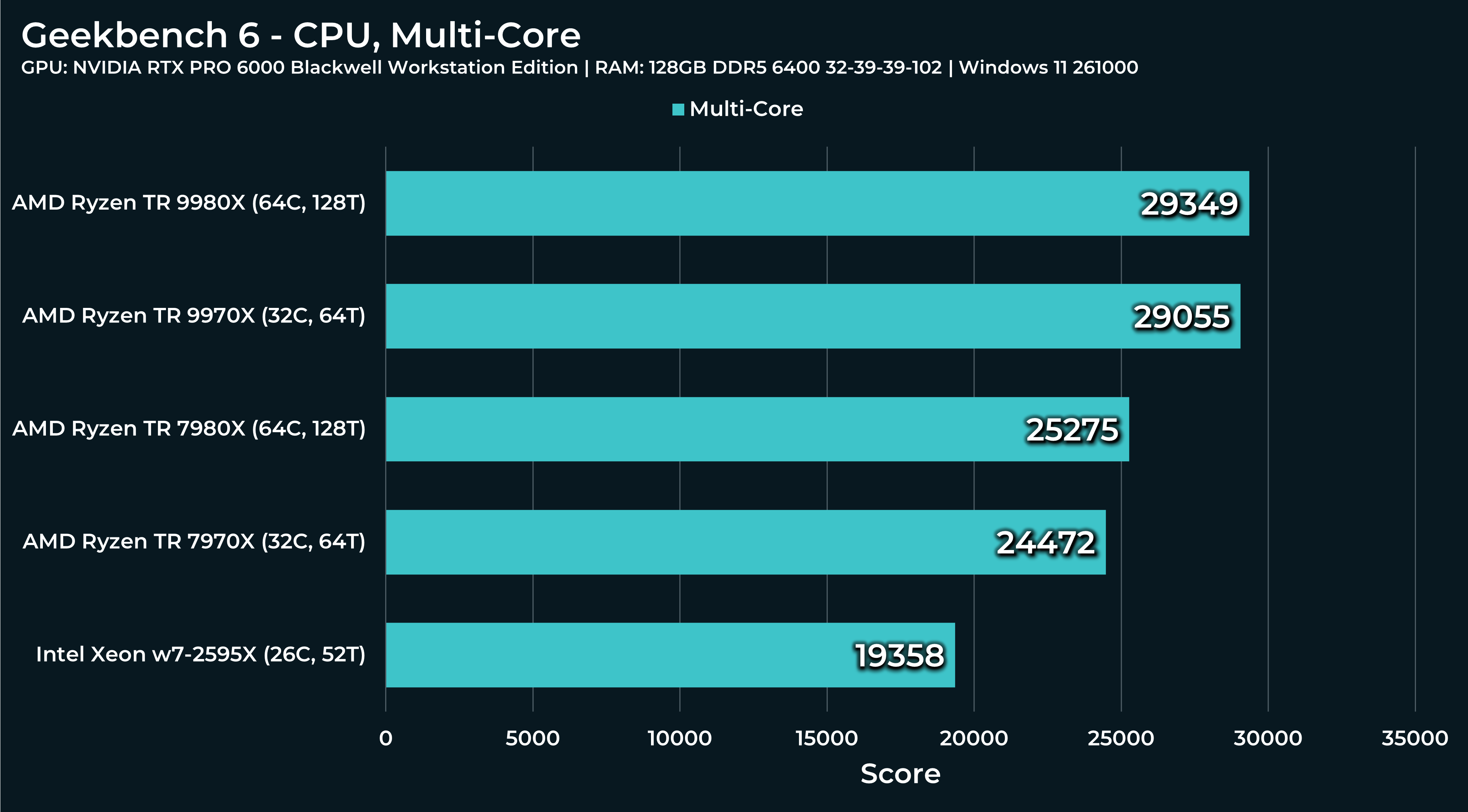
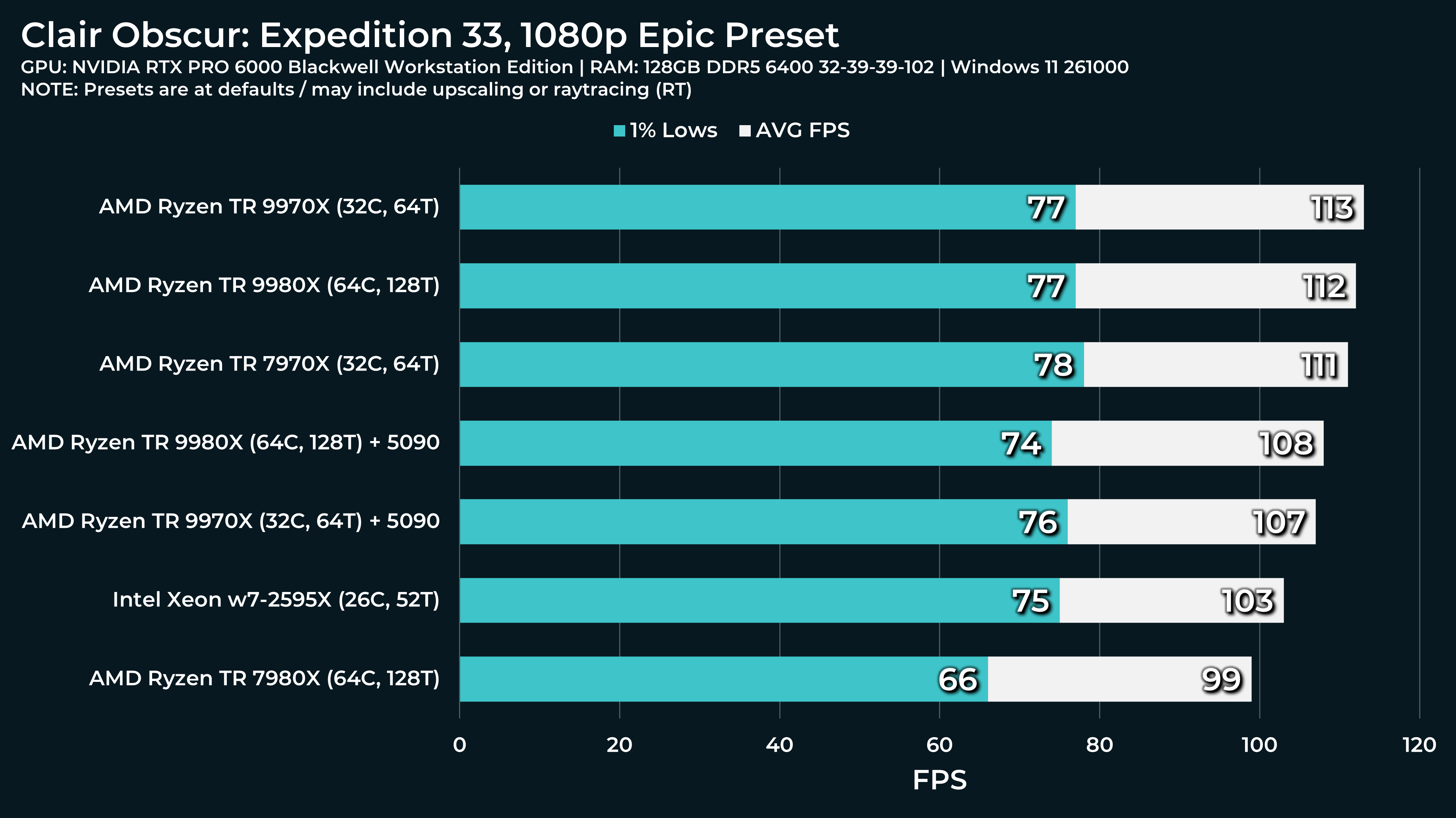
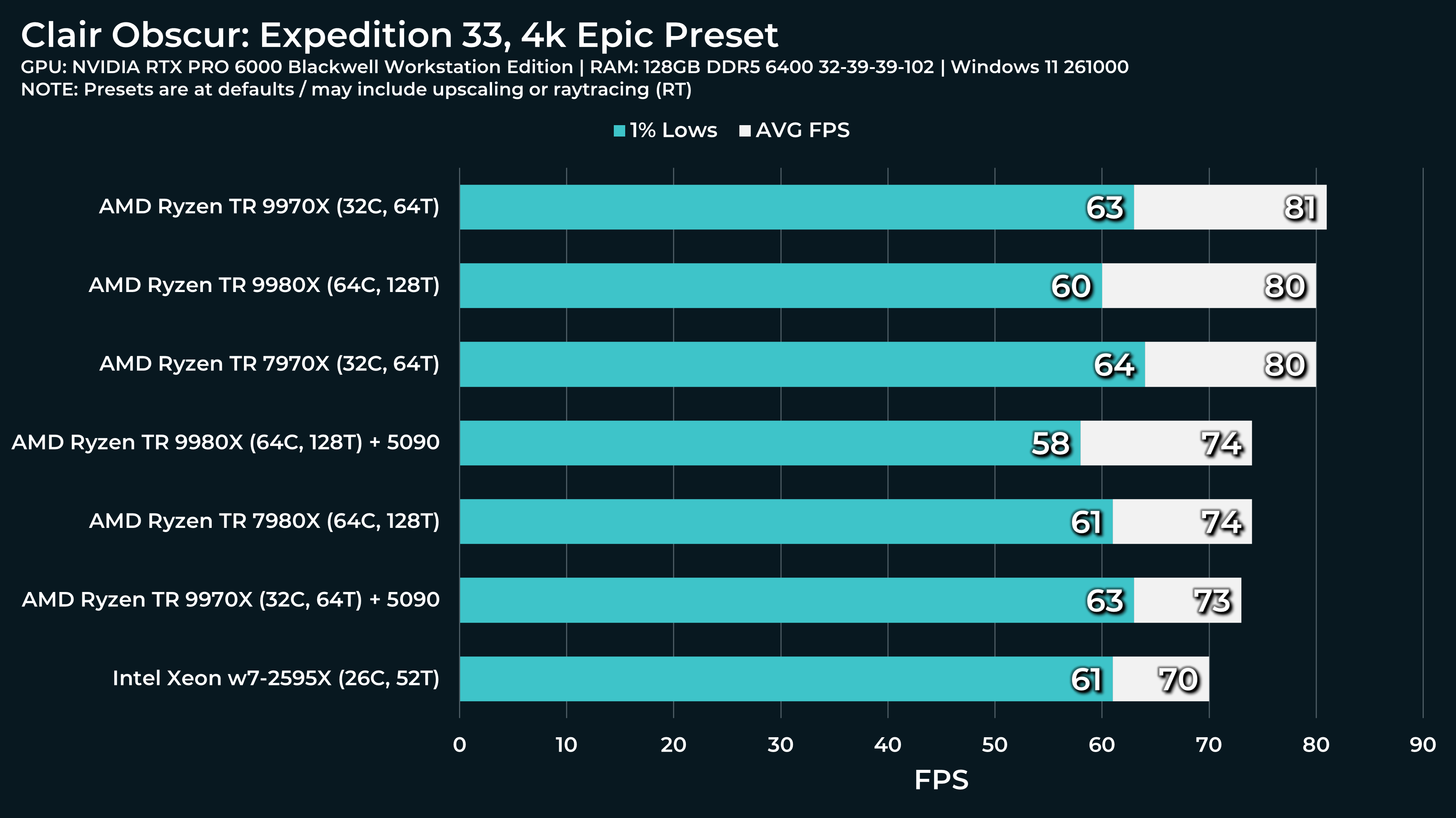
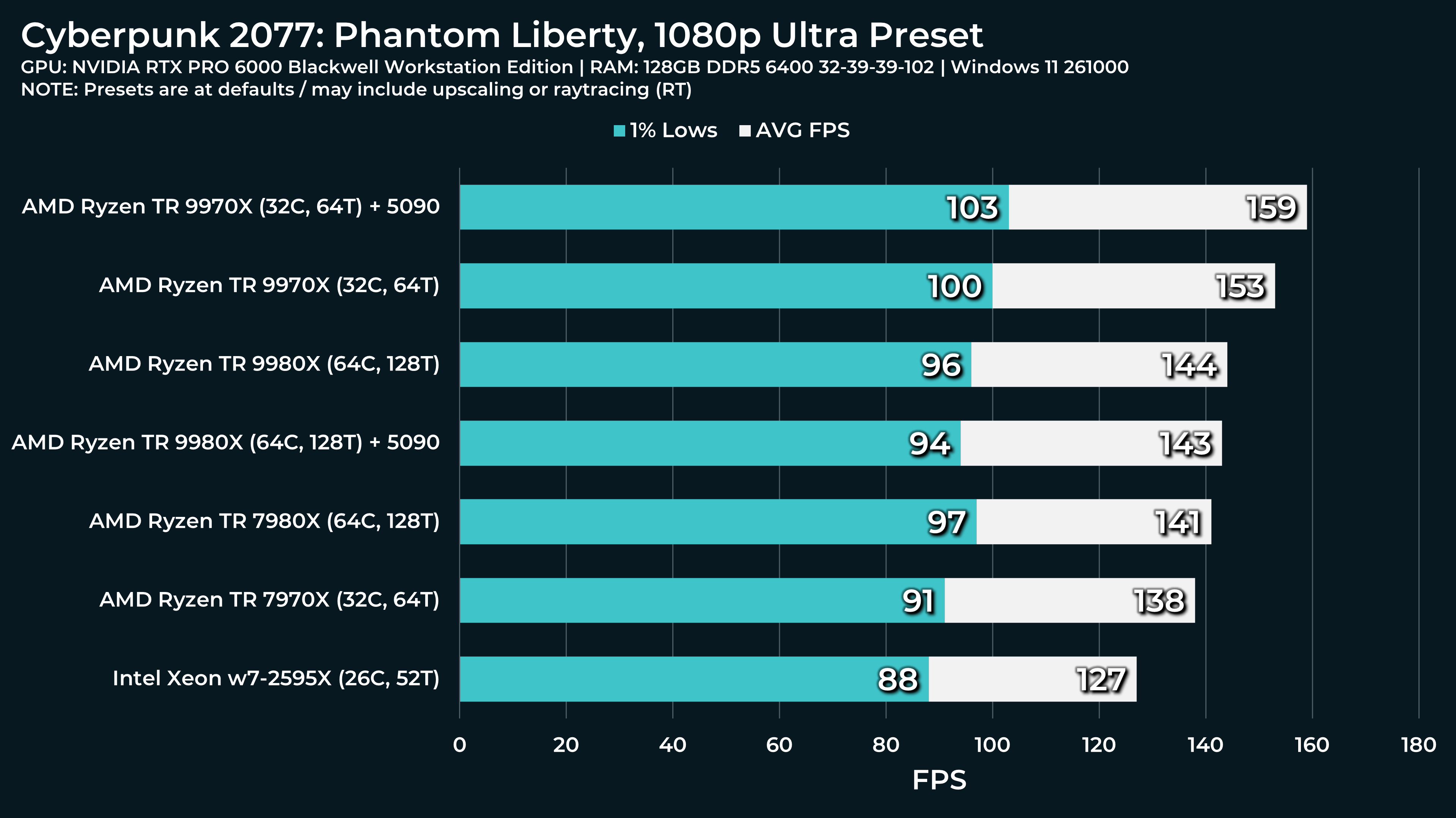
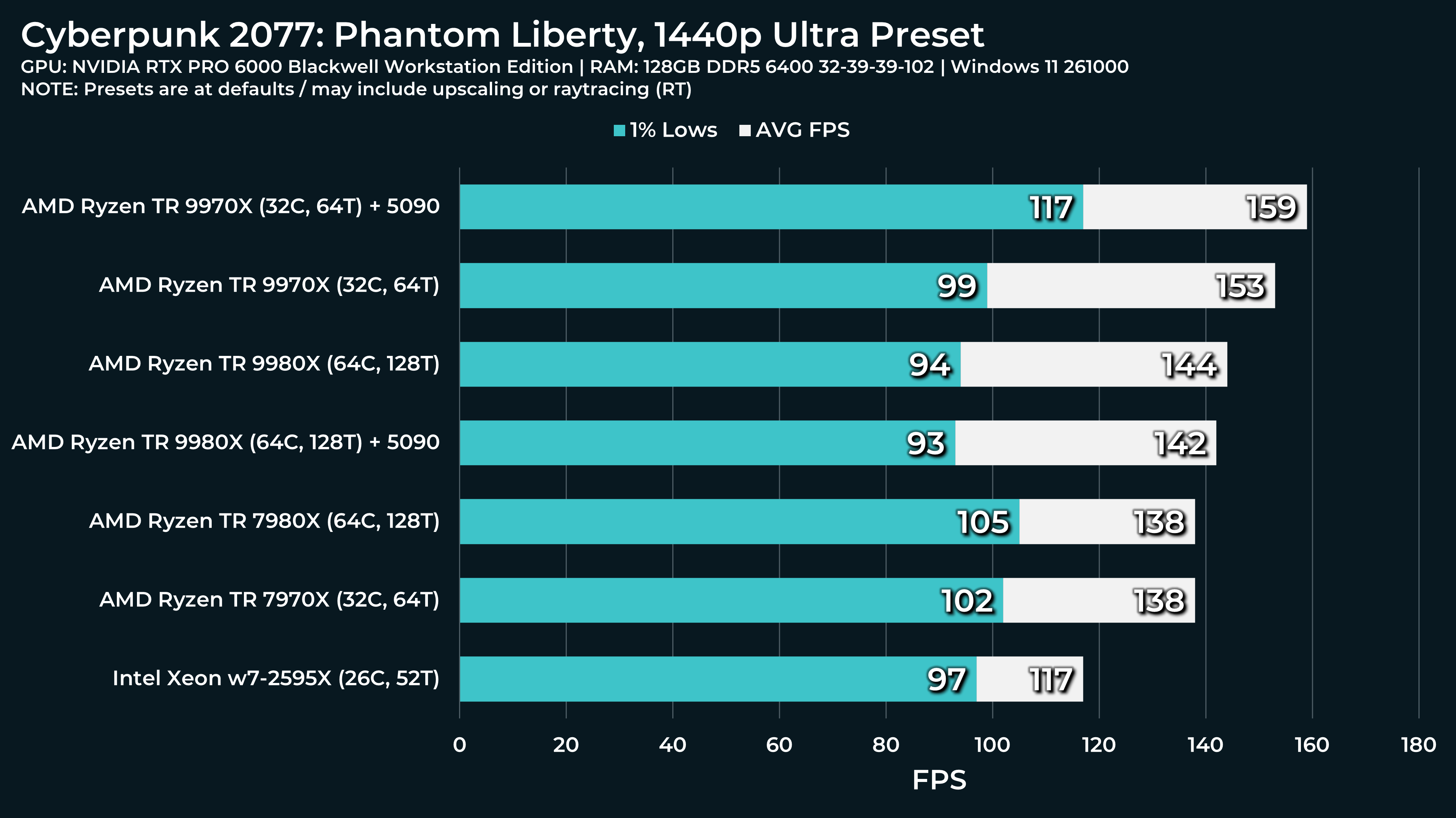
Are all benchmarks with the same RAM (6400 32-39-39-102), including the Xeon?
This is perhaps more a comment on the video – Zen desktop underperforming with dual channel memory vs. Threadripper is mostly due to the infinityfabric limitation (2000MHz usually with EXPO - 32b read/16b write so 64GB/s read and 32GB/s write per chiplet) rather than the IOD itself. The Threadrippers have 4 CCDs so the total IF bandwidth is much higher compared to Zen with 2 CCDs (or 1 CCD!).
I really enjoyed this video. If you’re open to requests, can we see more code compilation benchmarks? I think that’d be a good way to highlight CPU strengths. I also haven’t seen many results showing how 3DvCache does (or does not) affect code compilation. I think Level1Techs (or Level1Linux) would be uniquely respected as an authority on these tests
A testing suggestion: Can you disable all but one or two 8-core chiplets on a Threadripper PRO 9000 to simulate a “9800XT” or “9950XT” with an 8-channel memory interface?
Would like to see how games would work compared to the AM5 counterparts with the more powerful Infinity Fabric without any interference from having so many cores in the system.
Looking at scaling from 2, 4, 6 and 8 memory channels with only two chiplets would also be cool.
I’m one of those weirdos that complains about AMD reusing Zen 4’s IO Die on AM5 for Zen 5 and that testing would help demonstrate if there’s any meat to that criticism.
(In my opinion AM5 should have moved to a 4-channel memory interface, at the moment it’s even uncertain if Zen 7 gets something like an AM5+ socket or if AMD continues to stay on AM5 for one generation longer. While it’s great for longevity it sucks that starting with Zen 6 24 cores have to suffer with a 2-channel memory interface)
Exactly my opinion too, threadripper is good for professional stuff but ds for gaming and am5 exactly the other way around.
With the result that I still need two systems.
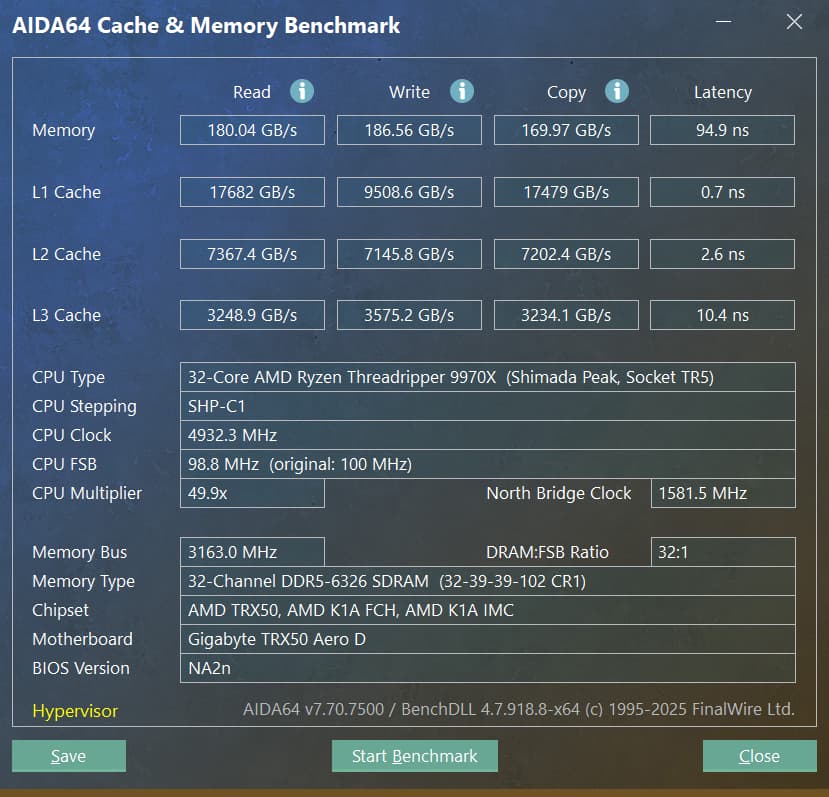
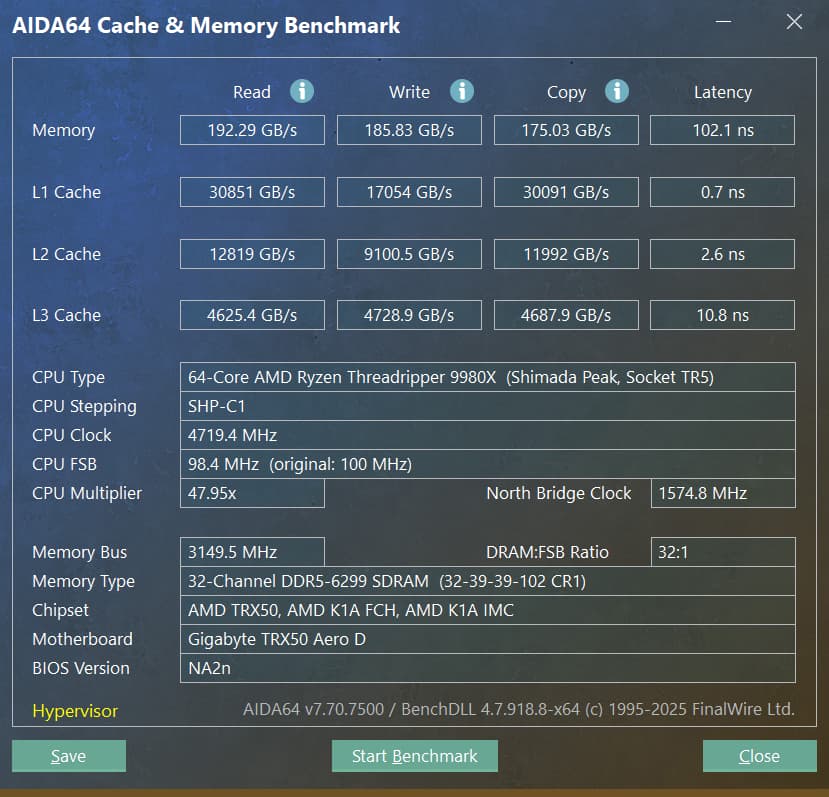
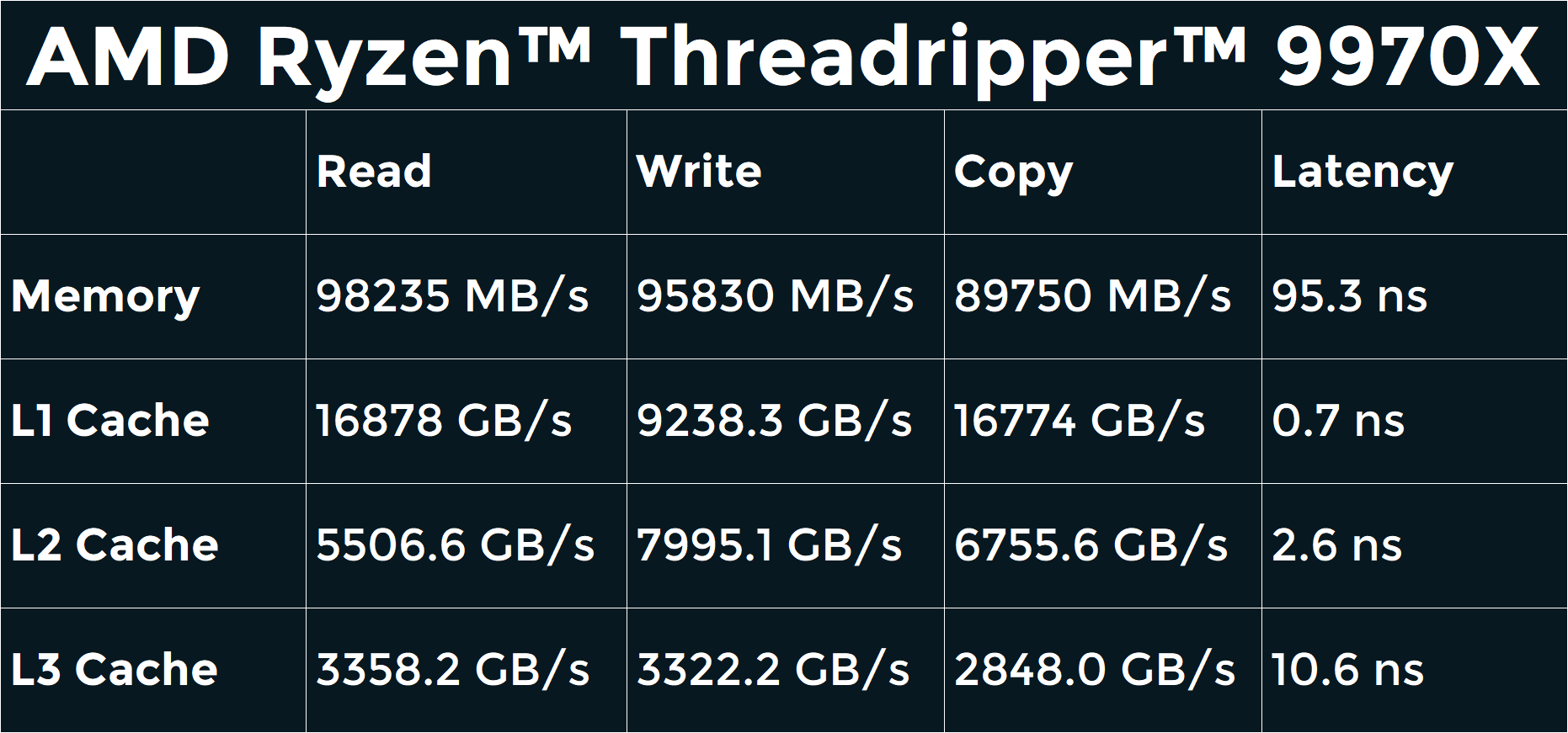
My last TR system had 62ns memory latency, now it’s 100ns and RDIMMs are considerably more expensive than UDIMMs.
I think OK for 512GB RAM and actual workstation use, take RDIMMs but for HEDT up to 256GB I would like to have the option to use UDIMMs.
Threadripper is an shameless upsell due to the lack of competition from Intel.
The situation is a bit like when you go to your trusted shipbuilder and ask for a frigate (HEDT), and he answers that frigates are no longer being built, but you can have two Corvettes or take the aircraft carrier.
Wendell Good Sir, can you Kindly link me to that awesome 2x80mm shroud for the silverstone cases so i can safely cool the ddr5 modules? I have found the post that links the 120mm shroud, but I really could use the file for the 2x80 and cannot find it on the forum anywhere. I don’t mind if its the V1 model either although I appreciate You are working to revise it. Thank You in advance.






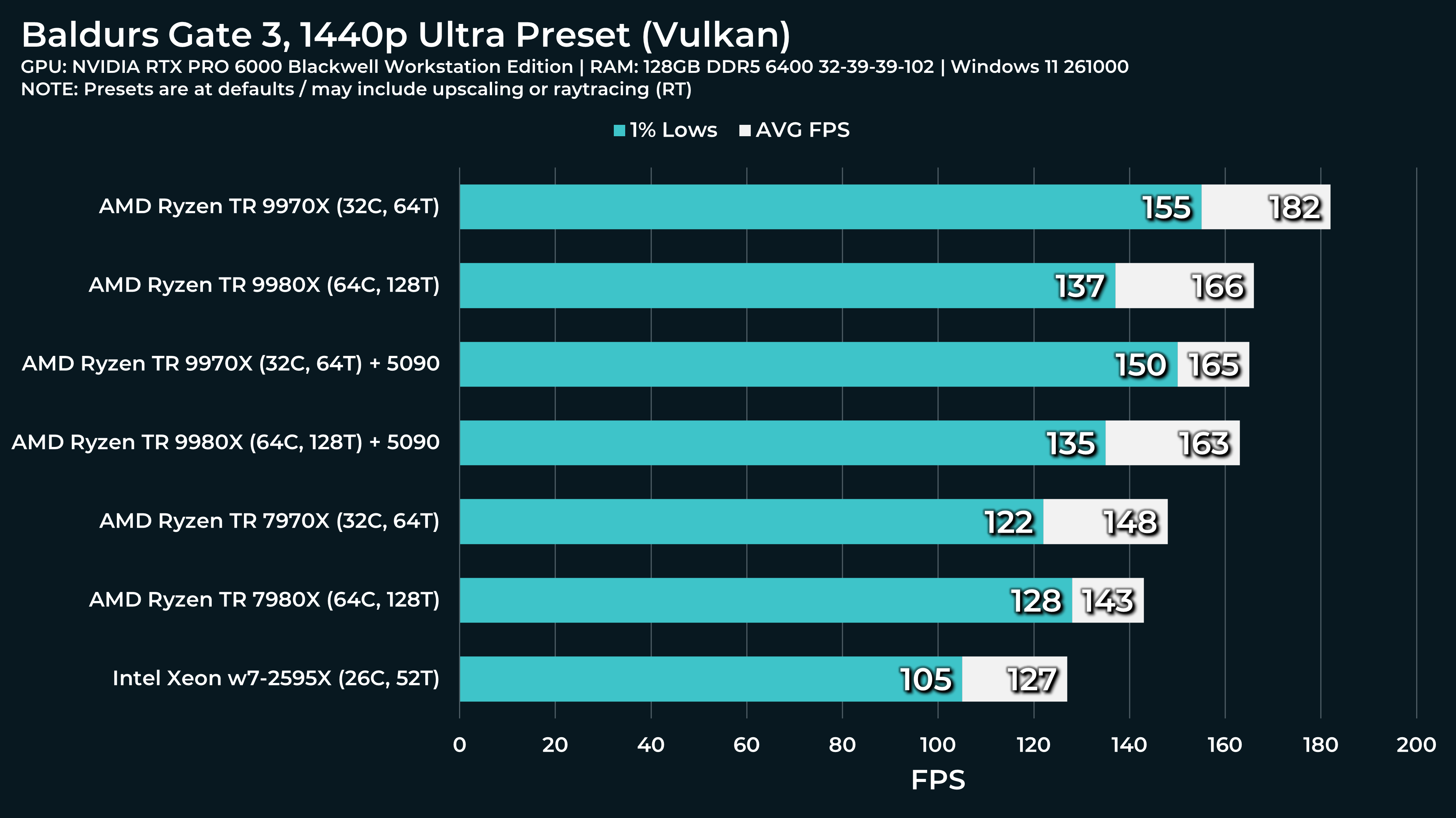
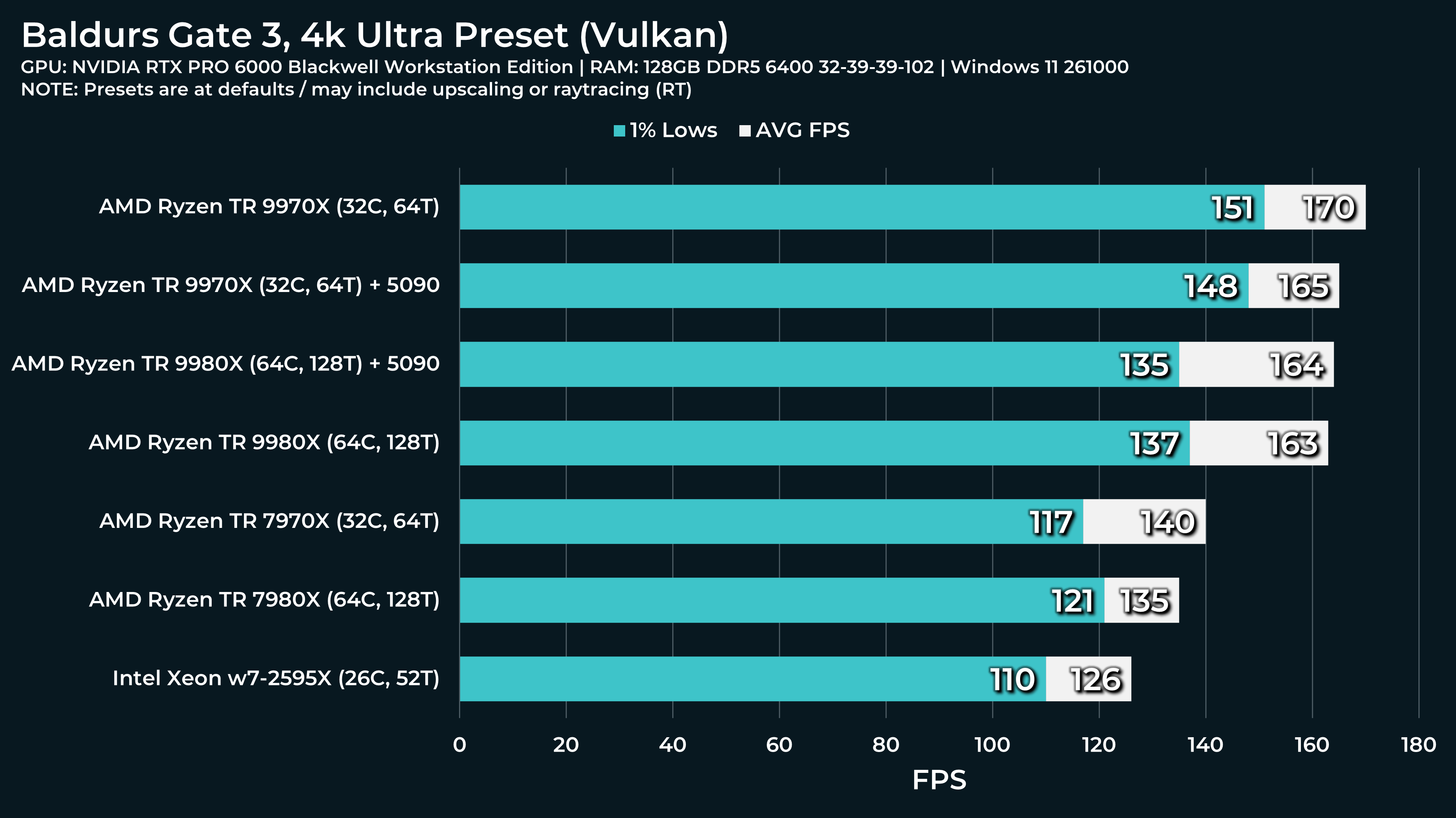
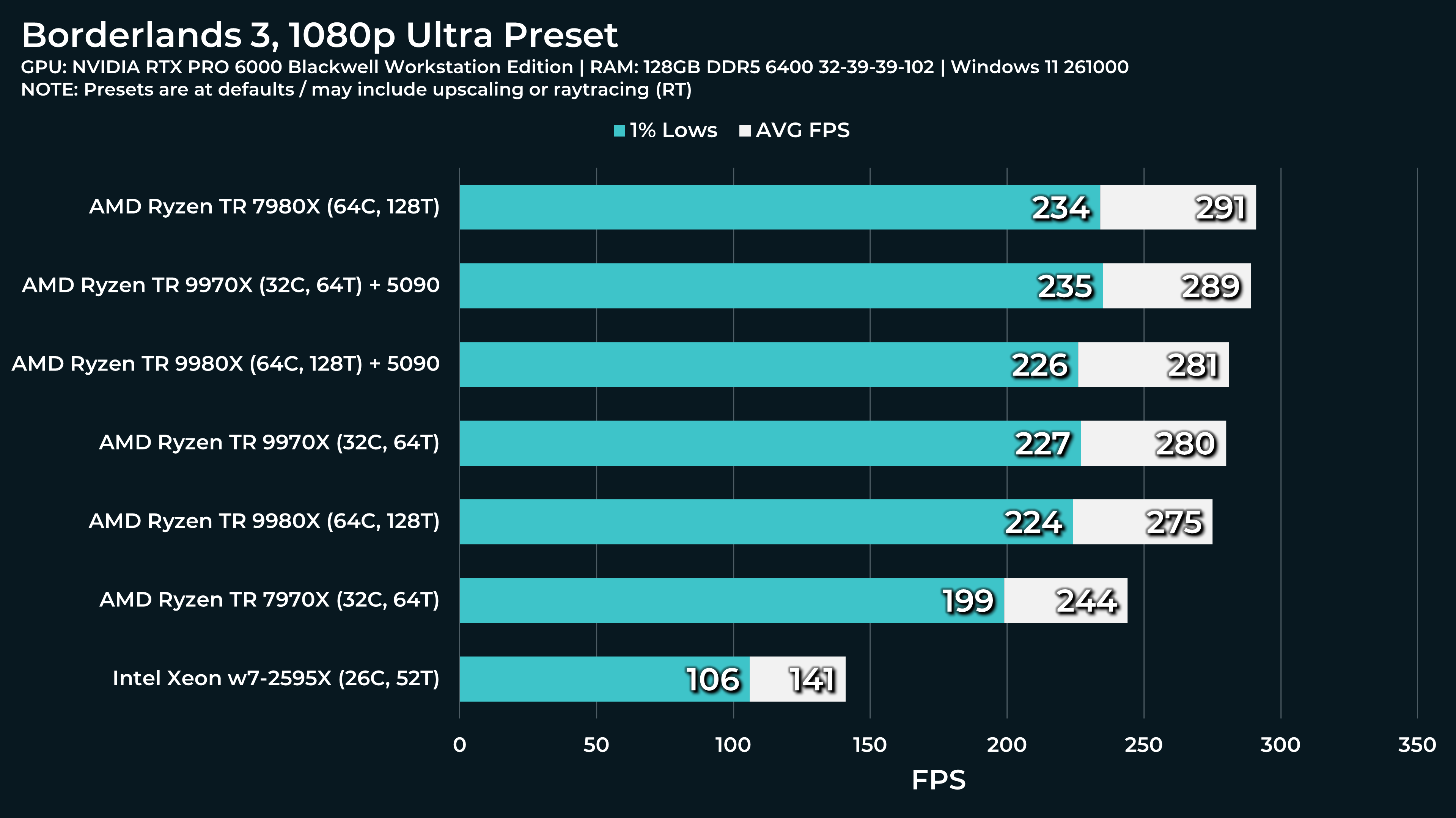

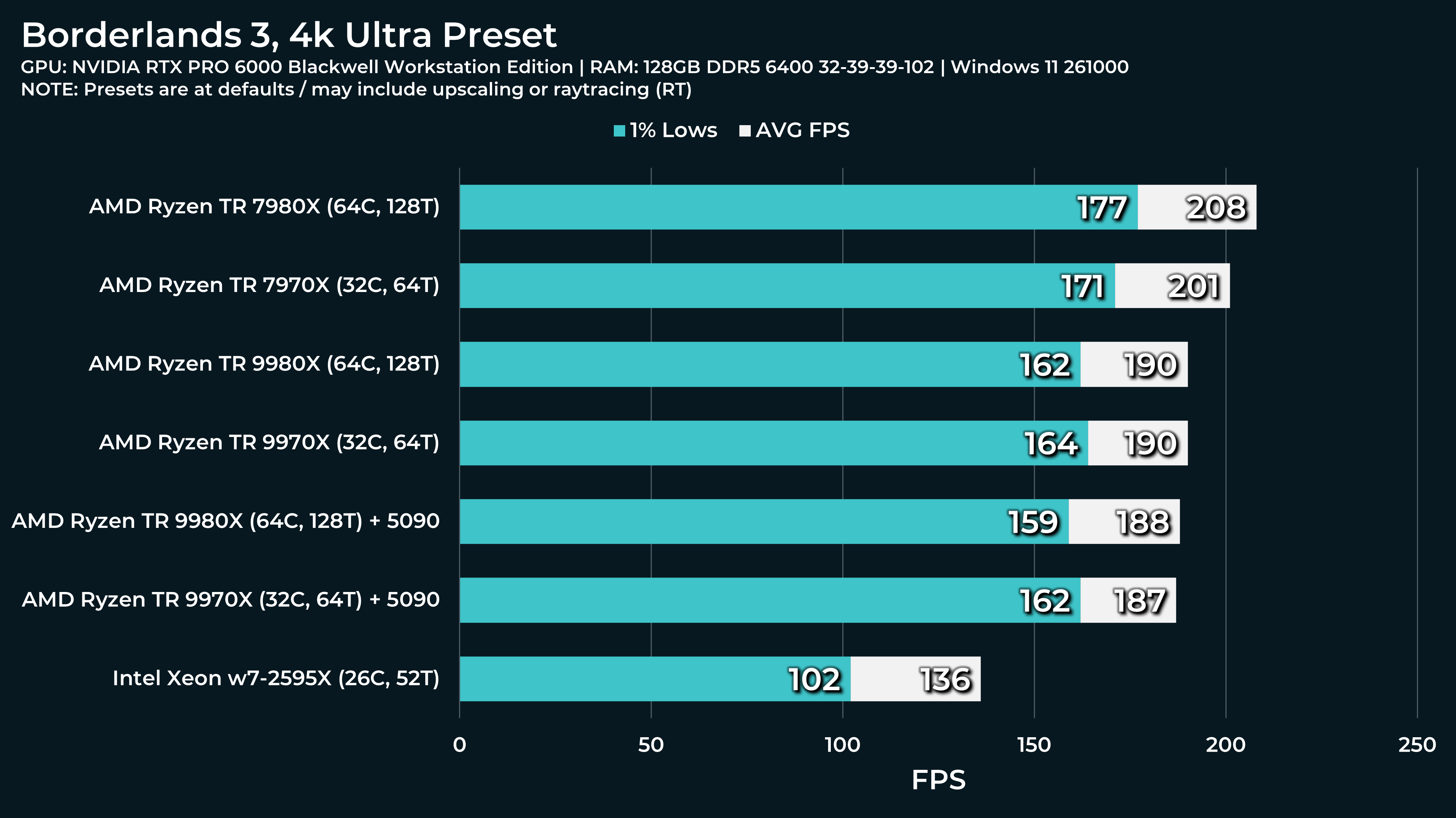



 Thank You in advance.